
Marc-William Palen
History Department, University of Exeter
Follow on Twitter @MWPalen
Marc-William Palen
History Department, University of Exeter
Follow on Twitter @MWPalen
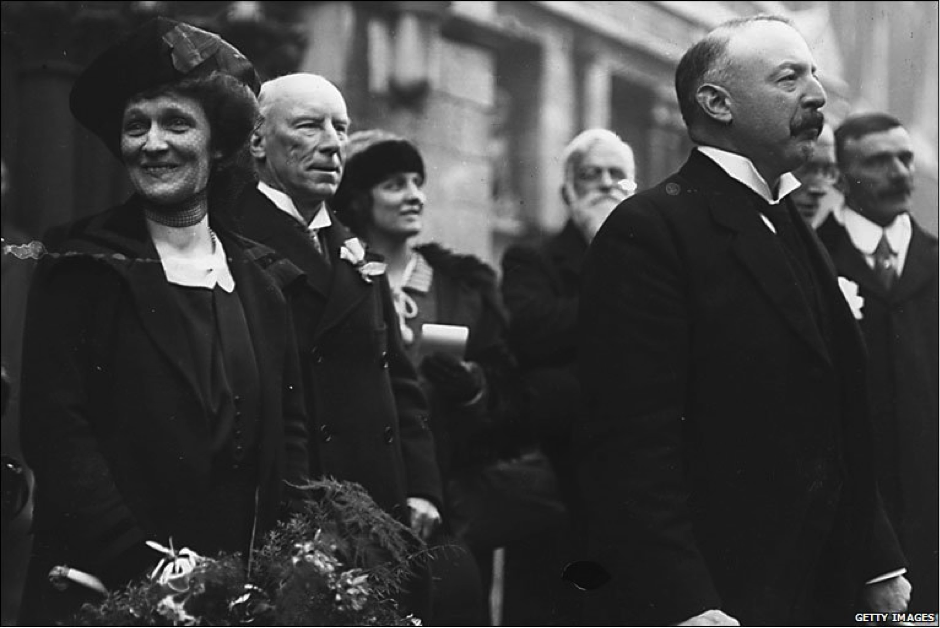
‘Born in Virginia, elected to be in the British House of Commons, I had a sense of gratitude and obligation to the two branches of the Anglo-Saxon peoples’[1]
Lisa Berry-Waite
University of Exeter
This year marks the centenary of Nancy Astor’s election to British Parliament, becoming the first woman MP to take her seat in the House of Commons. The landmark occasion is being commemorated with the Astor 100 campaign to celebrate Astor’s achievements and legacy, as well as to shine a spotlight on women in politics today. Astor’s political career spanned almost three decades; looking back at her career in 1956, she referred to herself as an ‘ardent feminist’ and continuously campaigned on women’s issues.[2]
Known for her wit and outspoken nature, Astor was elected as MP for Plymouth Sutton in a by-election in 1919 for the Conservative Party. She was persuaded to stand by her husband Waldorf Astor, who previously held the seat, when he was elevated to the House of Lords following the death of his father. Nancy Astor the pioneering politician has attracted attention from historians and the media alike, but few discuss in detail her American nationality and the influence it had on her British life and politics. Continue reading “An American Woman in the British House of Commons”
Marc-William Palen
History Department, University of Exeter
Follow on Twitter @MWPalen

Job title: Lecturer in Modern/Contemporary British History (Education and Research)
Job reference: P65129
Date posted:19/02/2019
Application closing date:19/03/2019
Location: Exeter
Salary: The starting salary will be from £35,211 up to £38,609 on Grade (F), depending on qualifications and experience.
Package: Generous holiday allowances, flexible working, pension scheme and relocation package (if applicable).
Job category/type: Academic
Job description
College of Humanities
The University of Exeter is a Russell Group university in the top 200 of universities worldwide.We combine world-class teaching with world-class research, and have achieved a Gold rating in the Teaching Excellence Framework Award 2017. We have over 22,000 students and 4600 staff from 180 different countries and have been rated the WhatUni2017 International Student Choice. Our research focuses on some of the most fundamental issues facing humankind today, with 98% of our research rated as being of international quality in the 2014 Research Excellence Framework. We encourage proactive engagement with industry, business and community partners to enhance the impact of research and education and improve the employability of our students.
College of Humanities
The role
The post of Lecturer in Modern/Contemporary British History will contribute to extending the research profile of British History at Exeter, particularly in areas related to race and ethnicity.
The post will include the delivery of teaching in post-1900 History. In particular, it will involve teaching a selection of undergraduate modules in this area, including Understanding the Modern World. Continue reading “New Job! Lecturer in Modern/Contemporary British History at @exeterclio”
Marc-William Palen
History Department, University of Exeter
Follow on Twitter @MWPalen
Thomas Brückner
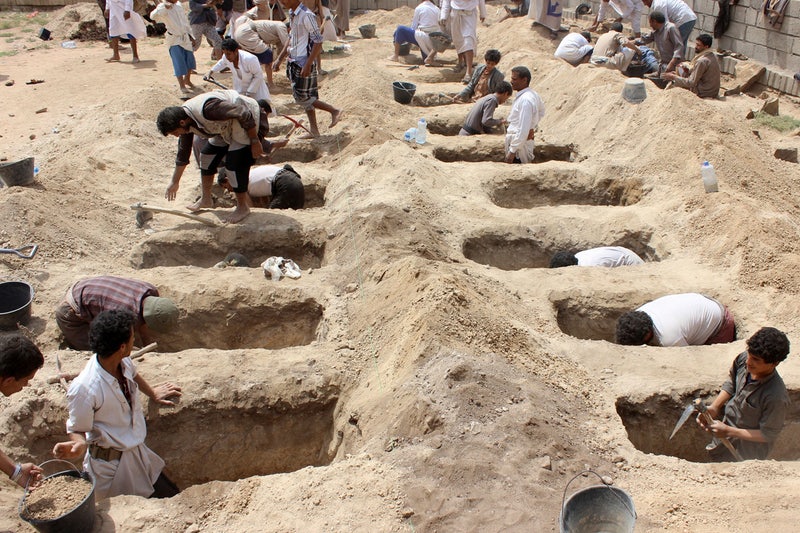
 These days, when we compare discourses of humanitarian assistance, it is astonishing how many states use the formula of a ‘humanitarian tradition’ to describe past actions and indeed influence current debates (see examples with critical discussions from Britain and from Switzerland). Wo liegt die Humanitäre Schweiz ? Eine Spurensuche in 10 Episoden accordingly conducts research into the history of the concept in Switzerland during the 19th and 20th century. Continue reading “Challenging the notion of a ‘humanitarian tradition’”
Marc-William Palen
History Department, University of Exeter
Follow on Twitter @MWPalen
Marlene Daut, University of Virginia
Marvel’s blockbuster Black Panther, which recently became the first superhero drama to be nominated for a Best Picture Academy Award, takes place in the secret African Kingdom of Wakanda. The Black Panther, also known as T’Challa, rules over this imaginary empire – a refuge from the colonialists and capitalists who have historically impoverished the real continent of Africa.
But fans of the box-office hit might not realize that they don’t need to look to the make-believe world of the Black Panther to find a modern-day black kingdom that aspired to be a safe haven from racism and inequality.
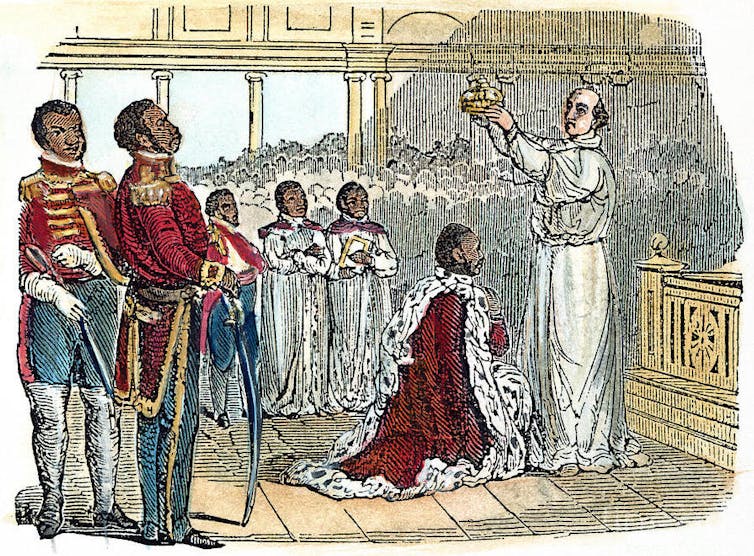
The fictional kingdom has a real-life corollary in the historic Kingdom of Hayti, which existed as a sort of Wakanda of the Western Hemisphere from 1811 to 1820.
The Haitian Revolution led to the creation of the first free black state in the Americas. But the world was hardly expecting a former enslaved man named Henry Christophe to make himself the king of it.
Media accounts from the era, some of which I’ve collected in a digital archive, serve as a window into a brief period of time when the kingdom stood as a beacon of black freedom in a world of slavery. Yet, like Wakanda, the Kingdom of Hayti wasn’t a utopia for everyone. Continue reading “Inside the Kingdom of Hayti, ‘the Wakanda of the Western Hemisphere’”

Darragh Gannon, Queen’s University Belfast
A century ago, on January 25, 1919, delegates to the Paris Peace Conference formally agreed on the establishment of a League of Nations, US President Woodrow Wilson’s attempt to create a new international order following the World War I.
Four days earlier, on January 21, Dáil Éireann, Ireland’s national parliament, had met for the first time. Its assembly in Dublin’s Mansion House was politically set to “Paris time”. Proclaiming an Irish Republic, the revolutionary parliament issued a Declaration of Independence from British rule in French, Irish, and English. It also sent A Message to the Free Nations of the World, and delegates to the Paris peace conference. It read:
Ireland today reasserts her historic nationhood confidently before the new world emerging from the War.
Neither the Irish Republic, nor its representatives would be admitted at Versailles. But international recognition of the Irish Republic, under the principles of the “new world order” established in Paris – self-determination, liberal democracy and internationalist development – would become a key battle ground in the Irish war of independence. A century on, it remains a key battle ground of historical debate – where, in this “new world order”, was the Irish Republic won and lost? Continue reading “January 1919: the Irish Republic, the League of Nations and a new world order”
Marc-William Palen
History Department, University of Exeter
Follow on Twitter @MWPalen
Paul Young, University of Exeter
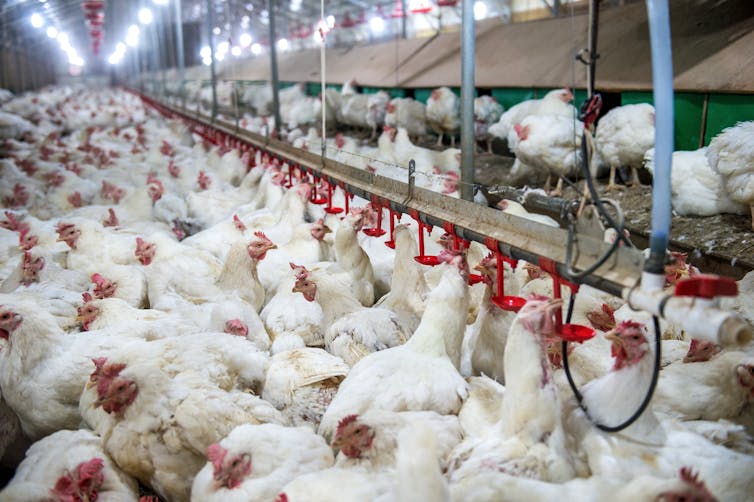
Increasing consumption of meat rich diets throughout the world in the 21st century raises pressing concerns about human health, animal welfare and environmental sustainability. Too much mass-produced meat is bad for us, bad for the livestock we eat, and bad for the planet on which we live.
If we want to understand how the world arrived at this point, as well as how we might change it for the better, we should look back to the Victorian period, which laid the foundations for modern globalised meat production and consumption.

Concerns today about what has become known as the “global meat complex” focus on the technologically driven overproduction and consumption of livestock. There’s a recognition in particular that “the middle classes around the world eat too much meat”, as a 2014 Friends of the Earth report put it. But the root of this problem can be traced to 19th-century Britain, when global meat markets emerged as a revolutionary way of dealing with a mid-Victorian “meat famine”. Continue reading “The Victorians caused the meat eating crisis the world faces today – but they might help us solve it”
Marc-William Palen
History Department, University of Exeter
Follow on Twitter @MWPalen
 An event of Exeter’s Centre for the Study of War, State and Society seminar on the theme of violence, law and honour in French Senegal that might be of interest to readers of the Forum. Professor James McDougall (Trinity College, Oxford) is to speak to the title, ‘The public but mysterious death of Diery Fall: Violence, law, and honour in French Senegal, 1904’.
| Date | 30 January 2019 |
|---|---|
| Time | 14:00 to 16:00 |
| Place | Forum Seminar Room 01 |
In April 1904, Henry Chautemps, an indigenous affairs officer and district administrator, was murdered in his office in the town of Thiès, near Dakar. Chautemps was the son of the politician and former colonial minister Emile Chautemps (his brother Camille would later become prime minister). This connection made his killing a minor sensation in Senegal and in France, where “the Chautemps affair” was discussed in newspapers and the instigators of “the Thiès insurrection” were pictured on postcards. The “affair” led to the final act in the long story of the abolition of slavery in Senegal. But another death, one that ended the manhunt for Chautemps’ assassins, tells us much more about what was going on in this corner of France’s African empire. Jeeri Joor Ndella Fall (Diery Fall), the Senegalese noble whose retainer killed Chautemps, whom Chautemps had tried to imprison for enslavement, and who was held responsible for the “insurrection”, remains a heroic figure in Senegalese oral tradition.
This paper, part of a larger ongoing book project, considers the public but mysterious death of Diery Fall — was he killed, or did he commit suicide? — as a microhistory to examine the themes of slavery, status, honour, masculinity, law, and violence that were being acted out and reshaped in this period.
Further details can be found here.
Marc-William Palen
History Department, University of Exeter
Follow on Twitter @MWPalen

Conceptualising statehood in the age of Brexit
Ex Historia’s afternoon conference
28 March 2019
Exeter’s postgraduate history journal, Ex Historia, are hosting an afternoon interdisciplinary PGR conference at the University of Exeter. The conference aims to explore how the history of states and empires can help us understand the current Brexit phenomenon. We welcome proposals for 10 minute papers with a flexible interpretation of the below themes. We invite papers from PGR students across university institutions and departments.
Topics include, but are not limited to:
• Conceptualising statehood throughout history
• The construction and dissolution of state and empires
• National identity and the rise of nation states
• The variable nature of statehood
• The history of Britain-European relations
The event aims to promote interdisciplinary discussions, develop the skills and knowledge of PGR students, and provide an enriched understanding of how we can learn from history, connecting academia with current international affairs. The keynote speaker will be Dr Robert Saunders, Senior Lecturer in Modern British History at Queen Mary, University of London. He has published widely on British politics and Brexit; his most recent book is titled Yes to Europe!: The 1975 Referendum and Seventies Britain. Furthermore, he has provided commentary and interviews on Brexit for BBC News, CNN and NPR. Please submit a 300 word abstract and a short biography to exhistoria@exeter.ac.uk by 15 February.
 Imperial & Global Forum

You must be logged in to post a comment.