Autumn Term CIGH seminar schedule

The Autumn Term is now upon us, and so please find the Centre for Imperial and Global History seminar schedule below for your calendars.

Please direct any inquiries about attending to the seminar convenor, Dr. Emily Bridger.

 
Date and Location
Speaker
Paper Title
26 September (Week 1)
Amory B315, 4:30-6pm
Katie Natanel
(Institute of Arab and Islamic Studies)
‘Unruly Affects: Tracing Love and Melancholia in Israeli Settler Colonialism’
10 October (Week 3)
Amory B315,
4:30-6pm
Amanda Nettleback
(University College Dublin)
‘Colonial Violence and the Limits of the Law’
24 October (Week 5)
Amory B315,
4:30-6pm
Sonia Wigh
(University of Exeter)
‘Sex, Secrets, and Savant: Exploring Sexualities in Early Modern South Asia (1650-1750)’
7 November (Week 7)
Amory B315,
4:30-6pm
Ljubica Spaskovska
(University of Exeter)
‘Constructing the “City of International Solidarity”: Non-aligned Internationalism, the United Nations and Visions of Development, Modernism and Solidarity, 1955-1975’
14 November (Week 8)
Amory B315,
4:30-6pm
Gabriel Gorodetsky
(All Souls College, Oxford)
The Myth of the Grand Alliance in World War II
21 November (Week 9)
Amory B315,
4:30-6pm
Michael Goebel
(Graduate Institute Geneva)
‘Patchwork Cities: Urban Ethnic Segregation in the Global South in the Age of Steam’
5 December (Week 11)
Room TBA,
4:30-6pm
Monica Ronchi
(Institute of Arab and Islamic Studies)
‘Settler colonialism and the representation of indigeneity: the cases of French Algeria and Israel/Palestine’


This Week’s Top Picks in Imperial & Global History

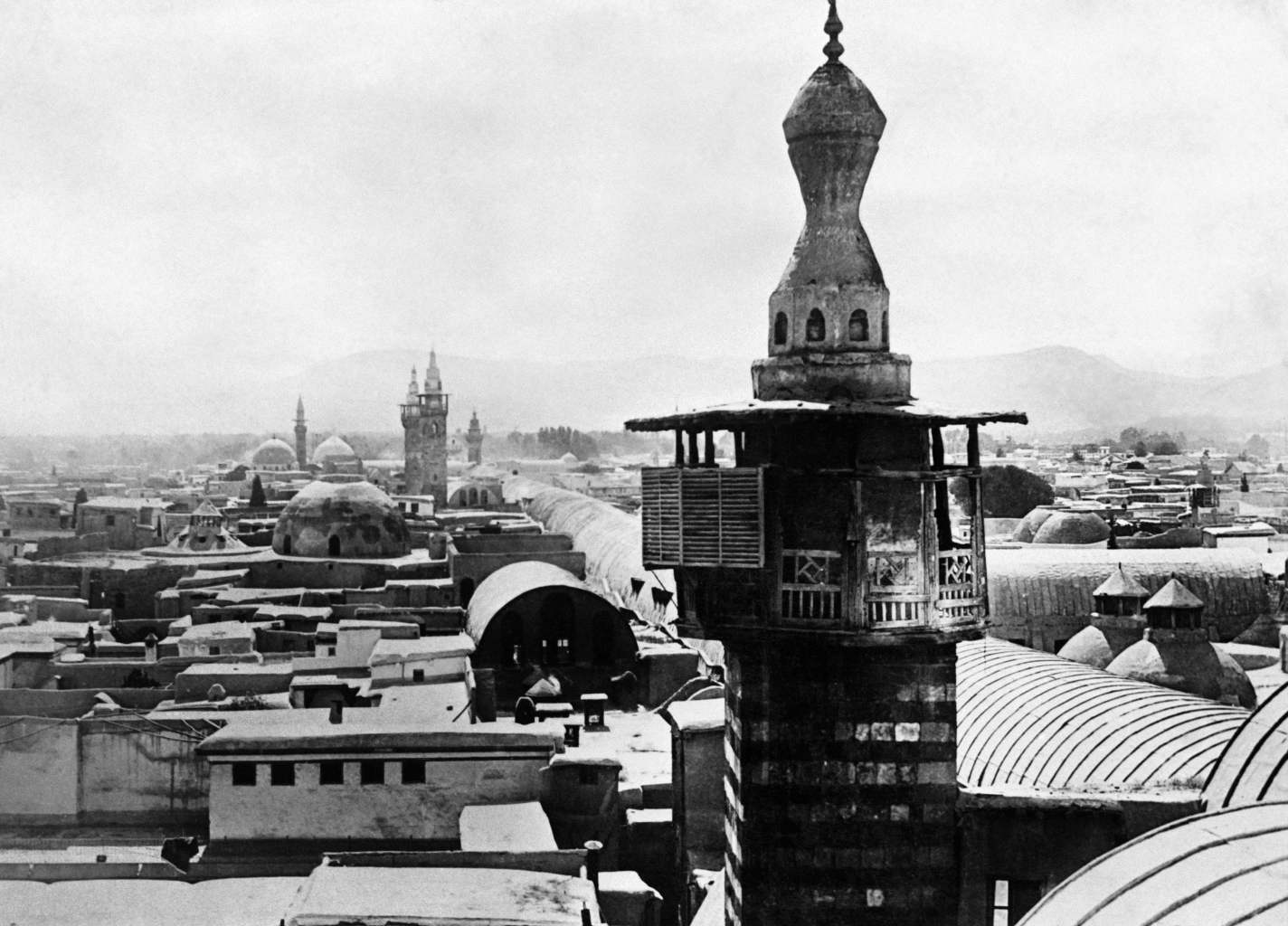
Picture released in the 30s showing the minaret of a Mosque, in Damascus. / AFP / STRINGER (Photo credit should read STRINGER/AFP/Getty Images)

Marc-William Palen
History Department, University of Exeter
Follow on Twitter @MWPalen

From when America needed Syria to fashion rules of the Colonial Atlantic, here are this week’s top picks in imperial and global history.

Continue reading “This Week’s Top Picks in Imperial & Global History”

Shooting Tigers in Early 20th-Century India

Bengal Tiger, Royal Albert Memorial Museum (RAMM), Exeter.

Rajarshi Mitra
Indian Institute of Information Technology

During my trip to Exeter to attend the Britain and the World Conference earlier this year, I discovered that the Royal Bengal Tiger on display in the Royal Albert Memorial Museum (RAMM) was a gift from King George V (1865 – 1936). Exeter’s Bengal tiger was one of 39 tigers the King had killed during his hunting excursion in Nepalese Terai in 1911 – the year of his grand Coronation Durbar in India. The accompanying plaque states that the King presented tiger skins to British museums so that visitors who have never seen a tiger could meet one face-to-face. Like any responsible museum, RAMM’s curators have taken care to send a nuanced message through its natural history exhibits. They raise our environmental guilt, they remind us of nature’s destruction in the hands of man. Tiger hunts in India have a rich history of their own, and that Exeter has somehow been made part of that history had me intrigued.   Continue reading “Shooting Tigers in Early 20th-Century India”

This Week’s Top Picks in Imperial & Global History

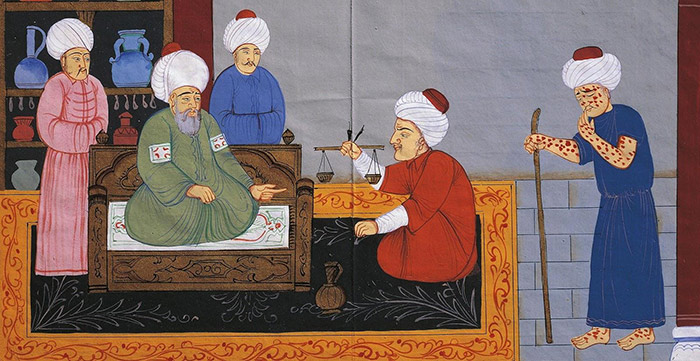
fake miniature
A fake miniature depicting the preparation of medicines for the treatment of a patient suffering from smallpox, purportedly from the Canon of Medicine by Avicenna (980-1037). Allegedly in the Istanbul University Library. Photo by Getty.

Marc-William Palen
History Department, University of Exeter
Follow on Twitter @MWPalen

From the global ways of white supremacy to the Stalinist Truman Show, here are this week’s top picks in imperial and global history. Continue reading “This Week’s Top Picks in Imperial & Global History”

The Weight of the Past in Franco-British Relations

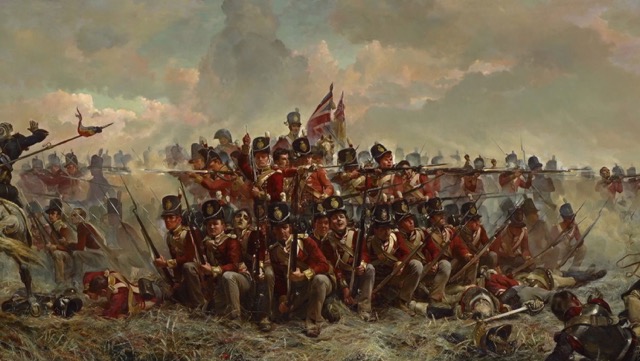
Elizabeth Thompson’s painting “The 28th Regiment at Quatre Bras” depicts the North Gloucestershire Regiment battling French cavalry two days before the 1815 Battle of Waterloo. Rendered in 1875 it captures the power of Waterloo in British political and historical imagination.

How does one measure the influence that history has on contemporary affairs and issues? Is it possible to fashion some kind of litmus test, through which we can assess the impact that perceptions of the past have had on the conceptualisation of national and transnational policies? It is questions like these that the AHRC research project ‘The Weight of the Past in Franco-British Relations’ will explore over the next three years. Led by Professor Peter Jackson (University of Glasgow) alongside co-investigators Dr Rachel Utley (University of Leeds) and Dr Rogelia Pastor-Castro (Strathclyde University) and post-doctoral research assistant Dr Rachel Chin (University of Glasgow), this project will assess the role that representations of the past have played in Franco-British relations since 1815. More specifically, it will seek to understand how history, or at least subjective constructions of history, has shaped policy debates in general and prospects for Franco-British co-operation in particular. Continue reading “The Weight of the Past in Franco-British Relations”

This Week’s Top Picks in Imperial & Global History

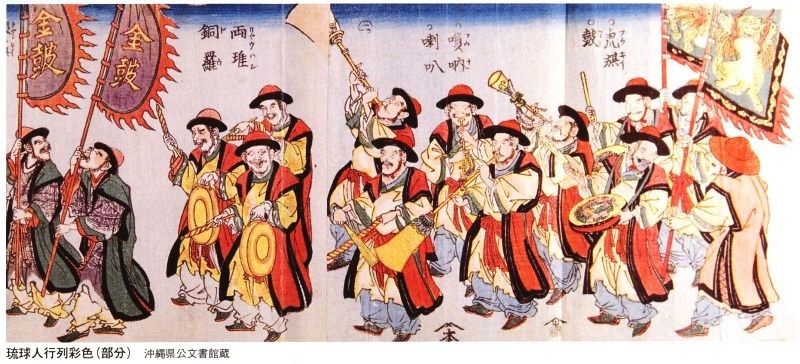
The Ryukyuan music parade or rojigaku consisted of fifteen or twenty musicians and was directed by a Japanese official called gieisei. In addition to performing when the mission reached or left an important destination, the musicians accompanied the parade of envoys along the streets of Edo, playing Chinese and Ryukyuan songs. Via Asia-Pacific Journal.

Marc-William Palen
History Department, University of Exeter
Follow on Twitter @MWPalen

From linking the Irish Revolution and the First World War to today’s lessons from the Warsaw ghetto, here are this week’s top picks in imperial and global history.

Continue reading “This Week’s Top Picks in Imperial & Global History”

This Week’s Top Picks in Imperial & Global History

Marc-William Palen
History Department, University of Exeter
Follow on Twitter @MWPalen

From globalizing ‘Gym Crow’ to the untold story of American isolationism, here are this week’s top picks in imperial and global history. Continue reading “This Week’s Top Picks in Imperial & Global History”

This Week’s Top Picks in Imperial & Global History

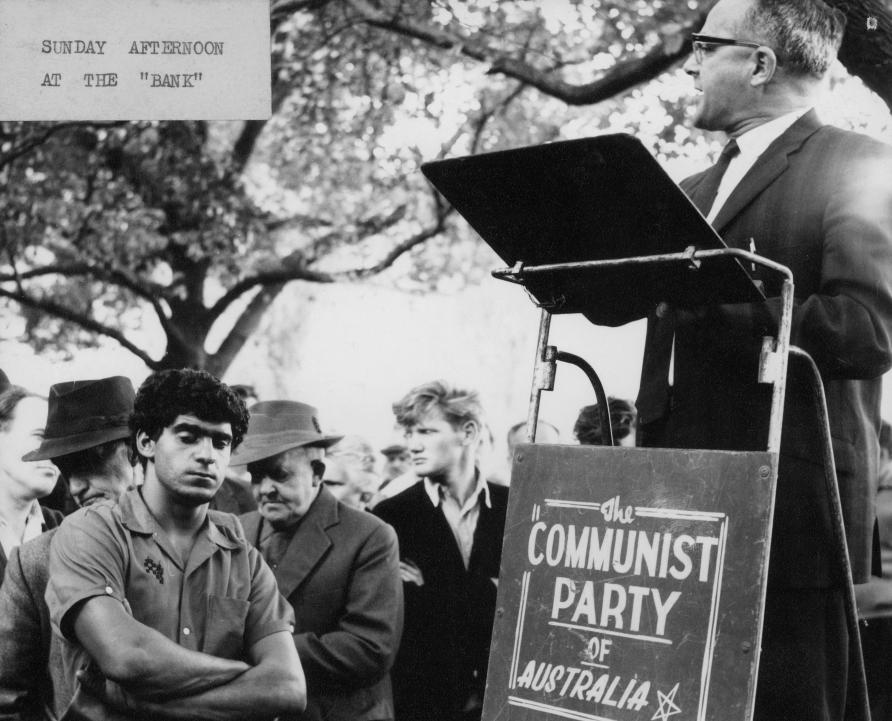
The Communist Party of Australia (CPA) condemned the Soviet invasion of Czechoslovakia in 1968, but the issue would eventually cause a split. Pictured is then CPA official Bernie Taft addressing listeners at Yarra Bank in Melbourne, c1960s. The University of Melbourne Archive’s new Bernie Taft Collection is one of the most significant resources on the history of the Australian left to become available in recent years. Picture: University of Melbourne Archives, Communist Party of Australia collection, 1991.0152.00099

Marc-William Palen
History Department, University of Exeter
Follow on Twitter @MWPalen

From black radicalism’s complex relationship with the Japanese Empire to how Soviet tanks shook up the Australian Left, here are this week’s top picks in imperial and global history. Continue reading “This Week’s Top Picks in Imperial & Global History”

Call for Editors – Journal of Global History

Professor William Gervase Clarence Smith, Professor Barbara Watson Andaya, and Professor Merry Wiesner-Hanks will shortly be coming to the end of their tenure as editors of the Journal of Global History (JGH). Cambridge University Press, in collaboration with an Editorial Board search committee, is now inviting applications for their successor(s).

The deadline for applications is 30 September, 2018.

JGH addresses the main problems of global change over time, together with the diverse histories of globalization. It also examines counter-currents to globalization, including those that have structured other spatial units. The journal seeks to transcend the dichotomy between ‘the West and the rest’, straddle traditional regional boundaries, relate material to cultural and political history, and overcome thematic fragmentation in historiography. The journal also acts as a forum for interdisciplinary conversations across a wide variety of social and natural sciences. Continue reading “Call for Editors – Journal of Global History”

This Week’s Top Picks in Imperial & Global History

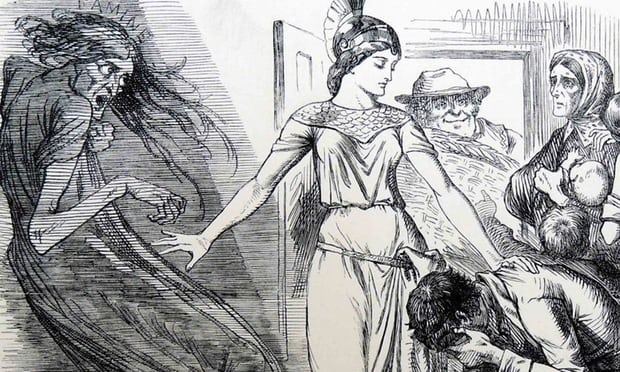
John Tenniel cartoon from 1862 showing Britannia visiting starving mill workers during the cotton famine

Marc-William Palen
History Department, University of Exeter
Follow on Twitter @MWPalen

From exporting US economic nationalism to rediscovering the 1860s cotton famine, here are this week’s top picks in imperial and global history.

Continue reading “This Week’s Top Picks in Imperial & Global History”

“The present is never present – it is already past. Humanitarian action in an age of reorder” – by Markus Geisser

2 ICRC Staff Members Killed in Attack in Yemen

Cross-posted from Humanitarianism & Human Rights

AHRC Care for the Future, in partnership with Exeter’s IIB and the GHRA 2018, invited Markus Geisser, Senior Humanitarian Policy Advisor at the International Committee of the Red Cross to give a public keynote at the Royal Albert Memorial Museum & Art Gallery Exeter. Markus looks back to a long career as humanitarian practitioner and accordingly he referred in his talk to this long experience.

Markus joined the ICRC in 1999 and carried out his first mission as an ICRC delegate in the Democratic Republic of Congo (DRC). This was followed by several years managing field operations in Myanmar, Thailand, Liberia, Darfur (Sudan) and then again in eastern DRC. From 2006 until 2013, he worked in senior management positions in countries affected by the so-called “Global War on Terror”, first in Iraq and Jordan, then in southern Afghanistan and in Washington DC. From 2013 until 2015, he served as Deputy Head of the division working on humanitarian policy and multilateral diplomacy at the ICRC’s headquarters in Geneva. In March 2015 he joined the ICRC Mission to the United Kingdom and Ireland as Senior Humanitarian Affairs and Policy Advisor.

What Christopher Nolan left out: Dunkirk’s Indian soldiers

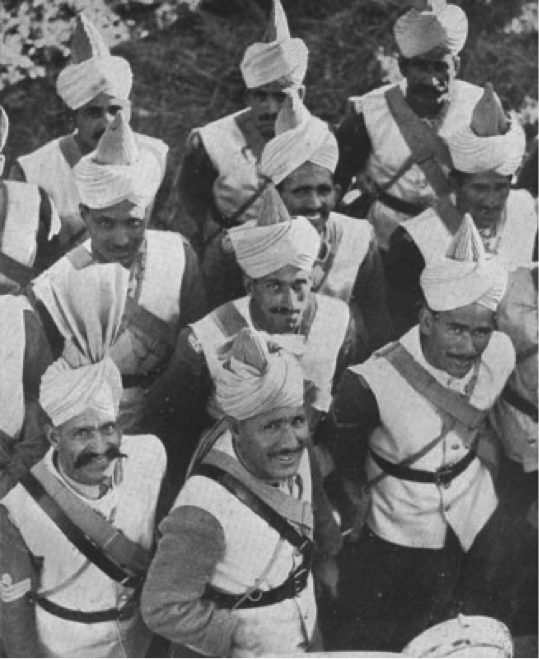
Len Puttnam, Men of K6 shortly after disembarking at Marseille, January 1940. Imperial War Museum F2016.

Ghee Bowman
University of Exeter

It’s been a year now since Christopher Nolan’s film Dunkirk was released to critical acclaim, public approval and criticism. Much of the criticism arose because the film omitted any mention of the Commonwealth troops who were in the British Expeditionary Force (BEF) and at Dunkirk.[1] It felt like a missed opportunity to correct an anomaly in the collective memory of Britain and the world: to remember the mule drivers of the Royal Indian Army Service Corps (RIASC) who were also on those beaches.

So here’s the missing piece of the story, derived from my research into Dunkirk’s Indian soldiers.

On May 29, 1940, in the middle of the evacuation of Dunkirk, with thousands of British soldiers lined up on the beaches east of the French town, with a giant pall of smoke from the burning oil refinery, with regular sorties by Luftwaffe planes scattering the queues, and with ships large and small taking men off the beaches, Major Mohammed Akbar Khan of the RIASC marched four miles along the beach at the head of 312 Muslim Indians, en route from Punjab to Pirbright.

These were the men of Force K6. Continue reading “What Christopher Nolan left out: Dunkirk’s Indian soldiers”

This Week’s Top Picks in Imperial & Global History

Marc-William Palen
History Department, University of Exeter
Follow on Twitter @MWPalen

From liberal romances of empire to a Russian sailor’s tomb in Singapore, here are this week’s top picks in imperial and global history. Continue reading “This Week’s Top Picks in Imperial & Global History”

Brexit, Food Prices, and History

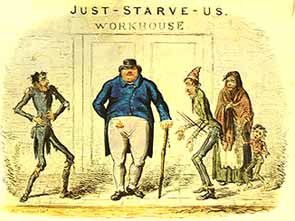
workhouse

Marc-William Palen
History Department, University of Exeter
Follow on Twitter @MWPalen

In case you missed it,  rumors of the May government’s plan to stockpile food supplies have finally gotten people talking about what Brexit will mean for food prices. As dedicated readers of the Forum know, I’ve been trying to draw attention to this important issue ever since the referendum vote.

Two years ago, I organized and chaired a roundtable, “Brexit and Food Prices: The Legacy of the Hungry Forties,” as part of our Global Economics & History Forum at History & Policy. The panelists were Prof. Anthony Howe (East Anglia); Geoff Tansey (Food Systems Academy); Dr. Lindsay Aqui (Queen Mary); and Prof. Sarah Richardson (Warwick).

Professor Anthony Howe (East Anglia) – The Hungry Forties and the Rise of Free Trade England

Dr Sarah Richardson (Warwick) – Food is a Feminist Issue: the legacy of the hungry forties and women’s rights in England

Dr Lindsay Aqui (Queen Mary) – Butter, Bacon and the British Housewife: Food Prices and the 1975 Referendum

Geoff Tansey (Curator, Food Systems Academy; Chair, Fabian Commission on Food and Poverty) – Food: policy, (in)security, poverty, inequality, power, control & Brexit

You can  listen to the podcast recording of the roundtable below: Continue reading “Brexit, Food Prices, and History”