Imagining Markets 3rd Workshop – Cambridge, 7 April

Cross-posted from Imagining Markets

Below are the details of the 3rd workshop of the Imagining Markets network. The network brings together scholars working in the fields of Imperial, European, and Asian studies, and scholars from cultural studies and economic studies, which have become increasingly separated branches of enquiry calling for reintegration. Working with and through a range of public policy intermediaries including History and Policy, the Churchill Archives Centre, and the Institute of Commonwealth Studies this project will provide policy-makers with an inter-disciplinary analysis of the long-term development of British overseas trade, which in turn will illuminate the diversity of cultural values and political perspectives that have, and continue to be, brought to bear in growing exports to key markets. There are still a handful of places available. If you wish to attend, please email Dr. David Thackeray. Continue reading “Imagining Markets 3rd Workshop – Cambridge, 7 April”
The Historians’ Group of the Communist Party – Ten Years that Reshaped History

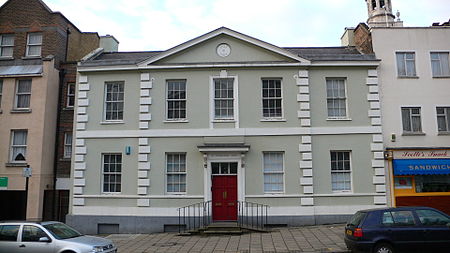
In late 1946 a group of historians, friends and members of the Communist Party started regularly meeting in Marx’s House in London, picture here.
In late 1946 the Historians’ Group – made up of historians, friends, and members of the Communist Party – started regularly meeting in Marx’s House in London, pictured here.

Gil Shohat
Humboldt University Berlin

In today’s history cosmos, terms such as ‘History from Below’, ‘People’s History’ and ‘Social History’ belong to the essential canon of most academics and students. Thus, it is important to remember how these terms found their way into historiography before they were considered legitimate. Members of the Communist Party Historians’ Group in the UK laid the cornerstone for a new paradigm in historiography, today largely referred to as Social History, in the late 1940s and early 1950s. But exactly how did these historians perceive their own role as academic insurgents in the heart of ‘Whig history’ and what were the problems facing them as historians and members of the Communist Party of Great Britain (CPGB)? Continue reading “The Historians’ Group of the Communist Party – Ten Years that Reshaped History”

This Week’s Top Picks in Imperial & Global History

Lisbon 1975 2
Street scene, Lisbon 1975. Photo: Mieremet, Rob / Anefo, National Archives of the Netherlands / Anefo, licence CC-BY

Marc-William Palen
History Department, University of Exeter
Follow on Twitter @MWPalen

From 1970s colonialism in Lisbon to saving digital archives, here are this week’s top picks in imperial and global history.

Continue reading “This Week’s Top Picks in Imperial & Global History”

Revisiting Churchill’s “Iron Curtain” Speech 70 Years After

1946_Churchill's-'Iron-Curtain'-speech

Richard Toye
History Department, University of Exeter

Follow on Twitter @RichardToye

The 5th of March marks the seventieth anniversary of Winston Churchill’s speech in Fulton, Missouri, in which he declared that an ‘iron curtain’ had descended across Europe. Delivered in the presence of US President Harry Truman, who had been instrumental in securing the former Prime Minister his invitation to speak, the address is well known as a landmark in the onset of the Cold War. Yet it is rarely considered in its full historical context. For the speech – formally entitled ‘The Sinews of Peace’ – was not merely a criticism of Russia. It was the means by which Churchill publicly enunciated his vision for a new world order. Continue reading “Revisiting Churchill’s “Iron Curtain” Speech 70 Years After”

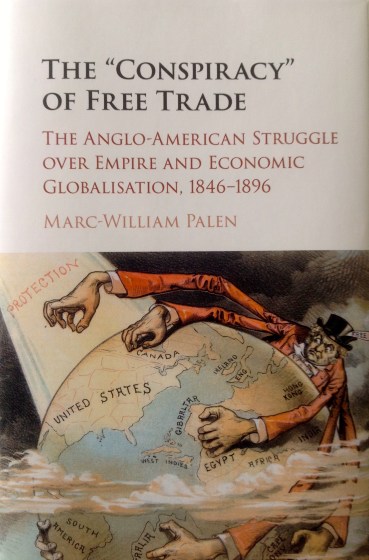
The “Conspiracy” of Free Trade

Book cover

Marc-William Palen
History Department, University of Exeter
Follow on Twitter @MWPalen

Living as we do in an era where many of the world’s political elites commonly support free trade initiatives, it is perhaps difficult to imagine that the global economy looked very different in the late 19th century. Aside from the notable case of Free Trade England, most nations in the latter half of the 19th century sought safety from the gales of modern global market competition behind ever higher tariff walls, buttressed with government subsidies to domestic industries and imperial expansion. The United States was the exemplar of this global turn to economic nationalism and empire.

In the wake of the Second World War, the United States would become the leading proponent of free trade. But for nearly a century before, American foreign trade policy was dominated by extreme economic nationalism. What brought about this pronounced ideological, political, and economic about face? How did it affect Anglo-American imperialism? What were the repercussions for the global capitalist order? In answering these questions, my new book, The “Conspiracy” of Free Trade (Cambridge University Press, 2016), offers the first detailed account of the controversial Anglo-American struggle over empire and economic globalization in the mid to late 19th century. Continue reading “The “Conspiracy” of Free Trade”

This Week’s Top Picks in Imperial & Global History

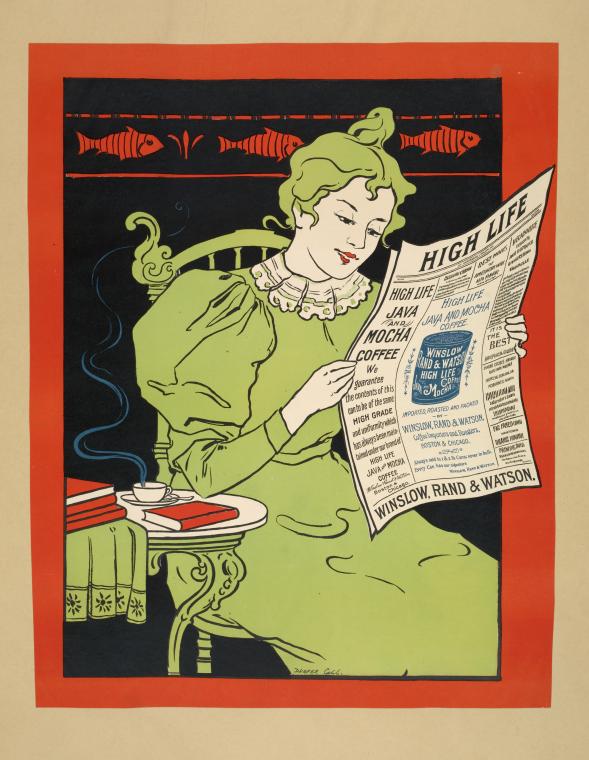
From the New York Public Library's digital posters. Via Open Culture.
From the New York Public Library’s digital posters. Via Open Culture.

Marc-William Palen
History Department, University of Exeter
Follow on Twitter @MWPalen

From being black in the USSR to the Revenant‘s justification of settler colonialism, here are this week’s top picks in imperial and global history. Continue reading “This Week’s Top Picks in Imperial & Global History”

What Was Distinctive About the Eighteenth-Century Local Press?

print

Richard Toye
History Department, University of Exeter

Follow on Twitter @RichardToye

In today’s world, news is everywhere: news communicated by the press, by other media bodies, and increasingly by anyone who wants to share something with the world via Facebook or Twitter, or via a blog like this one! In this new series of podcasts, based around our Third Year undergraduate module on News, Media, and Communication (HIH 3617) Exeter academics will examine how different societies transmit and receive information. The relationship between oral, visual, and written modes of communication, and the impact of technological advances upon news and the media will be examined, as will debates about the role of the media within societies.

What was the relationship between news, media, and state power; and between money, power, and the press? How did the media influence the conduct of war? What impact did the invention of printing, or of television, have on the communication of news, and how did the new technologies interact with social and cultural assumptions to shape what was considered to be ‘news’?

In this video, Professor Jeremy Black and Professor Richard Toye discuss the role of the local and regional press in Britain.

Call For Papers: Embassies in Crisis

Screen Shot 2016-02-21 at 12.21.01BIHG logoEmbassies in Crisis

British Academy, 9 June 2016

Call for Papers

This one-day conference will combine academic papers with a seminar session at which serving and former Embassy staff will be invited to present their testimonies and perspectives. The intention is to present a summary of the conference findings to the FCO to help inform future thinking in this area. The event will be held at the British Academy, 9 June 2016.

Embassies have long been integral to international diplomacy, their staff instrumental to inter-governmental dialogue, strategic partnerships, trading relationships and cultural exchange. But Embassies are also discrete political spaces. Notionally sovereign territory ‘immune’ from local jurisdiction, in moments of crisis Embassies have often been targets of protest and sites of confrontation. Embassies in Crisis will revisit flashpoints in the lives of Embassies overseas. Approaching Embassies as distinct communities with their own micro-histories, this conference seeks to explore each of these aspects in the lives of Embassies and the people who run them. Papers are welcomed that discuss instances of international confrontation or mass demonstration, past and present, that placed particular Embassies in the global spotlight. Continue reading “Call For Papers: Embassies in Crisis”

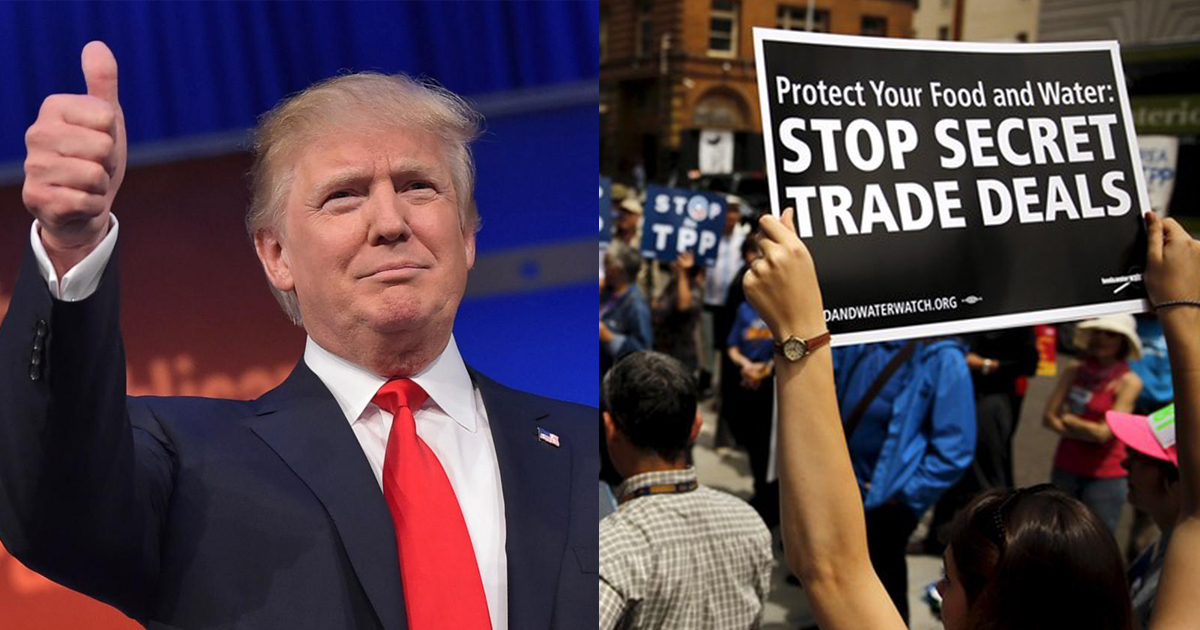
Trump’s anti-trade tirades recall GOP’s protectionist past

trump_tpp

Marc-William Palen
History Department, University of Exeter
Follow on Twitter @MWPalen

Cross-posted from the Conversation

As Donald Trump continues his quest for the Republican nomination, free trade agreements remain in his crosshairs.

The billionaire has been making waves by opposing American free trade initiatives like the massive Trans-Pacific Partnership (TPP) – just signed earlier this month by ministers of the 12 Pacific Rim member nations – and even the 21-year-old North American Free Trade Agreement (NAFTA). As Trump put it in November, right now “free trade’s no good” for the United States.

It may sound strange for the leading GOP candidate for president to be bad-mouthing free trade, but this is a protectionist sentiment that more and more Republicans appear to be warming up to.

It’s also a protectionist sentiment that’s drawn from the party’s paranoid past, as I’ve explored in my new book on Anglo-American trade. Continue reading “Trump’s anti-trade tirades recall GOP’s protectionist past”

“End the Autocracy of Color”: African Americans and Global Visions of Freedom

Keisha N. Blain*
University of Iowa

Historically, black men and women in the United States frequently linked national and geopolitical concerns. Recognizing that the condition of black people in the United States was “but a local phase of a world problem,” black activists articulated global visions of freedom and employed a range of strategies intent on shaping foreign policies and influencing world events.

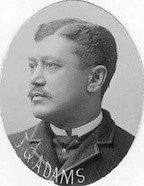
John Q. Adams
John Q. Adams

During the early twentieth century, John Q. Adams, an African American journalist, called on people of African descent to link their experiences and concerns with those of people of color in other parts of the globe. Born in Louisville, Kentucky in 1848, Adams moved to St. Paul, Minnesota in 1886, where he became associate editor, and subsequent owner, of the Appeal newspaper. The paper’s debut coincided with key historical developments of the period including the hardening of U.S. Jim Crow segregation laws, the rising tide of anti-immigration sentiment, and the rapid growth of American imperial expansion overseas.

Amidst the sociopolitical upheavals of the early twentieth century, Adams utilized the Appeal as a public platform from which to denounce global white supremacy and advocate for the liberation of people of color. These ideas gained increasing currency during World War I, a watershed moment in the history of black internationalist politics. The millions of black people who served the War effort—in the United States and in colonial territories in Africa, Latin America, and the Caribbean—demanded the immediate end of discrimination, racism, colonialism, and imperialism. Continue reading ““End the Autocracy of Color”: African Americans and Global Visions of Freedom”

This Week’s Top Picks in Imperial & Global History

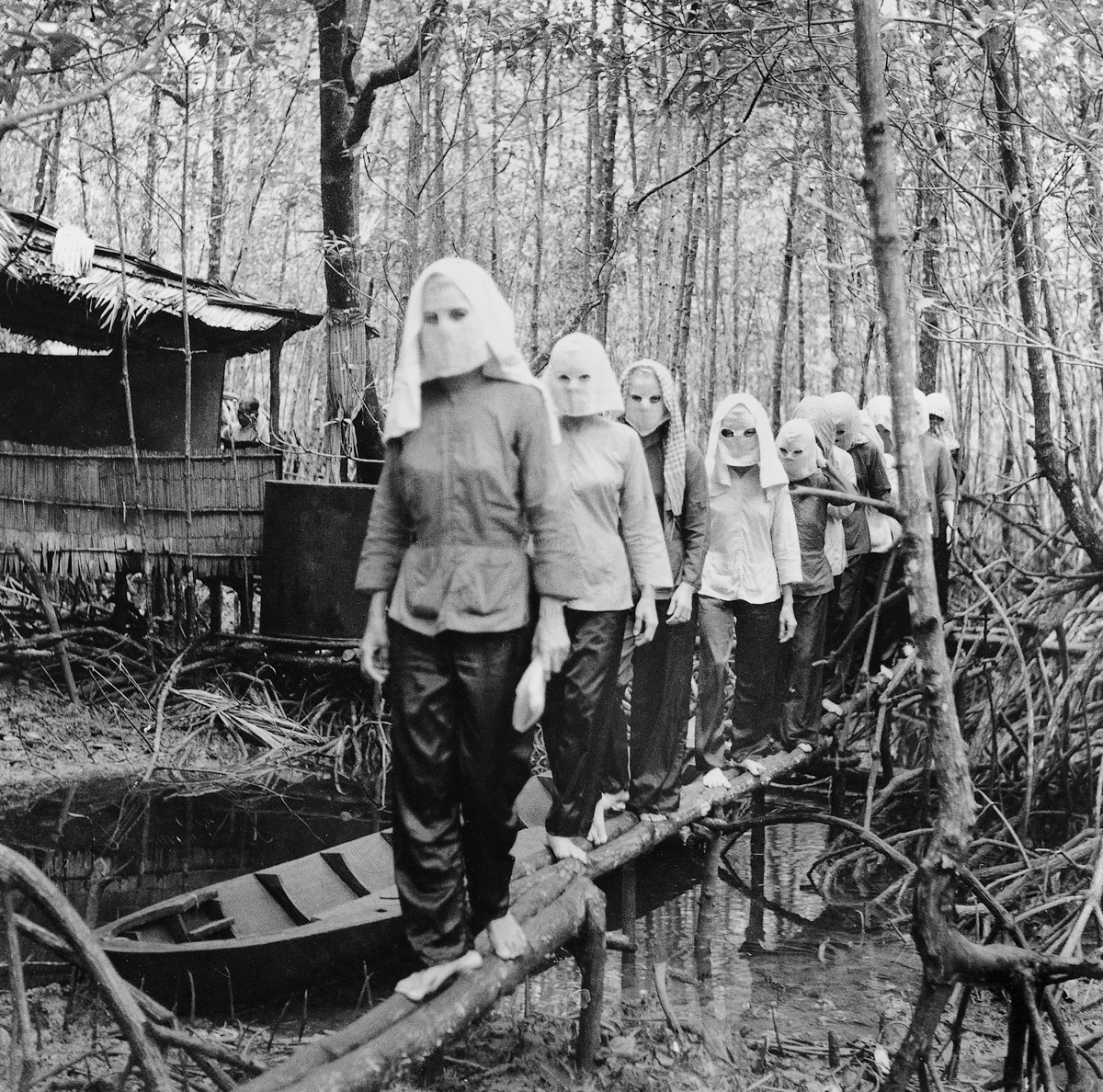
Activists meet in the Nam Can forest, wearing masks to hide their identities from one another in case of capture and interrogation.  IMAGE: VO ANH KHANH/ANOTHER VIETNAM/NATIONAL GEOGRAPHIC BOOKS
Activists meet in the Nam Can forest, wearing masks to hide their identities from one another in case of capture and interrogation.
IMAGE: VO ANH KHANH/ANOTHER VIETNAM/NATIONAL GEOGRAPHIC BOOKS

Marc-William Palen
History Department, University of Exeter
Follow on Twitter @MWPalen

From Gandhi the imperialist to writing global intellectual history, here are this week’s top picks in imperial and global history. Continue reading “This Week’s Top Picks in Imperial & Global History”

CFP: (Re)Thinking Yugoslav Internationalism – Cold War Global Entanglements and Their Legacies

call-for-paper

When: Graz, 30 September – 1 October 2016

Where: Centre for Southeast European Studies, University of Graz, and the University of Exeter

For more than forty years, Yugoslavia was one of the most internationalist and outward looking of all socialist countries in Europe, playing leading roles in various trans-national initiatives – principally as central participant within the Non-Aligned Movement – that sought to remake existing geopolitical hierarchies and rethink international relations. Both moral and pragmatic motives often overlapped in its efforts to enhance cooperation between developing nations, propagate peaceful coexistence in a divided world and pioneer a specific non-orthodox form of socialism.

Continue reading “CFP: (Re)Thinking Yugoslav Internationalism – Cold War Global Entanglements and Their Legacies”

Empire of Things

The following are two excerpts from Prof Frank Trentmann‘s new book, Empire of Things: How We Became a World of Consumers, from the Fifteenth Century to the Twenty-First (UK: Allen Lane, 2016; USA: HarperCollins, 2016), cross-posted from BirkbeckIn the book, Prof. Trentmann unfolds the extraordinary history that has shaped our material world, from late Ming China, Renaissance Italy and the British empire to the present. 

EmpireOfThings_MockUp_Front - Copy (2)Introduction

We live surrounded by things. A typical German owns 10,000 objects. In Los Angeles, a middle-class garage often no longer houses a car but several hundred boxes of stuff. The United Kingdom in 2013 was home to 6 billion items of clothing, roughly a hundred per adult; a quarter of these never leave the wardrobe. Of course, people always had things, and used them not only to survive but for ritual, display and fun. But the possessions in a pre-modern village or an indigenous tribe pale when placed next to the growing mountain of things in advanced societies like ours. Continue reading “Empire of Things”

This Week’s Top Picks in Imperial & Global History

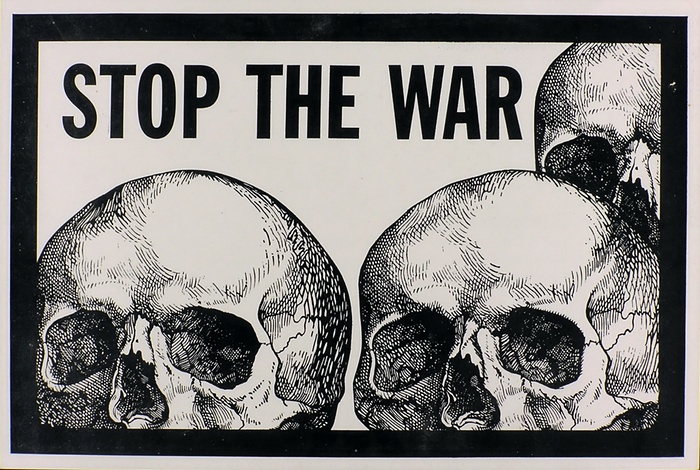
150 surviving prints of the anti-Vietnam war artworks made at University of California, Berkeley, are to be shown in a new exhibition at Shapero Modern, London, as featured on the Guardian
One of 150 surviving prints of the anti-Vietnam war artworks made at University of California, Berkeley, are to be shown in a new exhibition at Shapero Modern, London, as featured on the Guardian.

Marc-William Palen
History Department, University of Exeter
Follow on Twitter @MWPalen

From militant Third World liberation to the fallacy of collective memory, here are this week’s top picks in imperial and global history. Continue reading “This Week’s Top Picks in Imperial & Global History”