This Week’s Top Picks in Imperial & Global History

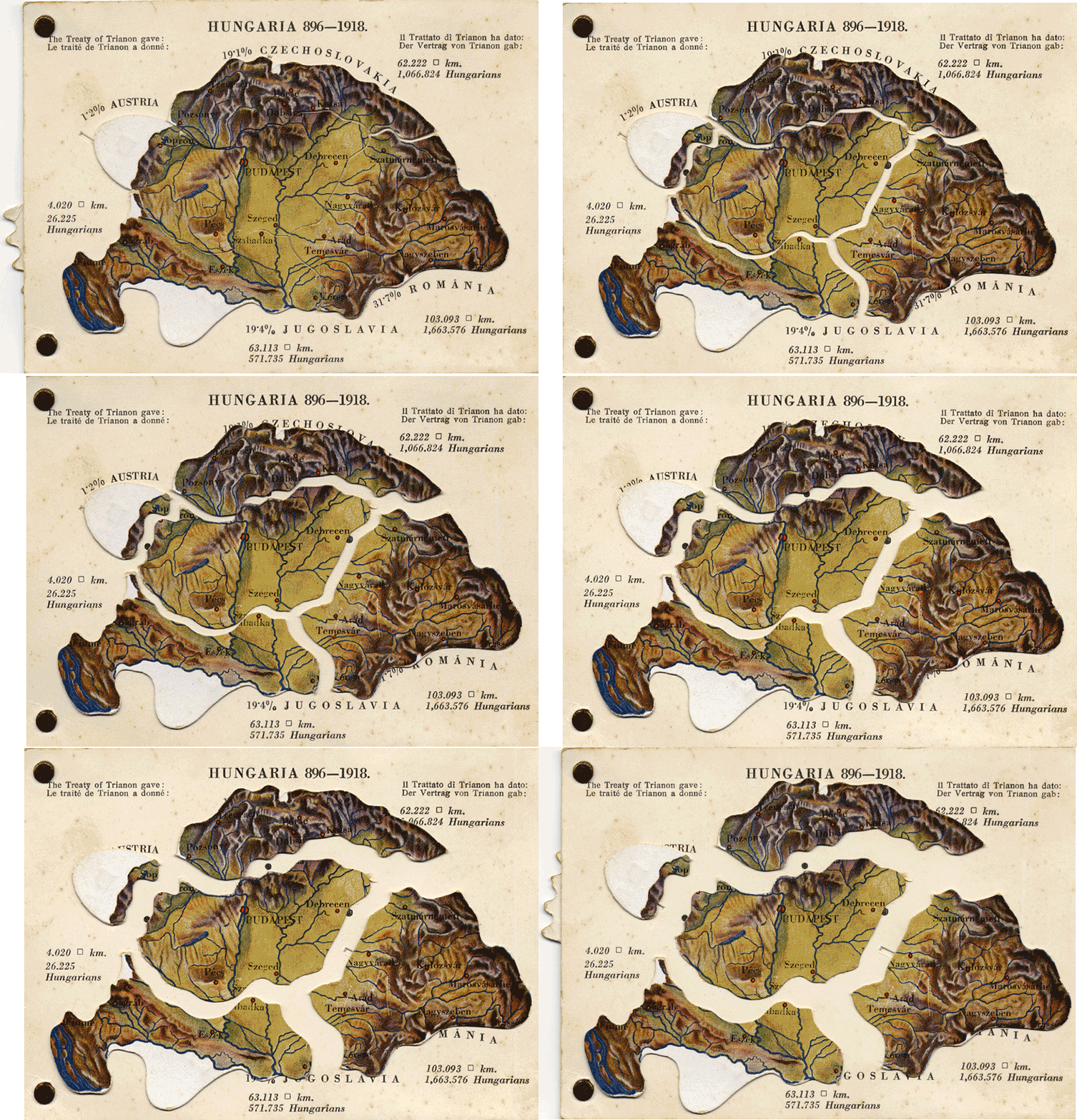
A mechanical postcard-form protest published by the Hungarian's Women's National Association, 1920, protesting the division of Hungaria by the Treaty of Trianon. A dial on the side of the card splits the country into its new political boundaries. Wofsonian
A mechanical postcard published by the Hungarian Women’s National Association, 1920, protesting the division of Hungaria by the Treaty of Trianon. A dial on the side of the card splits the country into its new political boundaries. Courtesy of Wofsonian

Marc-William Palen
History Department, University of Exeter
Follow on Twitter @MWPalen

From the Great War’s global effects to ISIS’s anti-Western gold currency, here are this week’s top picks in imperial and global history. Continue reading “This Week’s Top Picks in Imperial & Global History”

PhD Funding Available: Last Day to Register for AHRC Doctoral Training Information Day

ExeterDr. Stacey Hynd
Director of Postgraduate Research, History Department

If you are seeking PhD funding in the fields of World, Global, Imperial or Transnational History, please consider the following funding opportunities at the University of Exeter.

The Doctoral Training Partnership is hosting an Information Day at the National Museum of Wales on 24 November (registration closes on 10 Nov). If you cannot attend this information day, please feel free to contact the Director of Postgraduate Research, Dr Stacey Hynd (s.hynd@exeter.ac.uk), and she will answer any questions you have about our research community.

History at the University of Exeter has two research centres in the broad field of world history: the Centre for Imperial and Global History, and the Centre for War, State and Society. Both offer internationally-recognised supervision with geographical coverage from 30 staff across African, Asian (including Chinese), Middle Eastern, North American, Latin American, Imperial, and European history from early-modern to contemporary eras. The Centres have particular research interests in:

  • Globalisation’s past and present
  • Comparative empires and transnationalism
  • Humanitarianism, development and human rights
  • Law and colonialism
  • Political economy and the imperial state
  • Europe, decolonisation and the legacies of empire
  • The impact of armed conflict on society
  • Colonial warfare and counterinsurgency
  • Maritime history

Continue reading “PhD Funding Available: Last Day to Register for AHRC Doctoral Training Information Day”

Globalisation and the Roman World

Martin Pitts
Classics Department, University of Exeter
Associate Member, Centre for Imperial & Global History

pittscoverGlobalisation and the Roman World (2014), edited by myself and Miguel John Versluys (Leiden University), is a new book that examines the case for understanding the ancient Roman world as one of the earliest examples of globalisation. This is a controversial project, not least because many Roman historians and archaeologists feel that the word globalisation is inappropriate to use when discussing the ancient world. In their view, Rome was a completely different beast to the image of western capitalism which is frequently conflated with globalisation, and of course, the Roman world was never global in a literal sense.

Despite this reluctance to engage with globalisation, a group of archaeologists and historians feel there is sufficient mileage to explore the application of the concept to the Roman world in more detail, having for themselves overcome the initial objections of the critics. For these Romanists, a major impetus is to critically examine the possibilities of a new explanatory framework based on increasingly popular notions of connectivity and networks. Likewise, many felt dissatisfied with a state of affairs in which older ideas of Romanisation and imperialism had been deconstructed, but not adequately replaced with something better. At the same time, from the perspective of those contributors coming from outside the discipline, the exploration was overdue since ideas of Rome have long been (mis)appropriated in modern writings on globalisation. Continue reading “Globalisation and the Roman World”

This Week’s Top Picks in Imperial & Global History

ideology

Marc-William Palen
History Department, University of Exeter
Follow on Twitter @MWPalen

From imperialist feminism to the meaning of ideology, here are this week’s top picks in imperial and global history. Continue reading “This Week’s Top Picks in Imperial & Global History”

Empire: The Controversies of British Imperialism

MOOC pic

Exeter’s Centre for Imperial and Global History launches a new, free online course.

We are delighted to announce that, starting in January 2015, we will be running a Massive Open Online Course (MOOC) on the history of the British Empire.

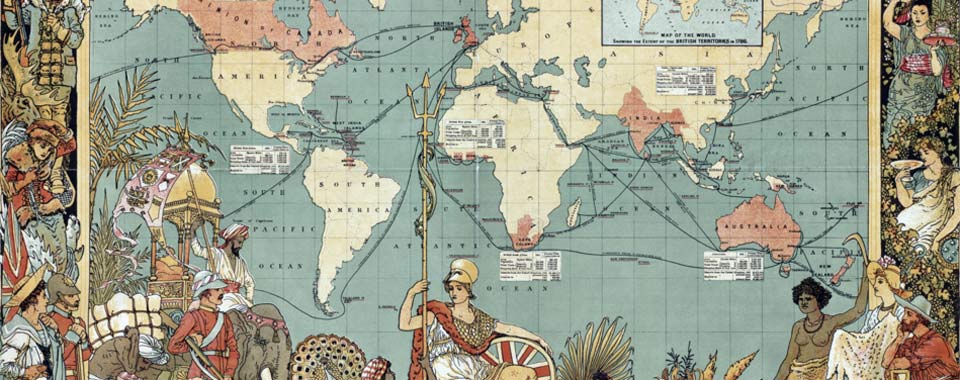
The British Empire was the largest empire ever seen. It ruled over a quarter of the world’s population and paved the way for today’s global economy. But British imperialism isn’t without controversy, and it continues to cause enormous disagreement among historians today.This free online course will help you understand why.

Continue reading “Empire: The Controversies of British Imperialism”

International Security: Is It as Bad as It Seems?

Cross-posted from RKT Exeter

NATO

A Lecture by Dr Jamie Shea, NATO
Date: 20 November 2014
Time: 18:00 to 19:45
Place: Alumni Auditorium

[Editor’s note: The talk is being hosted as part of the HASS Strategy Global Uncertainties theme, led by Professor Steve McCorriston, an Associate Member of the Centre for Imperial & Global History. The talk will be followed by a discussion led by Professor Doug Stokes, also a Centre Associate.]

Certainly, security challenges appear to be impacting on the NATO countries faster, and in less tractable forms, than in recent decades when NATO was able to deal more or less with one major challenge at a time; be it Bosnia, Kosovo, Afghanistan or Libya. Recent events have given many people the impression that the world is sliding into disorder and in some places (such as the Middle East) even anarchy.

Now the Alliance has to return to its core task of collective territorial defence in Eastern Europe, vis-à-vis a resurgent Russia, while being ready for more crisis management and defence capacity-building in the Middle East and North Africa to help the fragile states in these regions cope with the challenge of the Islamic State and other Jihadist movements.  Continue reading “International Security: Is It as Bad as It Seems?”

This Week’s Top Picks in Imperial & Global History

Swiss child labor

Marc-William Palen
History Department, University of Exeter
Follow on Twitter @MWPalen

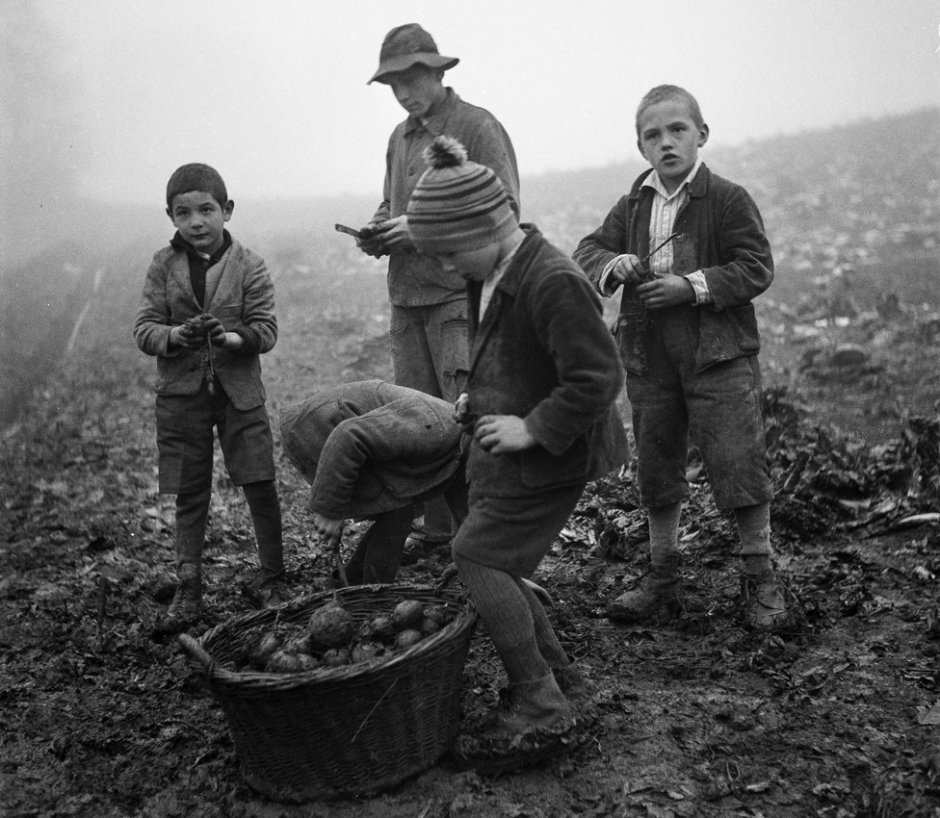
From a century of using Swiss children as cheap farm labor, to the many crises of 21st-century imperialism, here are this week’s top picks in imperial and global history. Continue reading “This Week’s Top Picks in Imperial & Global History”

Exeter’s Dr. Singh Featured in BBC’s ‘Soldiers of the Empire’

Singh headshot
Dr. Gajendra Singh

BBC Radio 4 recently featured the Centre’s Dr. Gajendra Singh in its ‘Soldiers of Empire’ series, ‘The Fight for Fairyland’ (especially at 17 minutes and 26 minutes). This episode:

tells the story of the Indian Army on the Western Front, from disembarkation in Marseilles where the troops were greeted by excited crowds, to the grim reality of the trenches. Ill-equipped and inadequately trained for industrial combat, they nonetheless resolutely held one third of the British frontline between October and December 1914.

Continue reading “Exeter’s Dr. Singh Featured in BBC’s ‘Soldiers of the Empire’”

Introducing: Centre Associates

Andrew Thompson_1000785_0Andrew Thompson
Director, Centre for Imperial & Global History
University of Exeter

Though based in the Department of History, Exeter’s Centre for Imperial & Global History is very keen to reach out into other areas of the College and the wider University. We share interests with a number of colleagues based in other departments who work on aspects of the history of empires as well as different dimensions of global history. The possibilities this opens up for collaborative work, for productive exchanges across disciplines, and for supporting one another’s seminars and conferences, are striking. We have recently invited a number of such colleagues to join us as Associate Members (appended below). Many of them are already in conversation with us, and we look forward to continuing these conversations in the future and in some cases to joint projects emerging out of them. If there are other scholars who would be interested in linking with us who we have not yet made contact with, and who are not on the list below, we’d be delighted to hear from you.

Centre Associates include: Continue reading “Introducing: Centre Associates”

This Week’s Top Picks in Imperial & Global History

seuss isolation
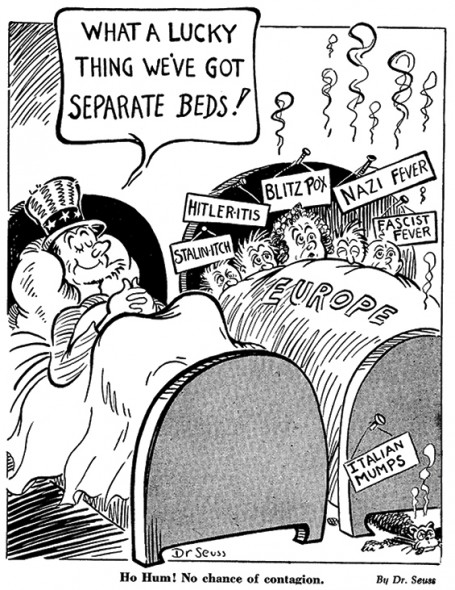
One of many Dr. Seuss anti-isolationist cartoons from the early 1940s. PM Magazine/Dr. Seuss

Marc-William Palen
History Department, University of Exeter
Follow on Twitter @MWPalen

From MI5’s Cold War obsession with historians, to the myth of American isolationism, here are this week’s top picks in imperial and global history. Continue reading “This Week’s Top Picks in Imperial & Global History”

15 Analyst Positions Available for Early Career UK Historians/Social Scientists

Graduate Analyst / Scientist – Ref:1429916

DepartmentDefence Science and Technology Laboratory

Deadline: 23 November 2014

Job Description: Graduate Analysts / Scientists within the area of social sciences help to deliver objective and independent scientific advice to MOD and wider Government on issues including training, equipment, personnel, information, concepts and doctrine, organisation, infrastructure, logistics, interoperability and sustainability, to inform senior decision makers’ choices on capability, balance of investment and future requirements.

Working as part of a team, you will be involved in analysing defence and security issues of a tactical, strategic or political nature applying often innovative analysis and Operational Research techniques. This may include collecting, managing and analysing data within projects, and developing bespoke tools, models and techniques to solve challenging new problems, often using a multidisciplinary approach. Depending on your area of expertise, your work may also include: developing, analysing and evaluating novel or emerging techniques; modelling and simulation and applied/fundamental research in specialist areas.

In order to fulfil these roles, Dstl employs analysts and scientists from a diverse and wide range of social science backgrounds, in order to allow for holistic analysis to be undertaken. These backgrounds include: psychology (social, forensic, cognitive and occupational), anthropology, sociology, behavioural science, human sciences, physiology, media & communication studies, marketing, journalism studies, history, criminology, management science, war studies, international relations, strategic studies, geography, political science, intelligence analysts and social network analysts. [continue reading]

For further details, click here.

This Week’s Top Picks in Imperial & Global History

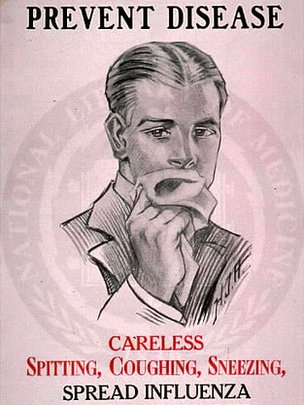
influenze spreading disease

Marc-William Palen
History Department, University of Exeter
Follow on Twitter @MWPalen

From the West’s decline to globalizing time, here are this week’s top picks in imperial and global history. Continue reading “This Week’s Top Picks in Imperial & Global History”

Nuclear Weapons and the 50th Anniversary of the 1964 General Election

Image, adapted from Dr. Strangelove (1964).

Andrew Holt
History Department, University of Exeter

The future of Britain’s independent nuclear deterrent remains a controversial subject. Debate continues as to the nature of the replacement for the Trident force of Vanguard class submarines – or whether they should be replaced at all. Whatever their respective views, it is difficult to imagine either David Cameron or Ed Miliband choosing to put the matter at the forefront of their campaigns for the May 2015 general election. Yet 50 years ago today, that is exactly the issue upon which the prime minister chose to base his campaign. Continue reading “Nuclear Weapons and the 50th Anniversary of the 1964 General Election”

Culture Makes All The Difference: Reclaiming the Culture of Economics

economics2-450x230

Andrew Thompson
Director, Centre for Imperial & Global History
History Department, University of Exeter

An earlier version of this article appeared in the Conversation

Last week I attended the final “Provocation” of the Warwick Commission on the Future of Cultural Value. Several such enquiries are currently in train. Together they promise a major re-examination of the UK’s arts and culture as one of the country’s greatest assets. They will no doubt touch on many things. But it will be particularly interesting to see what they have to say about the influence of culture on the economy. For this is the holy grail of the quest to quantify cultural value – a very old question yet one stubbornly resistant to an answer.

Culture, as described by one celebrated critic, is among the most awkward words in the English language. The broad and diffuse nature of the concept has meant that many economists have long been reluctant co-opt culture into their debates about development. Yet the case for spending public money on culture is greatly weakened by this failure to get to grips with its relationship to the economy.  At a time when the Institute for Fiscal Studies’ warns that up to 60% of public sector spending cuts are yet to be implemented, the arts and cultural sector more than ever needs to make its case to government in a manner commensurable with claims made by other competing calls on the public purse. Continue reading “Culture Makes All The Difference: Reclaiming the Culture of Economics”

The Global Challenges of Digital Newspapers

newspaper

David Thackeray
History Department, University of Exeter
Follow on Twitter @d_thackeray

Among the most frustrating experiences of my PhD were days spent scouring local newspapers at the ramshackle (and now closed) British Library Newspaper Reading Room at Colindale, and the inexplicably dark microfilm room at Cambridge University Library. Spending a few weeks working at the latter in the winter would provide good training for life at an Antarctic research base. With these experiences in mind I have been surprised at how large a part newspapers have played in my current research on the history of British trade identities in the UK and wider Empire/Commonwealth.

Recent years have seen a worldwide explosion in access to digitised newspapers, which obviously opens up a range of exciting new opportunities to researchers in imperial and global history. Having never previously conducted research in Australian archives, I was able to access thousands of articles from the National Library of Australia from the comfort of my home, significantly shaping both my post-doctoral funding application and the issues I was to explore in the archive itself. Yet the ever-growing range of newspaper material available also offers significant challenges to how we do research and train our students. Continue reading “The Global Challenges of Digital Newspapers”