7 Things You Should Know in the Wake of Charlie Hebdo

Photo from the January 11th National Unity march in Paris
National Unity march, Paris, 11 Jan. 2015.

Prof Charles Forsdick
Leadership Fellow, AHRC Translating Cultures

Prof Andrew Thompson
Leadership Fellow, AHRC Care for the Future
Director, Centre for Imperial and Global History

1. Charlie Hebdo is part of a long tradition of dissent in France. Its genealogy can be traced back to the satirical press at the time of the French Revolution. In February 2006, Charlie Hebdo shot to global prominence with its depictions of the prophet Mohammed. But since its launch, the anti-establishment magazine has had plenty of other targets in its sights. Hara Kiri, the publication banned in 1970 for its irreverent take on the death of Charles de Gaulle (and which Charlie Hebdo succeeded) was firmly opposed to French colonialism, particularly during the final stages of the Algerian War of Independence. And much of that French empire was of course in the Muslim world. Jean Cabut (known as ‘Cabu’), cartoonist and shareholder at Charlie Hebdo, a founder of Hara Kiri, and a victim of the 7 January 2015 shootings, linked his own politicization and pacifism to a period of conscription in Algeria in the 1950s. It was also while a conscript in Algeria that Wolinski, another victim of the killings, first came across an advert for Hara Kiri that attracted him to the publication. For more on the history of Charlie Hebdo and its predecessors, see the Exeter Centre for Imperial and Global History.

2. British and French laws on racial and religious discrimination differ in key respects. In Britain, legislation relating to incitement to hatred is applicable to all faiths and creeds and rooted in a multiculturalist tradition. In France, the situation is more complex. Although the offense of blasphemy was abolished during the Revolution, the penal code and press laws relating to freedom of expression still prohibit defamatory communication, or that which incites ethnic or religious discrimination. Legislation passed in France in the 1990s also outlaws declarations that seek to justify or deny crimes against humanity, most notably the Holocaust. In 2007, a French court clearedCharlie Hebdo and its director Philippe Val of defamation charges – filed by the Paris Mosque and the Union of Islamic Organizations of France – relating to the magazine’s re-publication of caricatures of the Prophet Mohammed that had originally appeared in a Danish newspaper. In the wake of the Charlie Hebdo attack, a number of people have been charged with and convicted for ‘defending terrorism’, under legislation that removes the focus from laws relating to freedom of the press to the criminal code. The tension between such convictions and the commitment to freedom of expression has not passed without comment.

3. Britain and France are still struggling to escape their colonial pasts. This is not only true of how parts of British and French society view immigrants but equally how many immigrants view them. The shanty towns which housed many Algerian immigrants in France after the Second World War were terrible places to live. They were regarded by the French authorities as a danger zones and colonial officials were brought back from North Africa to monitor the conditions affecting Algerian immigrants and the political threat they represented. The association of such precarious housing with marginalization continued until at least the 1970s, and some argue that the housing situation of several migrant communities in France still today reveals continuity between the post-war bidonvilles and the contemporary banlieues. Britain never developed the equivalent of shanty towns, although first generation immigrants from its former colonies struggled to gain access to social housing and often had to rent rooms in dilapidated properties in run-down inner city areas.

4. Despite the recent ramping up of political rhetoric on immigration it is worth reminding ourselves that politicians have not always pandered to public prejudices. Take the classic case in Britain. During the heightened racial tensions of the 1960s, Enoch Powell delivered his famous and inflammatory “Rivers of Blood” speech, a widely publicized attack on the levels of immigration which deliberately cast doubt on the capacity of immigrants to integrate. But at precisely the same time Britain’s first Minister of Immigration, Maurice Foley, was touring the country, warning of the dangers of the growth of extremism. Foley drew attention to the fact that in many parts of Britain immigrants had largely been ignored and abandoned. He called for a common humanity, especially greater respect for immigrant’s own traditions and culture. Similarly in France, two decades later in the 1980s amidst renewed controversy over immigration, the rise of the Front National was challenged by SOS-Racisme, an anti-racist group founded in 1984. Many SOS-Racisme activists have since become prominent if not uncontroversial PS politicians: Harlem Désir, for a time First Secretary, is currently the French Secretary of State for European Affairs; Malek Boutih, former president, is an MP. SOS-Racisme, although not escaping criticism for its Republican and assimilationist stance, has played a key role fighting racial discrimination. It regularly acts as plaintiff in discrimination trials and actively challenging prejudice in both social and legal spheres.

5. The dynamics of the debate about immigration in Britain and France share more in common than we care to admit. Debates regarding French republican identity and British multiculturalism relate to the political will to move beyond a rhetoric of integration to affect a genuine accommodation of migrant communities. In France, the rigidity of a centralized republican model that requires assimilation is countered by an alternative notion of a ‘république métissée’ [hybridized Republic] that maintains core values whilst accepting the necessity of adaptation to twenty-first century cultural shifts and population flows. In Britain, the multi-cultural model is increasingly discredited in the eyes of many because it is said to encourage cultural separation. Repeated calls for “core British values” are offered as an antidote. But when asked to define those values, there is perhaps some irony in the fact that “tolerance” is often top of the list. In Britain and France, some critics of current government policy discern a persistent structural racism with colonial roots.

6. The flashpoints between migrant communities and the rest of British or French society have changed considerably over the last half century. Inter-racial relationships and mixed-marriages were once of far greater concern. Today the markers of integration (or its perceived absence) are more likely to be Islamic customs and practices (codes of dress, treatment of women, religious imagery), attitudes to which may differ among Muslims as well as between the Muslim and non-Muslim parts of the population. In France, intermarriage was met with hostility in the earlier part of the twentieth century, especially after the First World War. Attitudes have since changed. The 1999 census suggests that 38% and 34% of male and female married immigrants, respectively, are intermarried (including around 30% of those of North African heritage). A recent study has indicated that despite perceptions of its active multiculturalism, Britain may in fact have less immigrant assimilation through marriage than is sometimes suggested. Britain has a lower number of mixed marriages than France: it was reported that 8.8% of British marriages include one foreign-born partner compared with 11.8% in France.

7. There are a lot of myths about immigrants not speaking the language of their host country that recent data dispels. The 2011 census in England and Wales has allowed detailed mapping of linguistic diversity – in particular the super-diversity associated with many urban wards. The census revealed that, of the 8% (4.2 million) of residents aged three years and above with a main language other than English, 79% (3.3 million) could speak English very well or well; only 0.3% of the population (138,000) cannot speak English, with the majority of these likely to be recent arrivals. Comparable data for France is not available as national statistics are not permitted to reflect markers of ethnic diversity. The 1999 census nevertheless posed questions to a sample of 380,000 adult respondents about their family situation, including one relating to the languages in which their parents spoke to them before the age of five. The results suggested that 940,000 people consider Arabic to be their mother tongue, but these figures do not capture actual language practice and only reflect the activity of those born before 1981. In both national contexts, it is clear that acquisition of English or French remains a key element of social cohesion, although, for differing reasons, multilingualism is still seen as more of an impediment than an asset.

This Week’s Top Picks in Imperial & Global History

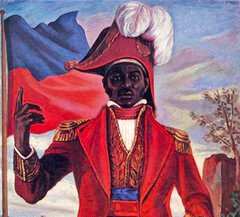
gunga din

Marc-William Palen
History Department, University of Exeter
Follow on Twitter @MWPalen

From the Deep Roots of Afro-Asia, to Mumbai’s Tata Empire, here are this week’s top picks in imperial and global history. Continue reading “This Week’s Top Picks in Imperial & Global History”

Winston Churchill: Still Newsworthy After All These Years

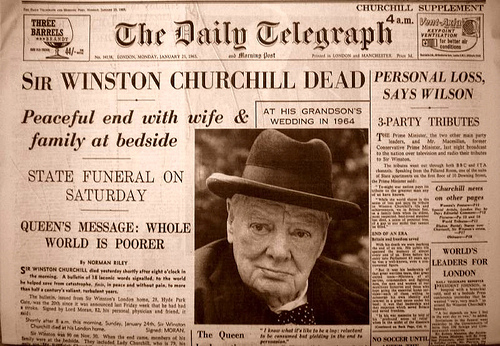
Churchill death

RICHARD TOYE
HISTORY DEPARTMENT, UNIVERSITY OF EXETER

FOLLOW ON TWITTER @RICHARDTOYE

Cross-posted from History & Policy

The 50th anniversary of Churchill’s death and funeral has put him in the news again. In many ways, he’s never been away. Even minor revelations about his life are guaranteed good coverage, and, as the comments sections of newspaper websites demonstrate, readers are eager to debate his legacy. This mass of coverage reminds us that before Churchill made history, he made news. To a great extent also, the news made him. If it was his own efforts that made him a hero, it was the media that made him a celebrity, and has been considerably responsible for perpetuating his memory and shaping his reputation in the years since his death. Continue reading “Winston Churchill: Still Newsworthy After All These Years”

This Week’s Top Picks in Imperial & Global History

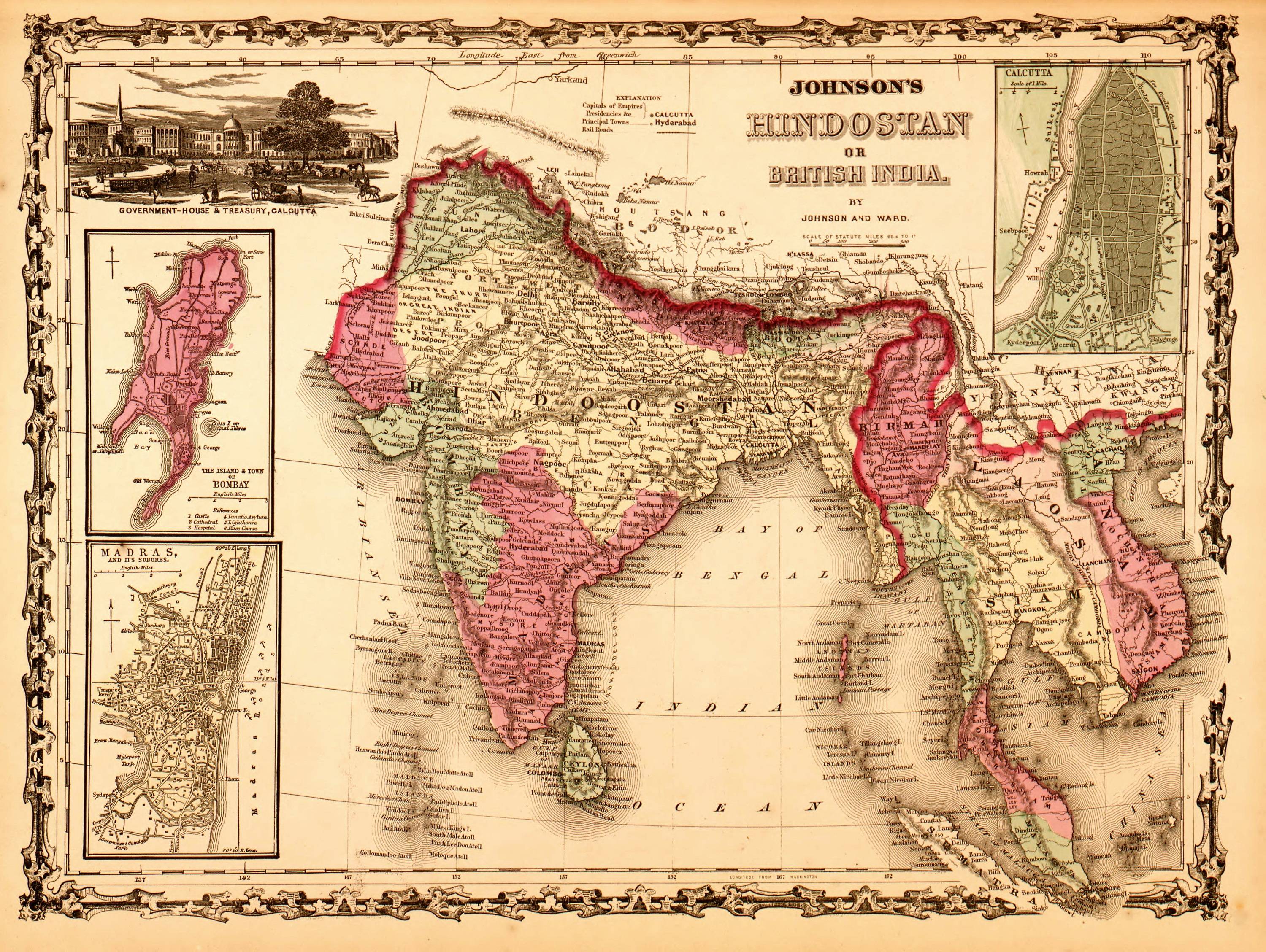
British India

Marc-William Palen
History Department, University of Exeter
Follow on Twitter @MWPalen

From the perils of writing global history, to a global tale from 1623, here are this week’s top picks in imperial and global history. Continue reading “This Week’s Top Picks in Imperial & Global History”

On Empire and Anachronism

anachronismRichard Toye
History Department, University of Exeter

Follow on Twitter @RichardToye

Our free online course Empire: The Controversies of Imperialism has now been running two weeks; between them, the participants have already made thousands of comments, often arguing their respective points of view quite vigorously. One persistent theme of debate is the degree to which it is possible to pass judgements on the actions of people in the past, who were operating on the basis of standards that are different from those held today. This is an important and difficult issue for historians in general, although the contentious topic of ‘Empire’ seems to throw it into particular relief. Everyone can agree that we shouldn’t reach assessments that are anachronistic; it is much harder to reach agreement on what constitutes anachronism. Continue reading “On Empire and Anachronism”

History in the Making: An @ICRC Interview with Andrew Thompson

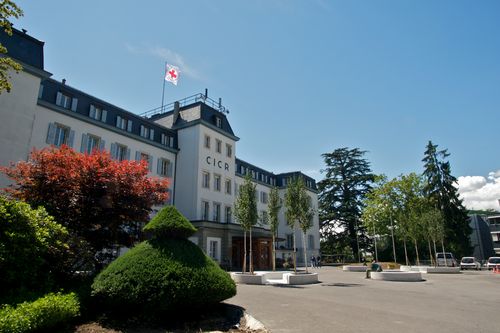
ICRC Headquarters, Geneva.

Malcolm Lucard
Cross-posted from Red Cross Red Crescent Magazine

Internal records from the ICRC’s archives concerning the conflicts of the 1960s and 1970s shed light on a decisive era for humanitarian action.

In a small room in the basement of ICRC headquarters in Geneva, Switzerland, historian Andrew Thompson methodically pours through folders full of documents — typewritten mission reports, confidential telegrams and hand-written letters — never before seen by people outside the ICRC.

“It is a process of discovery,” says Thompson, a professor of history at Exeter University in the United Kingdom. “There is a sense of expectation and anticipation not knowing what is going to be there. For a historian, it’s a bit like opening a birthday present, or like going into a candy shop.”

The ‘candy shop’ in this case is the ICRC archives, where Thompson is exploring 40- to 50-year-old records to be released to the public in January 2015 under the ICRC’s policy of making internal documents public in blocks of ten years once 40 years have passed since the events they describe.

Aside from exciting Thompson’s intellectual curiosity, these records offer a deeper understanding of conflicts going on between 1965 and 1975. In particular, they give insight into an area of great interest to Thompson, who took an early look at the records in order to pursue research on the evolution of international humanitarian law and human rights law as they pertain to the treatment of political detainees in non-international conflicts.

“I see the ICRC archive as hugely important for people thinking and writing about the past and present of humanitarian aid and human rights,” he says. “But it’s also much more than that. It’s an archive that allows for studying conflict in all its different dimensions.”

The archives are a treasure trove for historians as they contain first-hand accounts from delegates on the ground, as well as internal and external correspondence, for every major conflict during the period in question. According to Thompson, they offer a perspective not always found in diplomatic or military archives because in addition to political analysis, they show how conflict affects the lives of ordinary people on the ground. Continue reading “History in the Making: An @ICRC Interview with Andrew Thompson”

This Week’s Top Picks in Imperial & Global History

Billie-Holiday

Marc-William Palen
History Department, University of Exeter
Follow on Twitter @MWPalen

From the FBI’s hunt for Billie Holiday, to why we need a new European Enlightenment, here are this week’s top picks in imperial and global history. Continue reading “This Week’s Top Picks in Imperial & Global History”

Exeter PhD Funding in Imperial and Global History – Early Feb. Deadlines

ExeterSeeking PhD funding in the fields of World, Global, Imperial or Transnational History?

Please consider the following funding opportunities at the University of Exeter:

·       College of Humanities Doctoral Scholarships (up to 12 awards, plus 2 International Scholarships)  

·       ESRC South West Doctoral Training Consortium (up to 20 1+3 and 3 year awards).

·       One Leverhulme ‘1989 after 1989: Rethinking the Fall of State Socialism’ project doctoral award

·       One AHRC Globalism Goes Social project doctoral award

History at the University of Exeter has two research centres in the broad field of world history: the Centre for Imperial and Global History (led by Professor Andrew Thompson), and the Centre for War, State and Society (led by Professor Martin Thomas). Both offer internationally-recognised supervision with geographical coverage from 30 staff across African, Asian (including Chinese), Middle Eastern, North American, Latin American, Imperial, and European history from early-modern to contemporary eras, comprising of one of the largest groups of imperial and global historians currently working in the UK. Continue reading “Exeter PhD Funding in Imperial and Global History – Early Feb. Deadlines”

Announcing a New Website: ‘Imagining Markets’

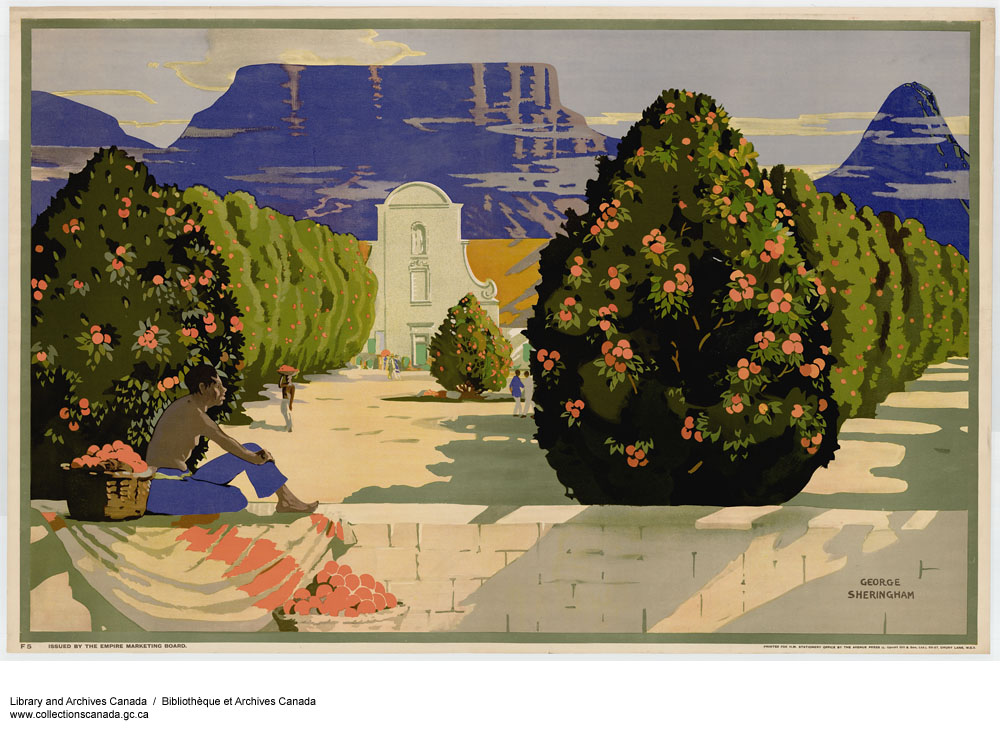
South African Oranges (Empire Marketing Board Poster), Library and Archives Canada.

Interested in the historical intersection of trade, culture, and empire? A new website, Imaginingmarkets.com, provides information on two AHRC projects which are being hosted by the University of Exeter’s History Department: ‘Imagining Markets: Conceptions of Europe, Empire/Commonwealth and China in Britain’s economic future since 1900’ (AHRC network, 2014-16) established by David Thackeray, Andrew Thompson and Richard Toye, and David Thackeray’s AHRC Research Leadership Fellowship ‘Backing Britain: Imagining a nation’s economic future since 1900’ (2014-15).

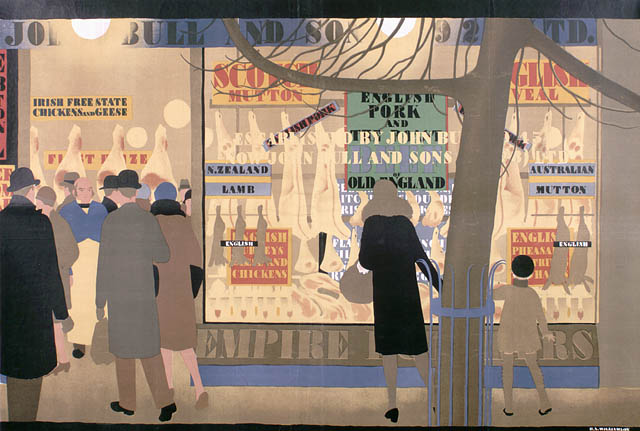
Woman Shopping at John Bull and Sons (British Empire Marketing Board, 1928), Library and Archives Canada.

Both projects are united by an interest in connecting historical and contemporary ways of thinking about Britain’s future global economic orientation, and involve a range of activities staged with project partners from the fields of public policy and heritage. Readers can subscribe to get updates on the projects. There will also be a blog to discuss issues connected with the research themes.

This Week’s Top Picks in Imperial & Global History

3938923-empire-of-japan-on-a-vintage-map-1926-and-old-japanese-coin-with-square-hole

Marc-William Palen
History Department, University of Exeter
Follow on Twitter @MWPalen

From kidnapping and capitalism to Japan’s rewriting of history, here are this week’s top picks in imperial and global history. Continue reading “This Week’s Top Picks in Imperial & Global History”

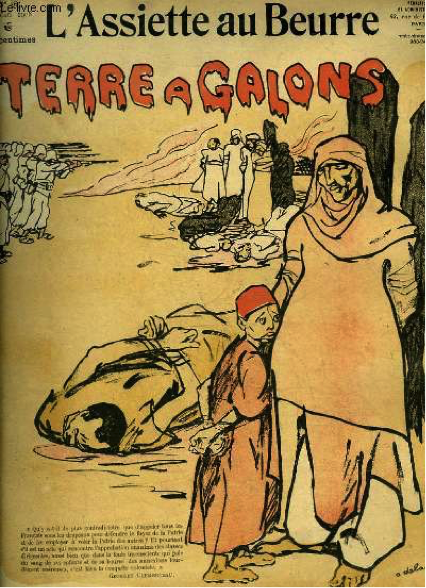
Charlie Hebdo’s Anti-Imperialist Roots

L’Assiette au Beurre, Terre à Galons ("A place to earn stripes"), March 14, 1908.
L’Assiette au Beurre, Terre à Galons (“A place to Earn Stripes”), March 14, 1908.

Daniel Foliard
Assistant Professor, Paris Ouest-Nanterre la Défense University

In a recent interview, George Wolinski (1934-2015), one of the Charlie Hebdo cartoonists killed in the Paris terrorist attacks on January 7, 2015, had claimed his magazine’s work was the legacy of L’Assiette au Beurre, an innovative satirical weekly published in France between 1901 and 1912.[1]

Both stylistically and politically, the two periodicals, separated by more than a century, could also claim an affiliation with a long French tradition of dissent. Accordingly, although Charlie Hebdo is now known around the globe for its unmediated satire on religions, we should not overlook its position in the longer history of French anti-imperialism. Continue reading “Charlie Hebdo’s Anti-Imperialist Roots”

CFP: The Hidden History of Decolonization

ICSChris Moffat
Institute of Commonwealth Studies

What do the ‘migrated archives’ reveal about British withdrawal from Empire?
A One-Day Workshop at the Institute of Commonwealth Studies, University of London 

Between April 2012 and November 2013, the Foreign and Commonwealth Office (FCO) transferred to the National Archives thousands of files in eight separate tranches, relating to the administration of former British territories in the final years of colonial rule. The files, which were released under the FCO 141 classification, had been generated by British colonial governments and were returned to the UK at the time of independence. From 1994 they were stored at the government communications centre at Hanslope Park. Their existence was only officially revealed in 2011, against the background of a case brought against the British government by a group of former Mau Mau detainees.

The announcement of the existence of the files led to speculation that they might reveal a ‘secret history’ of decolonization, transforming our understanding of the end of empire. This workshop provides the first opportunity to take stock of the research that has so far been conducted on the files. Have they lived up to expectations, or have they proved to be a disappointment to scholars? To what extent have the documents been censored, and do they suggest that significant amounts of sensitive material are still being retained? Continue reading “CFP: The Hidden History of Decolonization”

Why should we still study J. A. Hobson’s Imperialism?

Richard Toye
History Department, University of Exeter

Follow on Twitter @RichardToye

john_atkinson_hobsonIn preparation for our upcoming free course on The Controversies of Empire I’ve been thinking hard about the legacy of J.A. Hobson (1858–1940), one of England’s most famous critics of imperialism.

A clue to Hobson’s thinking can be found in the title of his 1938 autobiography, Confessions of an Economic Heretic. His core idea was that capitalism’s boom-and-bust cycles were caused by over-saving by the richer classes, or, to put it another way, by the forced ‘under-consumption’ of the poorer ones; their lack of spending power, a consequence of the unequal distribution of income, led to the repeated pattern of depression and unemployment.

What, though, did this have to do with Empire? Continue reading “Why should we still study J. A. Hobson’s Imperialism?”

This Week’s Top Picks in Imperial & Global History

‘Happy Philippines’ Dōmei grafu, 9 January 1943. An example of Japanese Wartime News Propaganda.
‘Happy Philippines’
Dōmei grafu, 9 January 1943. An example of Japanese wartime news propaganda, via Asia-Pacific Journal.

Marc-William Palen
History Department, University of Exeter
Follow on Twitter @MWPalen

From the 9/11 Report’s missing pages to Cold War Czech spies in the land of Oz, here are this week’s top picks in imperial and global history. Continue reading “This Week’s Top Picks in Imperial & Global History”

Muslim Education in Britain: Lessons From Colonial India

Robert Ivermee
SOAS, University of London 

In contemporary Britain, the subject of Muslim education provokes regular, often ill-informed, media and policy-level questions like “Do Muslim schools fuel extremism?” or “Are they compatible with British values?” Muslim institutions are widely assumed to provide education of inferior quality, and to reinforce social segregation and traditional gender roles. Public funding was first awarded to British Muslim schools in 1997. However, the number of Muslim state schools remains very small: in 2012, just 11 out of more than 6,500 state-maintained faith schools in the United Kingdom were Muslim. As an historian of British imperialism in India whose research focuses on colonial and Muslim education it is hard not to be struck by the parallels between later nineteenth century South Asia and Britain today.

In India, the British government ruled over a population of diverse races, ethnicities and creeds, including a large but ethnically heterogeneous aggregation of Muslims. Colonial officials fretted over the loyalty of their Muslim subjects and assessed the compatibility of Islam with Western-style government and social pluralism. Simultaneously, however, Muslim institutions were brought within the educational system established by the British, while Muslim pupils attended state-managed colleges and schools. Exchanges between Muslim and British parties on the subject of education in colonial India offer a set of lessons for policy-makers and a wider public concerned for (or about) Muslim education today. Continue reading “Muslim Education in Britain: Lessons From Colonial India”