Professor William Gervase Clarence Smith, Professor Barbara Watson Andaya, and Professor Merry Wiesner-Hanks will shortly be coming to the end of their tenure as editors of the Journal of Global History (JGH). Cambridge University Press, in collaboration with an Editorial Board search committee, is now inviting applications for their successor(s).
The deadline for applications is 30 September, 2018.
JGH addresses the main problems of global change over time, together with the diverse histories of globalization. It also examines counter-currents to globalization, including those that have structured other spatial units. The journal seeks to transcend the dichotomy between ‘the West and the rest’, straddle traditional regional boundaries, relate material to cultural and political history, and overcome thematic fragmentation in historiography. The journal also acts as a forum for interdisciplinary conversations across a wide variety of social and natural sciences. Continue reading “Call for Editors – Journal of Global History”→
AHRC Care for the Future, in partnership with Exeter’s IIB and the GHRA 2018, invited Markus Geisser, Senior Humanitarian Policy Advisor at the International Committee of the Red Cross to give a public keynote at the Royal Albert Memorial Museum & Art Gallery Exeter. Markus looks back to a long career as humanitarian practitioner and accordingly he referred in his talk to this long experience.
Markus joined the ICRC in 1999 and carried out his first mission as an ICRC delegate in the Democratic Republic of Congo (DRC). This was followed by several years managing field operations in Myanmar, Thailand, Liberia, Darfur (Sudan) and then again in eastern DRC. From 2006 until 2013, he worked in senior management positions in countries affected by the so-called “Global War on Terror”, first in Iraq and Jordan, then in southern Afghanistan and in Washington DC. From 2013 until 2015, he served as Deputy Head of the division working on humanitarian policy and multilateral diplomacy at the ICRC’s headquarters in Geneva. In March 2015 he joined the ICRC Mission to the United Kingdom and Ireland as Senior Humanitarian Affairs and Policy Advisor.
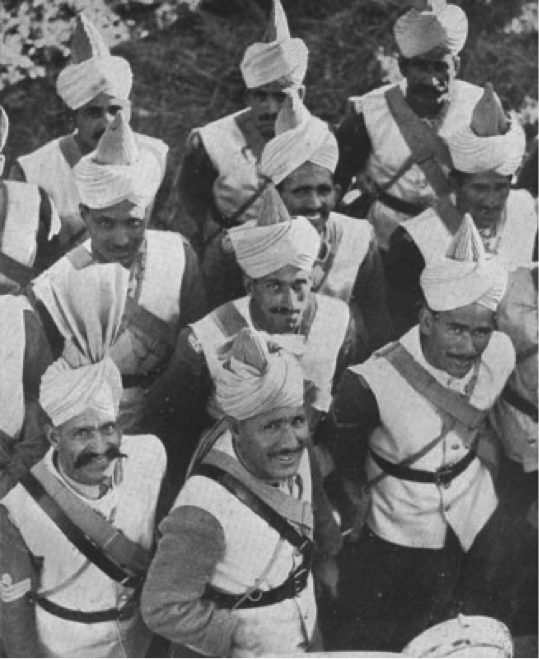
It’s been a year now since Christopher Nolan’s film Dunkirkwas released to critical acclaim, public approval and criticism. Much of the criticism arose because the film omitted any mention of the Commonwealth troops who were in the British Expeditionary Force (BEF) and at Dunkirk.[1] It felt like a missed opportunity to correct an anomaly in the collective memory of Britain and the world: to remember the mule drivers of the Royal Indian Army Service Corps (RIASC) who were also on those beaches.
So here’s the missing piece of the story, derived from my research into Dunkirk’s Indian soldiers.
On May 29, 1940, in the middle of the evacuation of Dunkirk, with thousands of British soldiers lined up on the beaches east of the French town, with a giant pall of smoke from the burning oil refinery, with regular sorties by Luftwaffe planes scattering the queues, and with ships large and small taking men off the beaches, Major Mohammed Akbar Khan of the RIASC marched four miles along the beach at the head of 312 Muslim Indians, en route from Punjab to Pirbright.
In case you missed it, rumors of the May government’s plan to stockpile food supplies have finally gotten people talking about what Brexit will mean for food prices. As dedicated readers of the Forum know, I’ve been trying to draw attention to this important issue ever since the referendum vote.
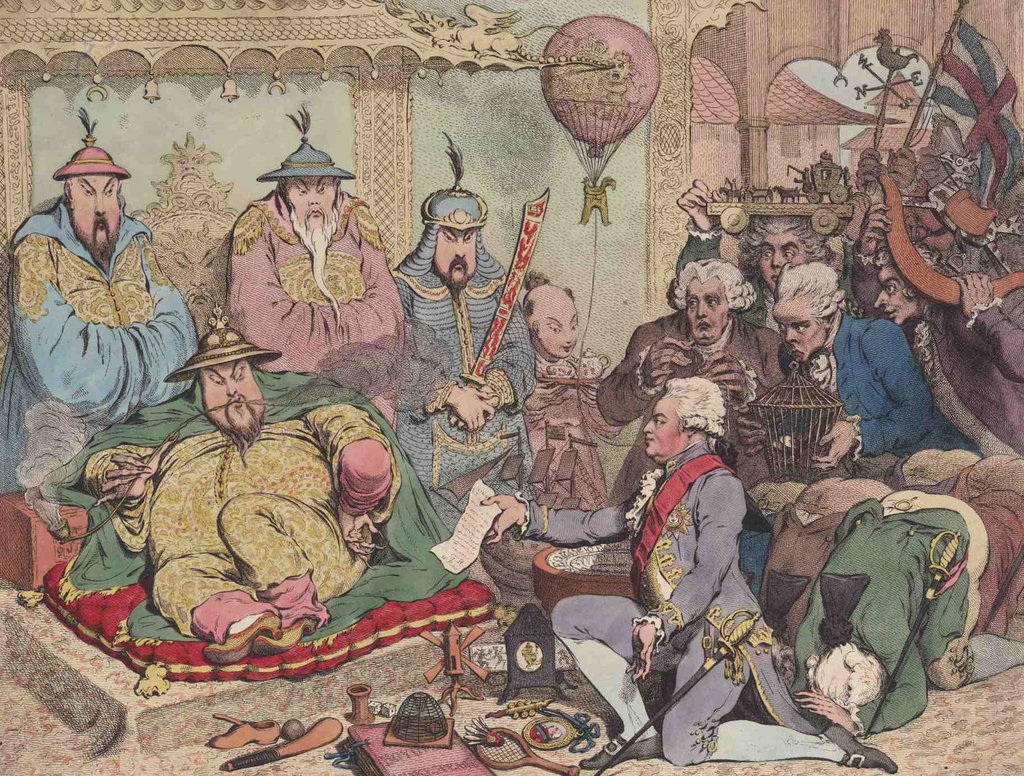
A satirical cartoon of Lord Macartney kneeling before Emperor Qianlong and presenting his “gifts.”CreditCourtesy of the Lewis Walpole Library, Yale University
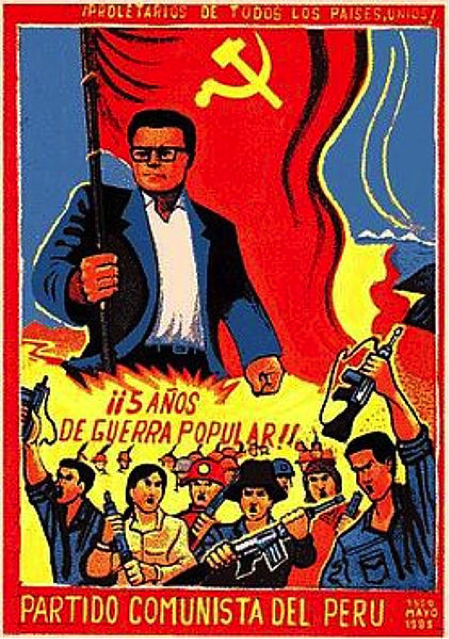
“Mao Zedong Thought” was a major global ideology at a time when China didn’t have much to offer the world economically. Chairman Mao influenced a wide range of groups, such as the Black Panthers in the United States and revolutionary movements in Nepal, India, and the Philippines. Mao was also a guiding light for one particular Peruvian revolutionary: Abimael Guzman. This acolyte’s revolution caused radical waves long after Mao’s death in 1976 – and ultimately ended in failure. Continue reading “Memories from Nemesis: Tale of a Peruvian Maoist”→
Dr Tris Kerslake, author of the book Science Fiction and Empire (2010), provides the final post of our multi-week roundtable on science fiction and imperial history, co-edited by Marc-William Palen and Rachel Herrmann. You can read our call for posts here, and the other posts in the series here,here, here, here, here, here, here, and here. Thanks to all of our participants for writing and we’re still looking forward to hearing what you think!
It has been a pleasure and an academic delight to be involved in this series of essays focused at the interconnection of Science Fiction (SF) and imperialism. Long considered the sandbox of neo-empire, these particular thought-experiments of SF cast their shadows both backwards and forwards. Continue reading “The Science Fiction of Empire: the Best of All Possible Worlds?”→
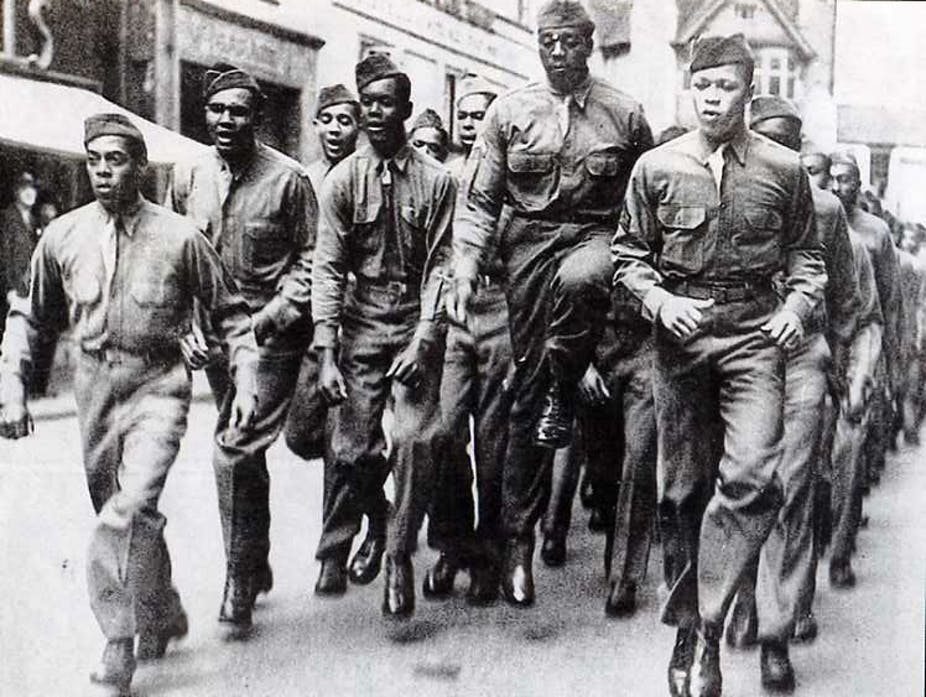
Black American GIs stationed in Britain during the war, these in Bristol, were given a warm welcome by their hosts but treated harshly by their white US Army comrades. brizzlebornandbred, CC BY-NC-SA
John Stuart Mill [left] and Jean-Luc Picard [right, drawing by gerardtorbitt]
This is the penultimate post of our five-week roundtable on science fiction and imperial history, co-edited by Marc-William Palen and Rachel Herrmann. You can read our call for posts here, and the other posts in the series here,here, here, here, here, here, and here. We look forward to hearing your thoughts!
“No starship may interfere with the normal development of any alien life or society.”
— Prime Directive (United Federation of Planets General Order 1)
“The Prime Directive is not just a set of rules; it is a philosophy…and a very correct one. History has proven again and again that whenever mankind interferes with a less developed civilization, no matter how well intentioned that interference may be, the results are invariably disastrous.” – Capt. Jean-Luc Picard
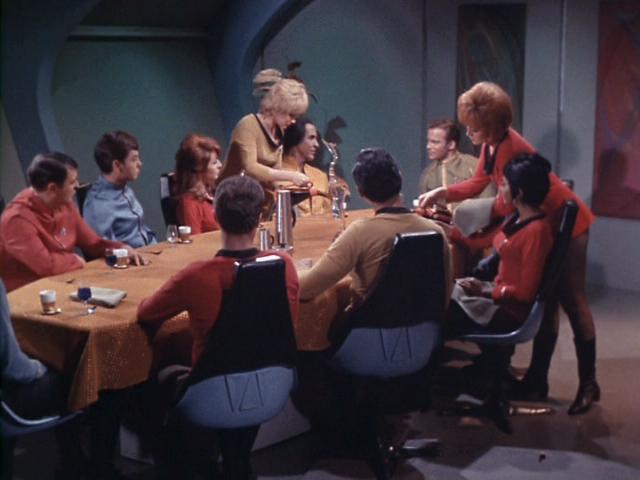
The Victorian political philosopher John Stuart Mill (1806-1973) and Star Trek’s far-future United Federation of Planets (the Federation) differ substantially on the colonial question. In particular, Mill the Victorian liberal imperialist thought that it was the duty of the British to help “civilize” less developed states through colonialism. Within his stages of civilization, Mill regarded underdeveloped states like India to be backwards and in need of benign British despotism, which was “a legitimate mode of government in dealing with barbarians, provided the end be their improvement, and the means justified by actually effecting that end.”[1]
Although Star Trek‘s Federation may share some similar Victorian-era ideas about imperial power structures and civilizational stages, by contrast it has strict rules about not attempting to “civilize” or colonize “backward” societies. It is enshrined in their Prime Directive, which was first introduced in the Original Series (1966-69) as a none-too-subtle anti-imperial rebuke of the US war in Vietnam.[2]
This is the newest post in our fourth week of our roundtable on science fiction and imperial history, co-edited by Marc-William Palen and Rachel Herrmann. You can read our call for posts here, and the other posts in the series here,here, here, here, here, and here. Posts will run twice a week until the second week in July. We look forward to hearing your thoughts!
If you were to tell the children and adults who first bought copies of legendary PC game designer Sid Meier’s Civilization in 1991 that they would still be playing some version of this classic game of imperial expansion almost thirty years later, they probably wouldn’t have believed you. Yet the record-breaking franchise, now in its sixth iteration, has continued to ensnare generations of PC gamers with its epic sweep, imaginative scope, and highly addictive turn-based gameplay that allows you to take an ancient empire to conquer the world—and then colonize the stars.
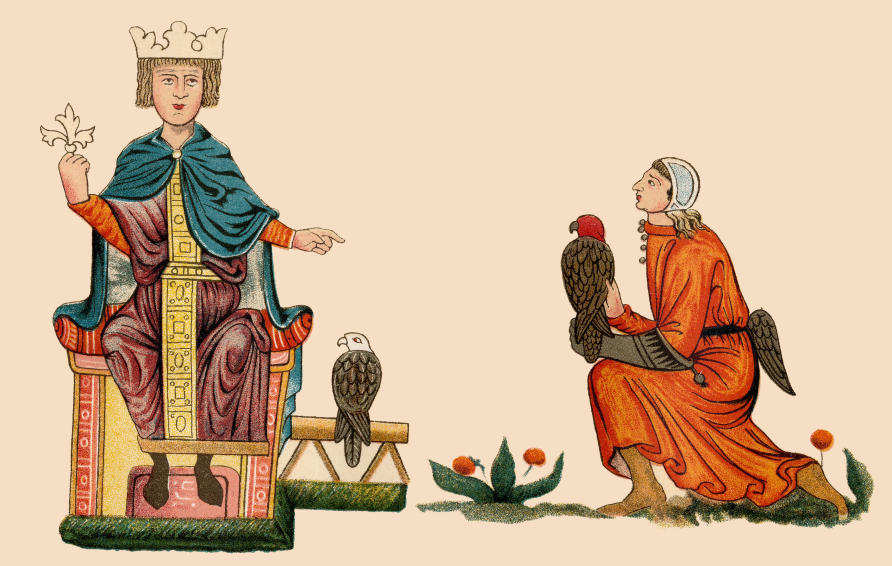
The Holy Roman Emperor King Frederick II of Sicily’s falconry book, De Arte Venandi cum Avibus (The Art of Hunting with Birds) features 900 pictures of birds in its margins. Picture: De Arte Venandi cum Avibus / Alamy






 Imperial & Global Forum
You must be logged in to post a comment.