

Marc-William Palen
History Department, University of Exeter
Follow on Twitter @MWPalen
Marc-William Palen
History Department, University of Exeter
Follow on Twitter @MWPalen
Richard Toye
History Department, University of Exeter
Follow on Twitter @RichardToye
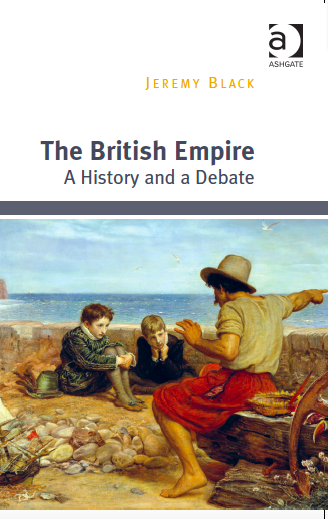 How should historians tackle the controversial topic of imperialism? To what extent is it permissible to pass moral judgements on the actions of people in the past who had very different sets of values than we hold today? In his forthcoming book The British Empire: A History and A Debate, Professor Jeremy Black notes that the rights and wrongs, strengths and weaknesses of empire are a major topic in global history, and deservedly so.Focusing on the most prominent and wide-ranging empire in world history, the British empire, Black provides not only a history of that empire, but also a perspective from which to consider the issues of its strengths and weaknesses, and rights and wrongs. In short, this is history both of the past, and of the present-day discussion of the past, that recognizes that discussion over historical empires is in part a reflection of the consideration of contemporary states.
In this video, I interview Professor Black about his findings.
Marc-William Palen
History Department, University of Exeter
Follow on Twitter @MWPalen
Continue reading “This Week’s Top Picks in Imperial & Global History”
Patrick Porter
University of Exeter
The Global Village Myth takes aim at Globalism, or the idea of the ‘death of distance’ in the world of conflict. And it takes aim at the dangerous policies it tends towards. I argue that even in a supposedly ‘globalised’ world, distance matters.
Does technology kill distance? So often we hear it. The cumulative message of our news cycle, of debate about foreign and defence policy, is the fear that the global spread of ideas, capital, weapons and people makes our world ever more dangerous. Continue reading “The Global Village Myth”
When: Tuesday, 26 May 2015
Time: 3-4.30pm
Where: Amory 128 (University of Exeter, Streatham Campus)
Dane Morrison
Salem State University
Follow on Twitter @trueyankees
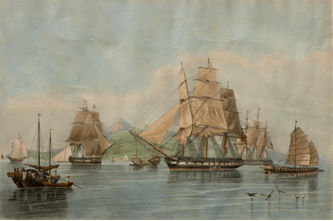
On a balmy Sunday evening in March 1838, a colorful conclave of English, Parsee, American, and Hong merchants crowded the resplendent grand hall of the New English factory in Canton in a sort of town meeting to hear Chief Superintendent and Plenipotentiary of Britain’s China trade, Charles Eliot. Eliot was there to announce Britain’s response to the arrival of Imperial Commissioner Lin Zexu, who had arrived days earlier with a commission to eliminate the opium trade, his sweeping proclamation demanding they deliver “every particle of opium” to him for destruction. It was addressed to “the Barbarians of every nation.” Recognizing the sprinkling of Americans in the hall, Eliot expressed his delight for their tacit cooperation, and assured them, too, of the protection of the British government. Proclaiming what everyone already knew, that two American warships, the imposing USS John Adams and the Columbia, were expected imminently, he hoped that he could count on their assistance. “Yes, you may,” someone shouted back. All in all, it was “a very pretty speech,” American merchant Robert Bennet Forbes observed.[1]
More than a pretty speech, Eliot’s words recognized an important aspect of imperial and global history – Eliot understood that the sinews that connected the British Empire were more than ships plying trade routes, colonial administrators issuing edicts from imposing fortresses, or agents collecting taxes from impoverished farmers. They were also strengthened by informal ties of commerce, gentility and affinity that bound, albeit loosely, communities of global expatriates. In subtle but significant ways, the empire of the 1830s was already an informal phenomenon, connected by the citizens of the world whose residencies in colonial outposts created webs of support.
The print culture of early global travelers reveals a world of expatriate networks that transcend nationality. Continue reading “Expat Imperialism: Reconsidering the Bonds of Empire”

Marc-William Palen
History Department, University of Exeter
Follow on Twitter @MWPalen
From exploring eighth-century India to finding Lenin’s lost love, here are this week’s top picks in imperial and global history. Continue reading “This Week’s Top Picks in Imperial & Global History”
Andrew Thompson
History Department, University of Exeter
Cross-posted from the Humanitarian Practice Network
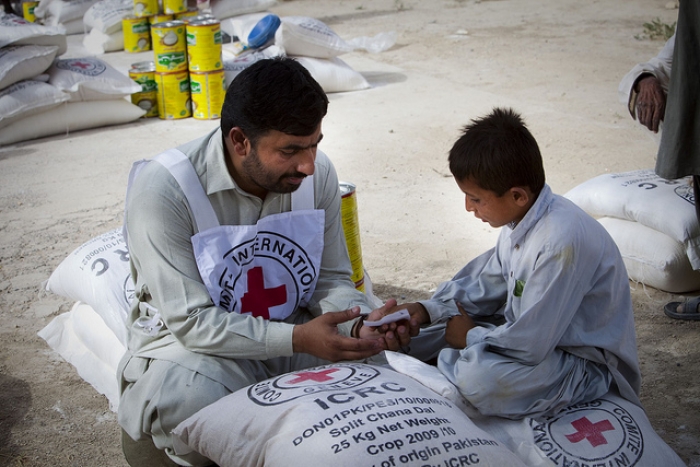
Even as Red Cross and Red Crescent societies around the world mark the 50th anniversary of the adoption of the movement’s Fundamental Principles, there is a palpable sense that they are at risk. Threatened not only by the resurgence of state sovereignty and proliferation of non-state armed groups, the very universality of the principles may be in question. As the twenty-first century draws on, are the principles of ‘impartiality’, ‘neutrality’ and ‘independence’ still fit for purpose as Western influence wanes and the nature of conflict itself rapidly evolves?
The Red Cross’ principles have marinated in a century and a half of humanitarian history. That history matters. The past helps us to understand how different types of threat to humanitarian principles have emerged from different types of conflict and geopolitical environments. History also sheds light on how, despite such obstacles, the principles came to acquire the public prominence and moral authority they currently possess.
Where did the Fundamental Principles come from? Continue reading “The Future of the Past: Shining the Light of History on the Challenges Facing Principled Humanitarian Action”
Richard Toye
History Department, University of Exeter
Follow on Twitter @RichardToye
Cross-posted from Western Morning News
As polling day looms it seems certain that Britain is heading for another hung parliament, raising the prospect of a minority government or another coalition.
The resulting administration may well be more unstable than the current Conservative-Lib Dem government; things will certainly be messy to some degree. For those accustomed to the idea of living under a two-party system, in which Labour alternates with the Tories as the political pendulum swings, this is all very disconcerting.
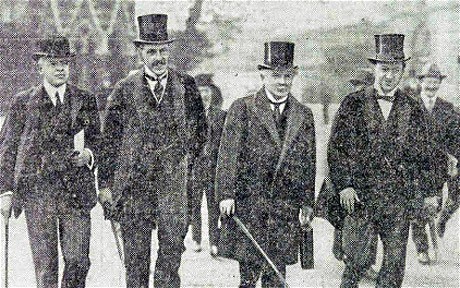
But the story of another coalition, one formed a hundred years ago this month, casts things in a different light. It was the chaos of May 1915 that laid the groundwork for much of our modern political order; and our expectations about how party politics operates are to a considerable degree the legacy of the era of Asquith and Lloyd George.
The events of a century ago were of enormous significance for both the course and conduct of the First World War and for the political future of Britain. They resulted in the fall of Britain’s last solely Liberal government and its replacement by a coalition that included Conservatives and a small number of Labour figures. Continue reading “Like a Century Ago, This Election May Change Things for Decades”

Emily Bridger
History Department, University of Exeter
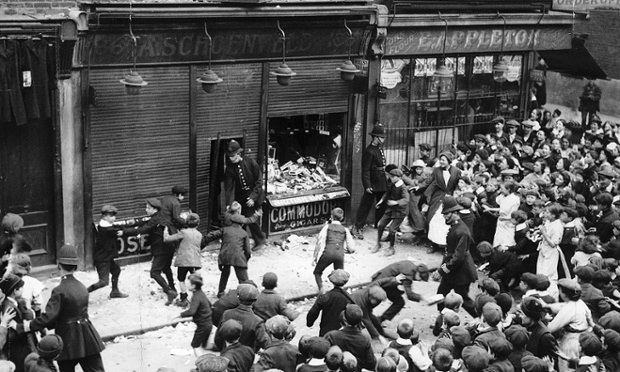
Over the past several weeks, a new wave of xenophobic violence has swept across South Africa, beginning in Durban and quickly spreading to Johannesburg and its surrounding townships. The targets are makwerekweres, a derogatory term used for foreigners, in reference to the “babble” they speak. They are Zimbabweans, Mozambicans, Nigerians, Somalis, Bangladeshis and other foreign nationals. Initial violence in Durban was sparked by the remarks of Goodwill Zwelithini, the king of South Africa’s largest ethnic group, the Zulus, who reportedly called on foreigners to “pack their bags and go back to their countries.”
In the following weeks, the violence claimed the lives of seven people and turned thousands more into refugees. Media images depicted scenes of terror, displacement and hatred: foreign-owned shops looted and ransacked; tent cities hastily assembled for refugees; foreigners boarding buses back to their home countries; and even the brutal stabbing of Mozambican Emmanuel Sithole in Johannesburg’s neighbouring township of Alexandria. Yet these images are not new for South Africans. Just earlier this year, another episode of xenophobic-induced looting and violence occurred Soweto. Recent violence particularly calls to mind scenes from just seven years ago, in May 2008, when 62 foreigners were killed and thousands displaced in the worst xenophobic attacks in the country’s post-apartheid history.
These episodes of violence are not sporadic. They represent long-simmering anti-migrant sentiments that have been increasing in the country since the early 1990s. As apartheid collapsed and South Africa opened its borders to foreign migration, many within the country found new scapegoats for their dissatisfaction with democracy’s failed promises. They blamed foreigners, rather than whites or the government, for high unemployment and scarce resources.
But these sentiments can be traced back much further than 1994 – fear or hatred of foreigners has a long history in South Africa. Continue reading “Xenophobia in South Africa: Historical Legacies of Exclusion and Violence”
Michael R. Anderson
University of Texas at Austin
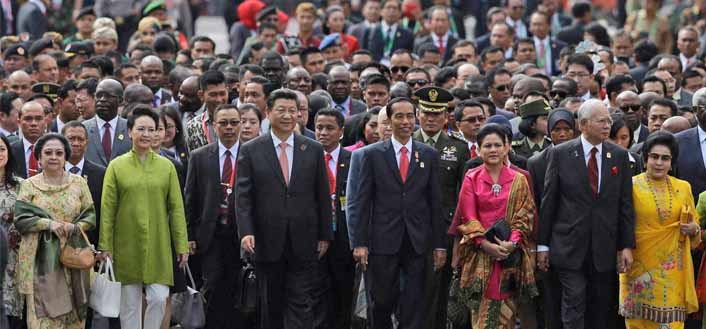
The 60th anniversary of the Asian-African Relations Conference has brought renewed global attention to the themes that animated the first major gathering of Asian and African heads of state in Bandung, Indonesia in 1955. At a recent commemorative gathering (19-24 April 2015), delegates from 109 Asian and African countries convened once again in Bandung and ruminated upon an ambitious agenda: “Strengthening South-South cooperation to Promote World Peace and Prosperity.” Delegates in 2015 renewed a commitment to the New Asian-African Strategic Partnership (launched in 2005 during the 50th anniversary commemoration of the first Bandung Conference), and they also worked to further initiatives in economic cooperation, most notably through the Asian-African Business Summit. The “spirit of Bandung” may have endured, but the historical context of such cooperative ventures has shifted dramatically over the decades. Continue reading “The “Spirit of Bandung” at Sixty”
Marc-William Palen
History Department, University of Exeter
Follow on Twitter @MWPalen
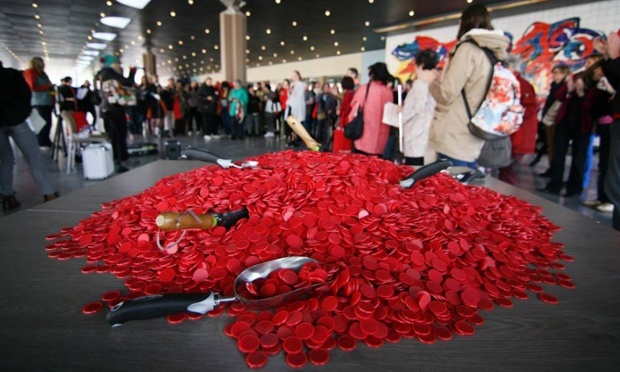
Who’s afraid of a feminist foreign policy? To mark the centenary of the Woman’s Peace Congress and the corresponding international peace conference held at the Hague this past week, here are this week’s top picks. Continue reading “This Week’s Top Picks in Imperial & Global History”
Richard Toye
History Department, University of Exeter
Follow on Twitter @RichardToye
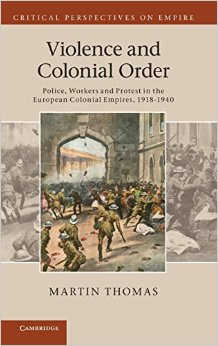
Professor Martin Thomas’s book Violence and Colonial Order: Police, Workers and Protest in the European Colonial Empires, 1918-1940 is a pioneering, multi-empire account of the relationship between the politics of imperial repression and the economic structures of European colonies between the two World Wars. Ranging across colonial Africa, Southeast Asia and the Caribbean, Thomas explores the structure of local police forces, their involvement in colonial labour control and the containment of uprisings and dissent. This work sheds new light on broader trends in the direction and intent of colonial state repression. It shows that the management of colonial economies, particularly in crisis conditions, took precedence over individual imperial powers’ particular methods of rule in determining the forms and functions of colonial police actions. In this Talking Empire podcast, I interview Professor Thomas about the issues raised by the book.

Marc-William Palen
History Department, University of Exeter
Follow on Twitter @MWPalen
News of the death of Sir Christopher Bayly swept across the world last week. We at the Centre for Imperial & Global History join the global community of scholars in expressing our sadness at his untimely passing. Below, we include some of the tributes to Bayly that have appeared in the days since: Continue reading “Tribute to Sir Christopher Bayly (1945-2015)”
Marc-William Palen
History Department, University of Exeter
Follow on Twitter @MWPalen
From covering up Soviet crimes to how the Vietnamese view the Vietnam War 40 years after, here are this week’s top picks in imperial and global history. Continue reading “This Week’s Top Picks in Imperial & Global History”
 Imperial & Global Forum
You must be logged in to post a comment.