
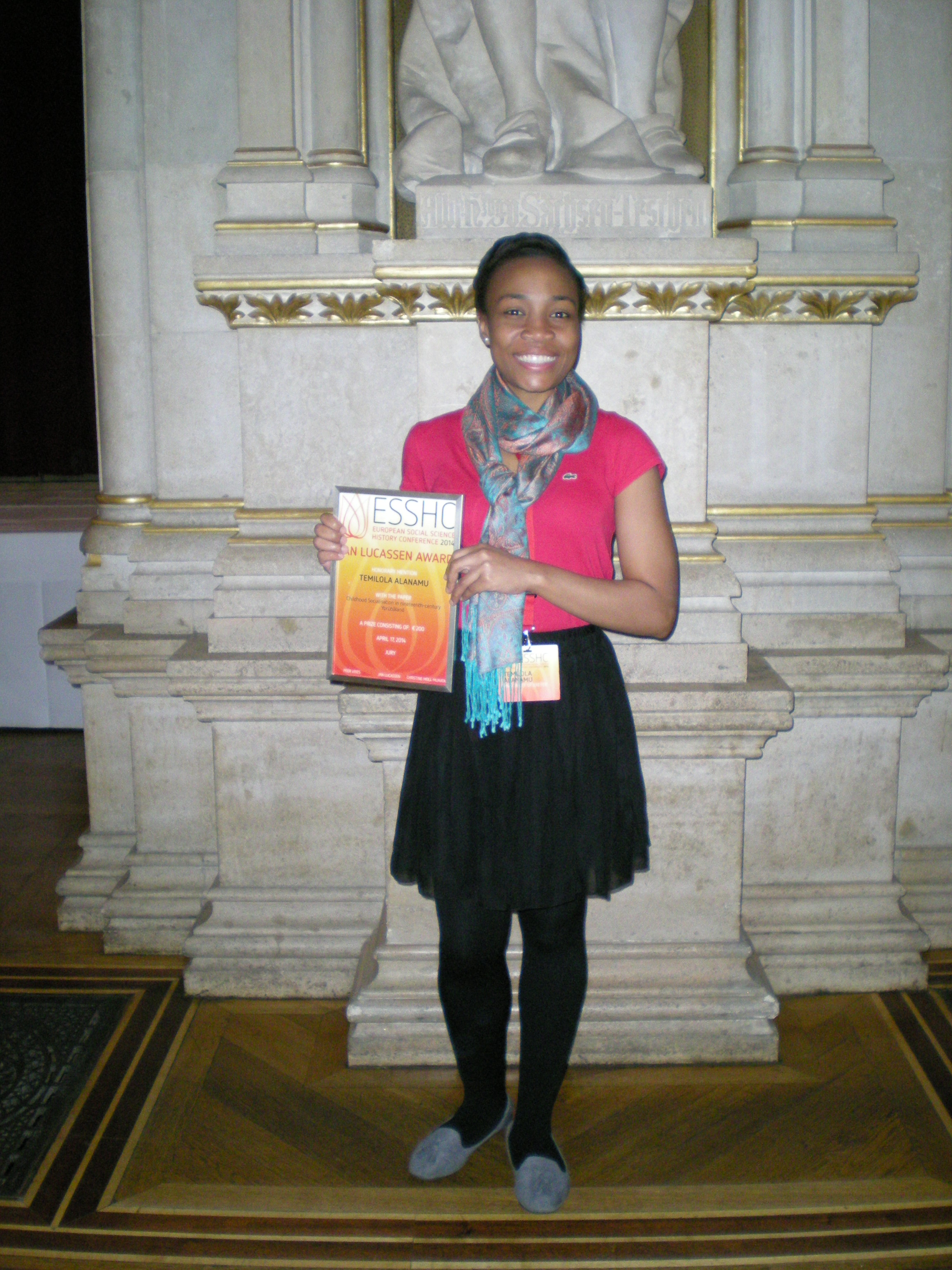
 The Centre for Imperial and Global History wishes to congratulate our student, Temi Alanamu, who was recently awarded an Honourable Mention Award under the inaugural Professor Jan Lucassen Award for the best paper by a PhD student at the European Social Science and History Conference in Vienna, 2014 – a very good showing at her first major conference! Continue reading “History PhD Awarded for Work on 19th-Cent. Childhood Socialization in #Nigeria”
Churchill the Middlebrow
Richard Toye
History Department, University of Exeter
Follow on Twitter @RichardToye
Cross-posted from Australian Book Review
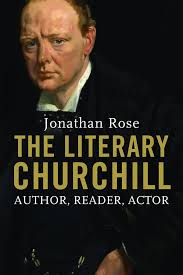 On the rear jacket of this fascinating and important book is a picture of Winston Churchill at his desk at Chartwell, his house in Kent, just a few months before the outbreak of World War II. Apparently caught in the moment of literary creation, cigar in mouth and concentrating on his papers, the photo credit – to a Picture Post photographer – leads to the obvious suspicion that this was actually a staged shot. For Churchill, his country home was not merely a place of repose but a writing factory, the output of which would earn him the large sums of money necessary for its upkeep. At the same time, his image as a man of letters served to advertise the product as well as to suggest the existence of a non-political ‘hinterland’ of the kind appropriate to a statesman of fertile brain and broad views. Continue reading “Churchill the Middlebrow”
This Week’s Top Picks in Imperial & Global History

Marc-William Palen
History Department, University of Exeter
Follow on Twitter @MWPalen
From why ‘liberalism’ means empire to the global struggle over the value of money, here are this week’s top recommended reads in imperial and global history. Continue reading “This Week’s Top Picks in Imperial & Global History”
Congratulations! Exeter History PhD Student Awarded NORHED Postdoc
 The Centre for Imperial and Global History wishes to congratulate another of our students, Elizabeth (Beth) Laruni, for not only successfully passing her doctoral viva but for being awarded a two-year NORHED postdoctoral fellowship at the Makerere Institute of Social Research in Uganda. Beth, who works on Acholi politics and identity in Northern Uganda, has been with us at Exeter from the beginning of her undergraduate studies, and we are very proud of her achievements! Continue reading “Congratulations! Exeter History PhD Student Awarded NORHED Postdoc”
The Global Anti-Apartheid Movement, 1946-1994
Dr. Nicholas Grant
American Studies, University of East Anglia
Follow on Twitter @nicholasggrant
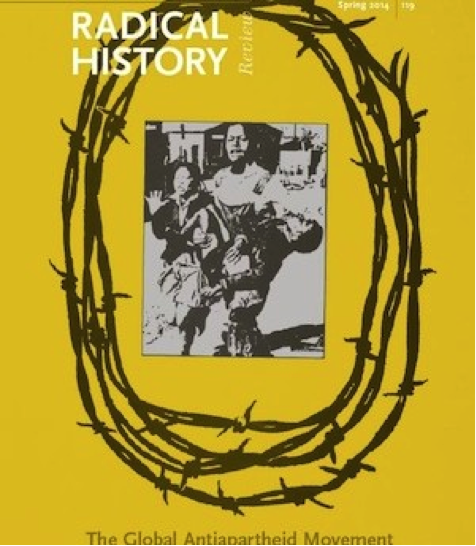
Last month saw the publication of the Radical History Review’s special issue on ‘The Global Anti-Apartheid Movement’. Appearing on the 20th anniversary of South African democracy, the issue contains articles, roundtables and review pieces that explore a range of transnational connections that shaped political opposition to white supremacy in South Africa. As editors Lisa Brock, Alex Lichtenstein and Van Gosse comment in their introduction, “in seeking contributions to this issue, we made a deliberate effort to give the truly global nature of the movements in solidarity with southern Africa their due.”[1]
Whilst activism in the US and Britain continues to dominate much of the scholarship on the international anti-apartheid movement, this special issue makes an important effort to move beyond this occasionally restricting narrative. Continue reading “The Global Anti-Apartheid Movement, 1946-1994”
Two Exeter History Lectureships: Deadline Approaching
 The History Department at the University of Exeter has two lectureships available. The result of the 2008 Research Assessment Exercise confirms Exeter’s position as one of the UK’s leading research-intensive universities. Almost 90% of our research is at internationally recognised levels and every single subject submitted included world-leading (4*) research. When adjusted for the 95% of staff submitted, Exeter ranks among the top 15 in the UK for research out of 159 higher education institutions. The Times Higher Education described Exeter as ‘a rising star among research-intensive institutions’.
Please note: The closing date for completed applications is Thursday 31st July 2014. Continue reading “Two Exeter History Lectureships: Deadline Approaching”
This Week’s Top Picks in Imperial & Global History

Library of Congress, Prints and Photographs Division,
reproduction number LC-USZC4-2388
Marc-William Palen
Follow on Twitter @MWPalen
From teaching contemporary comparative slavery to 19th-century globalization and hopelessly drunk KGB spies, here are this week’s top reads in imperial and global history. Continue reading “This Week’s Top Picks in Imperial & Global History”
Empires in Perspective: Baudin, Napoleon and the Exploration of Australia
Rachel Chin
History Department, University of Exeter
Nicole Starbuck. Baudin, Napoleon and the Exploration of Australia. London: Pickering & Chatto, 2013. 208 pp. £60 (hardback), ISBN 978 1 84893 210 4; £24 (eBook), ISBN 978 1 84893 210 4.
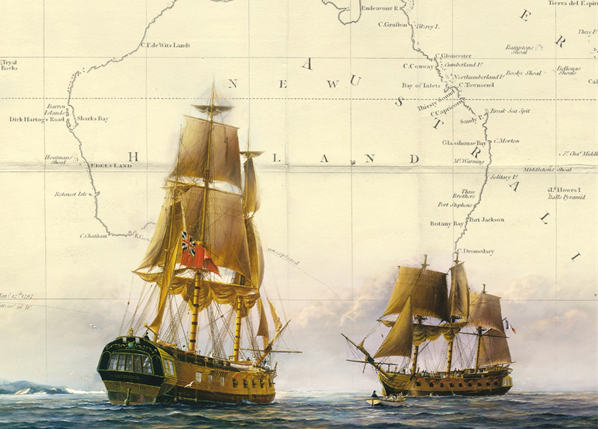
 As the blade of the guillotine slowed in the aftermath of the Terror, Napoleon took up the reigns as First Consul and French explorer Nicolas Baudin proposed an ambitious voyage to “interest the whole of Europe” [12]. It is also where Nicole Starbuck begins Baudin, Napoleon and the Exploration of Australia (2013). A commoner by birth, Baudin made his name as a member of the French merchant marine and French East India Company, eventually captaining a scientific voyage to the Caribbean. However, his 1802 Australian voyage was unique in its narrow scope of exploration, and its unprecedented twenty-two participating naturalists and scientists. This voyage was the first to emphasize specialized knowledge acquisition and scientific detail, a shift from earlier Enlightenment explorations, when natural history was seen as “a sweeping and largely philosophical study of the natural environment…implicated in questions about rationality” [15]. Continue reading “Empires in Perspective: Baudin, Napoleon and the Exploration of Australia”
Invisible Empire: An ‘Imperial’ History of the KKK
Dr. Kristofer Allerfeldt
History Department, University of Exeter
 Historians are used to the concept of formal and informal empires. They are used to empires expanding and empires declining. Most are perhaps less familiar with a concept bandied about in the United States from the late 1860s to the mid-1930s – that of an “invisible” empire.
In reality this empire was anything but invisible. Born in the turmoil of the post-Civil War South, by the mid-1920s it had spread to all mainland states of the Union, claiming some ten million members.
It was also known as the Ku Klux Klan. Continue reading “Invisible Empire: An ‘Imperial’ History of the KKK”
This Week’s Top Picks in Imperial & Global History
Marc-William Palen
Follow on Twitter @MWPalen
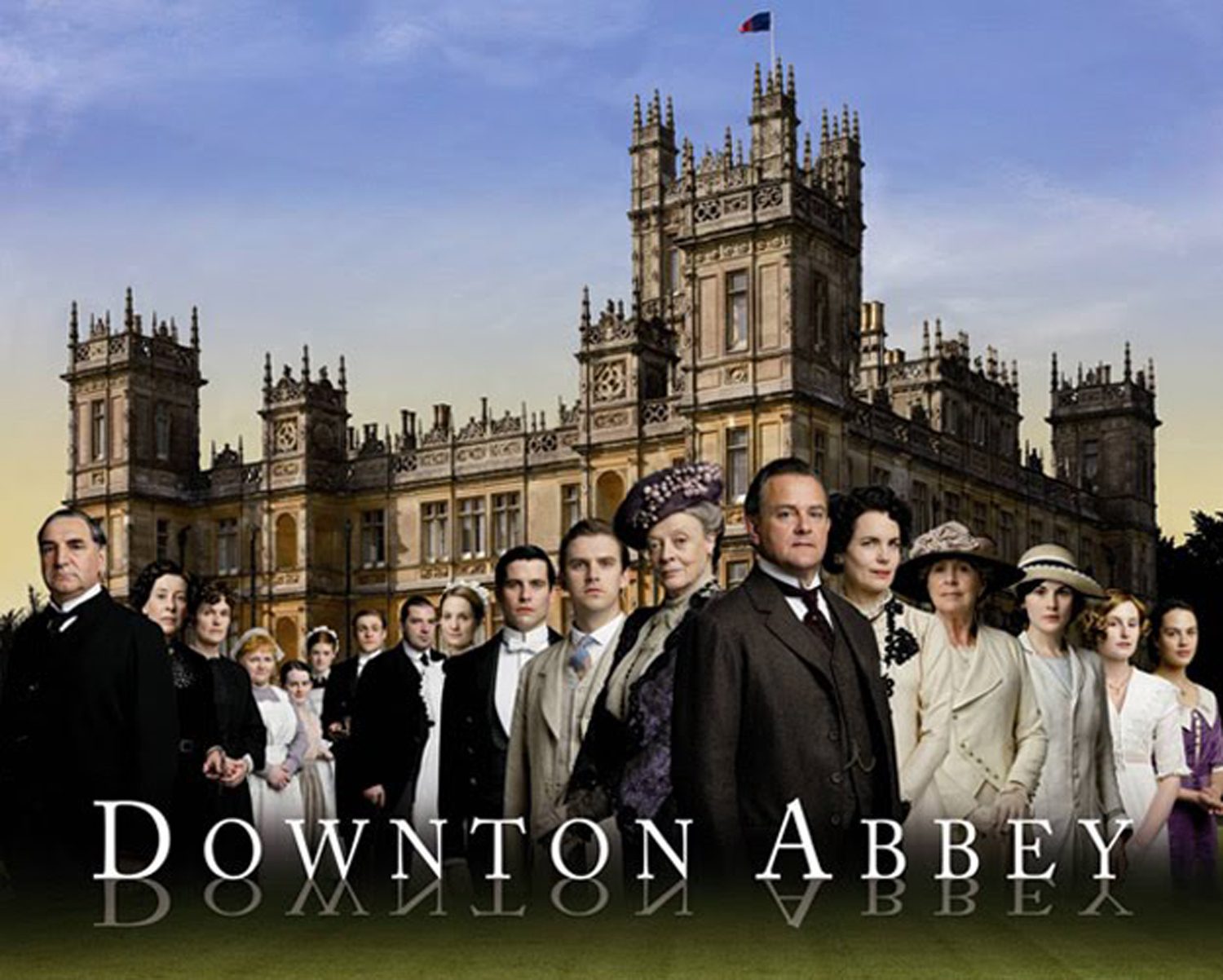
Has Downton Abbey played an imperial role in Anglo-Chinese relations? Ever heard of the Cold War’s socialist internet? What is the current state of international history? What if the US Civil War had turned out differently?
Here are the top reads of the week.
Continue reading “This Week’s Top Picks in Imperial & Global History”
The 1914 Home Rule Act – Is It Worth Celebrating?
Richard Toye
Follow on Twitter @RichardToye
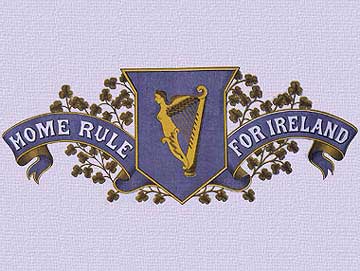
The following remarks were made by Professor Richard Toye at an event held this week at the Irish Embassy to commemorate the centenary of the Third Home Rule Act. The event, which also featured Professors Paul Bew and Michael Laffan, and former Taoiseach John Bruton, will be broadcast on BBC Parliament at 9pm on 5 July.
The 1914 Home Rule Act was, by any standards, a messy compromise. But was it a good compromise or a bad one? Continue reading “The 1914 Home Rule Act – Is It Worth Celebrating?”
The Secret History Behind Today’s Algeria-Germany #WorldCup Match

Mathilde von Bülow
Lecturer in International and Imperial history, University of Nottingham
Today, Germany’s Mannschaft will face Algeria’s Fennecs at Porto Alegre, after both teams made it through the group stage of the FIFA World Cup. Though it has yet to be played, the match is already being hailed as an historic, even epic, event. Why? Because it represents the first time the Algerian squad has progressed to the final sixteen at a World Cup. Its larger symbolism, however, is rooted in a longstanding Algerian resistance to French colonialism, which underpinned the secret history of Algerian-German football relations. Continue reading “The Secret History Behind Today’s Algeria-Germany #WorldCup Match”
This Week’s Top Picks in Imperial & Global History
Marc-William Palen
Follow on Twitter @MWPalen
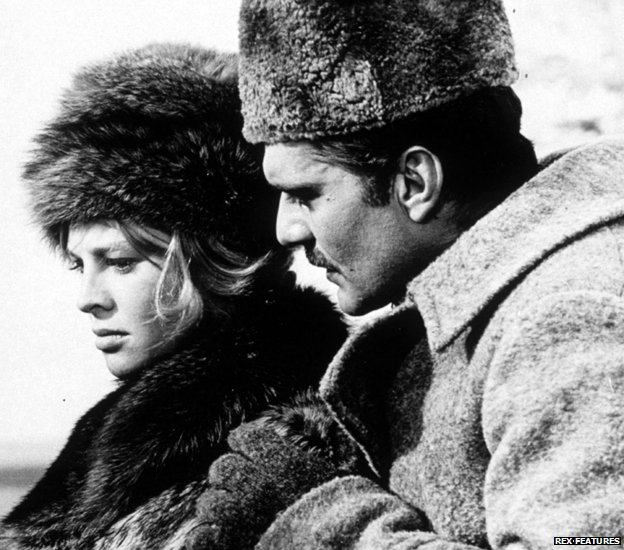
From selling cat meat in the British Empire to how the CIA was behind the publication of Dr. Zhivago, here are this week’s top picks in imperial and global history. Continue reading “This Week’s Top Picks in Imperial & Global History”
Academic Arrested by Government of Tajikistan – A Call For Support
[Editor’s Note: Below is a statement from Dr. John Heathershaw that seeks to bring attention to the recent arrest of an academic colleague by the Government of Tajikistan. For further details or to lend your support, please contact Dr. Heathershaw at the email address below. You can also sign a petition at Scholars for Sodiqov, and read more at the Guardian.]
Dr. John Heathershaw
Politics Department, University of Exeter
J.D.Heathershaw@exeter.ac.uk
FULL STATEMENT BY JOHN HEATHERSHAW
On Monday 16 June at approximately 2.30pm my academic colleague Alexander Sodiqov was arrested and detained in Khorog whilst working on the research project ‘Rising Powers and Conflict Management in Central Asia’. He has not been heard of since. On Tuesday 17 June, it was reported on state news agency Khovar that he was under investigation for ‘espionage’. Later we heard that Presidential Advisor Mr Khairulloev accepted that Alexander is an academic researcher and he would be released. However, yesterday evening a heavily edited video was shown on television in Badakhshon. I remain saddened and shocked by his detention and worried about his condition. I call on the Government of Tajikistan to release information about his arrest. Continue reading “Academic Arrested by Government of Tajikistan – A Call For Support”
‘Men of Martial Nature’: Reconsidering Churchill and Indian Muslims
Warren Dockter
Junior Research Fellow, Cambridge University
Follow on Twitter @WarrenDockter
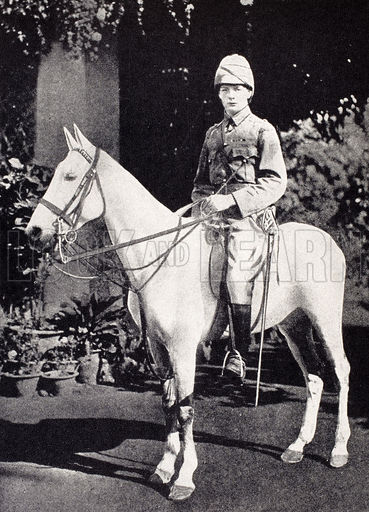
Winston Churchill’s tumultuous relationship with India is typically seen in the context of his campaign to deny increased autonomy and independence to India during the 1930s. The standard narrative tends to engage Churchill’s relationship with India by depicting a fiercely imperialist Churchill whose policy ‘rested on the simple concept that British power in India must be preserved without qualifications’ against the meek and well-intentioned Mahatma Gandhi, whose policy of ahimsa (nonviolence) helped make Churchill seem even more fanatically imperialist. Many historians also have linked Churchill’s resistance to Indian Independence to his romantic Victorian conception of the British Empire. That is, that he allowed his belief in the ‘civilizing effects of British rule’ to serve as his primary, if only, motivation for opposing Indian home rule. While Churchill’s romantic view of the British Empire undoubtedly played a role in his motivation to keep India within the British Empire, taken alone it does not sufficiently explain what motivated him to undertake such a politically ruinous stance.
These combined approaches are problematic because they are predicated on the notion that Churchill only understood British India as a static and monolithic extension of the empire, and that the Victorian-minded Churchill was so convinced of this view that he was willing to politically marginalize himself. As a result, Churchill is often caricatured as a hater of all Indians, an approach that ignores important considerations regarding Churchill’s view of minorities in India — especially India’s Muslims. Continue reading “‘Men of Martial Nature’: Reconsidering Churchill and Indian Muslims”


You must be logged in to post a comment.