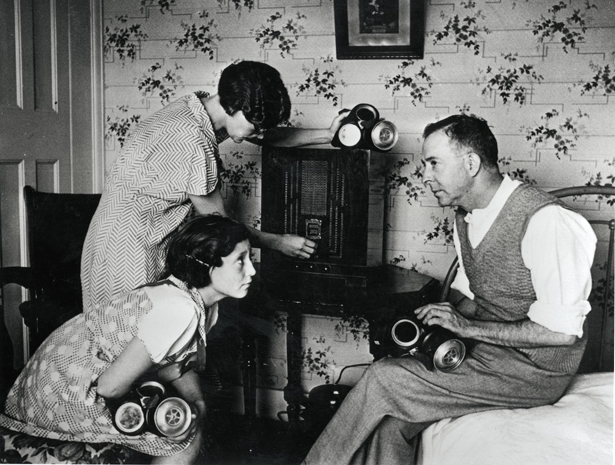
It’s often struck me that historians of World War II don’t make nearly as much use as they might of radio sources.
By contrast, they draw on newspapers to a much greater extent. Of course, the print media was important, but in order to capture people’s lived experience of the conflict the significance of radio has to be appreciated. Continue reading “Why do We Neglect Radio Sources When Studying #WW2?”→
How racist and sexist attitudes formed in the Victorian era resulted in the harsh and discriminatory treatment of women by the immigration control system in the 1960s and 1970s.
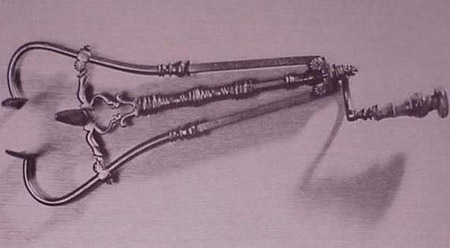
In February 1979, The Guardian reported that a number of women had been given gynaecological examinations by immigration control staff in the UK and at British High Commissions in South Asia, in a practice colloquially known as ‘virginity testing’. These tests were predominantly performed on South Asian women seeking to enter the UK on fiancée visas, which were not subject to waiting lists under the Immigration Act 1971. But while these rules allowed fiancées to enter without much paperwork, British immigration officials were also highly suspicious that these visas were being abused, feeding off a wider belief that many South Asian migrants were coming to Britain under false pretences. Continue reading “Virginity Testing: Racism, Sexism, and British Immigration Control”→
Since its founding in 1863, the International Committee of the Red Cross (ICRC) has been aware of the importance of keeping a record of its work and of its legacy – in the form of paper and audiovisual archives – to preserve the memories and knowledge of its past and to lay the foundation for its current and future work. Over time, the organization has amassed an outstanding and unique collection that encompasses its own history as well as the history of international humanitarian law and humanitarian action in general.
In January 1996, the ICRC decided to open its archives to the public in broad chronological sections at a time. By shortening the protective embargo on its archives, the ICRC was able to open the 1951-1965 records in 2004, thereby adding to the sources in its collection available for consultation by the public. From January 2015, the 1966-1975 archives will also be open to outside researchers. Continue reading “The @ICRC Archive is Opening its Records from 1966-1975”→
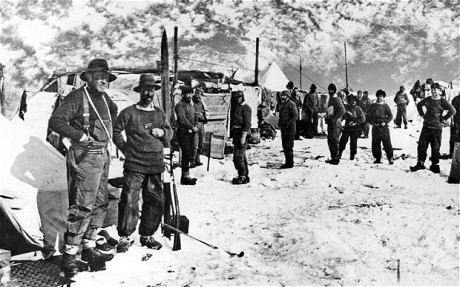
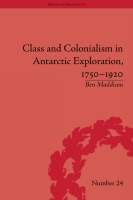
The histories of Antarctic exploration have generally tended to focus on the narratives of intrepid explorers such as Ernest Shackleton and Robert F. Scott, who led expeditions of endurance to the arduous polar wilderness of Antarctica. In the view of Ben Maddison, this concentration on the heroism of the Antarctic explorers, who he defines as the Antarctic elite or the ‘masters’, was an understandable consequence of how historians had approached ‘Antarctic history almost exclusively from the rhetoric and records of the masters’ [79]. In Class and Colonialism in Antarctic Exploration, 1750-1920 (2014), Maddison suggests that historians have, unintentionally, strengthened the invisibility of the Antarctic working class because they have been hesitant to engage critically with the voices from below on these expeditions.
Indeed, Maddison argues that it was the ‘gentrification’ of Antarctic exploration in the late nineteenth and early twentieth centuries that further contributed to the silencing of the working class. This despite the fact that the expeditions to Antarctica were ‘facilitated by multifarious labours of the working class’ [6]. Consequently, Maddison claims to fill this historical vacuum by providing a substantial new interpretation of the history of Antarctic expeditions. Continue reading “How the Antarctic Reframes the Context of Class and Empire”→
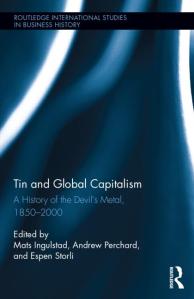
Tin and Global Capitalism, 1850-2000 traces the development of the industry from the ups and downs of the Cornish trade to the emergence of the Bolivian, Congolese and Malays as global players. Released on 27 August 2014, as part of the Routledge International Studies in Business History, the volume is the first collection to emerge out of the establishment of the History and Strategic Raw Materials Initiative (HSRMI), which we founded in 2012.
HSRMI was formed with the explicit intention of bringing together scholars working on what EC Vice-President referred to in 2012 as “raw materials diplomacy” from an historical perspective to utilise history to inform ongoing public debates about access to “strategic raw materials”. The importance of this is underlined by ongoing trade disputes over access to “rare earths” and other mineral deposits, as well as “resource wars” in Africa. Based on papers given at a conference on tin and the global economy at Harvard Business School in June 2012, the book intentionally explores the growth of global capitalism through the prism of the international trade in tin. Continue reading “Tin and Global Capitalism, 1850-2000: A History of the “Devil’s Metal””→
David Thackeray, Angela Banks, Kelly Cave, Jessica Deters, Caroline Menu, Daniel Scherer, Xiaohan Wang, and Henrik Zimmermann International Summer School 2014, University of Exeter
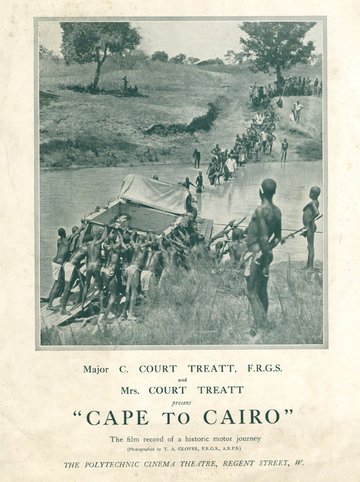
In July 2014 the University of Exeter ran its second annual summer school connected to Imperial and Global History: Britain and the making of the modern world with students from Canada, China, India, the Netherlands, Switzerland, and the USA. In this blog post students reflect on their experience working with Dr. David Thackeray from the History Department to explore archives connected to imperial history and documentary culture from the Bill Douglas Cinema Museum at the University of Exeter. The museum is home to one of the largest collections of material on the moving image in Britain, with a collection of over 75,000 items. The class was split into three groups and given a variety of film and visual culture sources to explore, then asked to record their reactions to those they found of most interest. Continue reading “Imperial History and Documentary Culture at the Bill Douglas Cinema Museum”→
Online registration is now open for a two-day conference, ‘Colonial Counterinsurgency in Comparative Perspective’, to be held on 18 and 19 September 2014, the University of Exeter.
The recent conflicts in Afghanistan and Iraq have prompted renewed interest in Britain’s colonial experience of rebellion and state breakdown, while current French interventions in Mali and the Central African Republic have stirred controversy over French military actions in former colonial dependencies, promoting accusations of ‘imperialist humanitarianism’. Yet, in spite of increasing interest in the history of counterinsurgency and empire, we lack comparative studies of colonial responses to armed insurrection, civil disorder, anti-colonial paramilitaries and other irregular forces. The aim of the conference is to address this imbalance by drawing on examples from the British, Dutch, French, and Portuguese empires, as well as case studies from China and Southern Africa. Continue reading “Colonial Counterinsurgency in Comparative Perspective, Sept. 18-19”→
During the second world war, the British and Americans led a bold effort to create a new international economic architecture, in the hope of ensuring future stability and peace. That they pulled it off, more or less successfully, was not so much a miracle as the product of a specific set of propitious historical circumstances. But they didn’t achieve it by being nice to each other. During the planning phase, that led to the crucial Bretton Woods conference of 1944, John Maynard Keynes, Britain’s key negotiator, contemptuously threw some draft minutes prepared by the Americans to the floor, declaring them “intolerable”. Harry Dexter White, Keynes’s opposite number, shot back: “We will try to produce something which Your Highness can understand.”
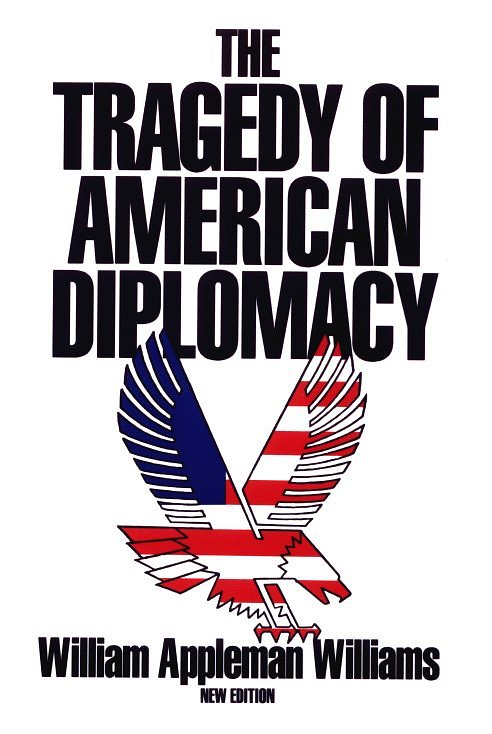
William Appleman Williams is considered the founder of the “strongly influential” Wisconsin School of U.S. foreign relations imperial history that took root from within the History Department at the University of Wisconsin, Madison. Williams’s book The Tragedy of American Diplomacy, first published in 1959, was the first of many revisionist imperial histories of American foreign policy that appeared amid what would become the broader radical New Left movement. Continue reading “The Tragedy of American Diplomacy and US Imperialism”→
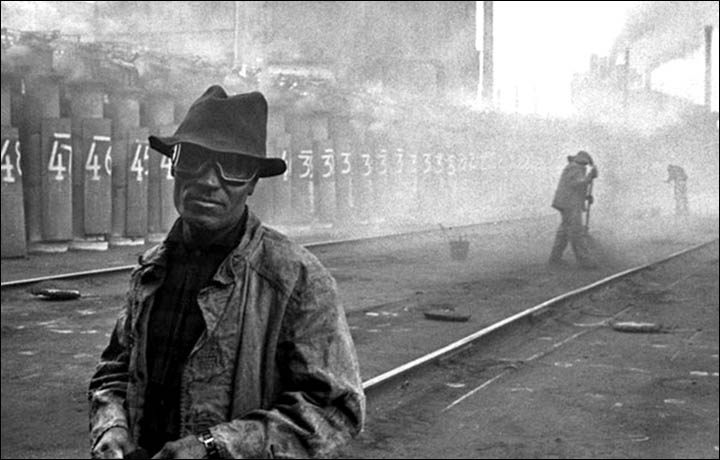
The Financial Times is making a global demand for more historians of wine. Also, killing Hitler, and more on New Left critiques of American imperialism. Oh, and did I mention contraband photos from Soviet Siberia? Here are this week’s top picks in imperial and global history. Continue reading “This Week’s Top Picks in Imperial & Global History”→







You must be logged in to post a comment.