France in Africa – Imperialist Humanitarian?

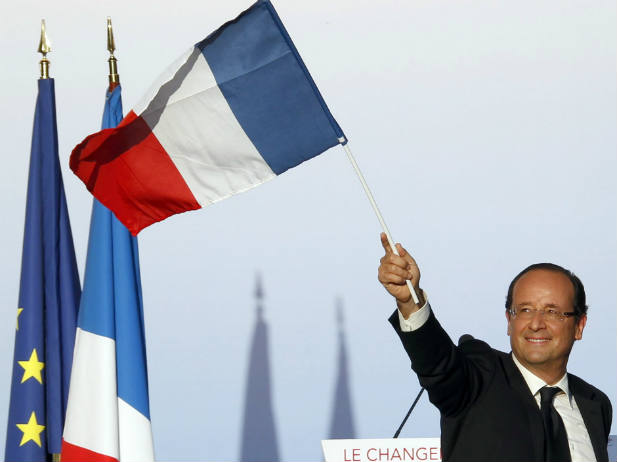
Francois Hollande, Socialist Party president-elect of France, waves to supporters in Toulouse. (Regis Duvignau/courtesy Reuters)
Francois Hollande waves to supporters in Toulouse. (Regis Duvignau/courtesy Reuters)

Martin Thomas
Director, Centre for the Study of War, State and Society, University of Exeter

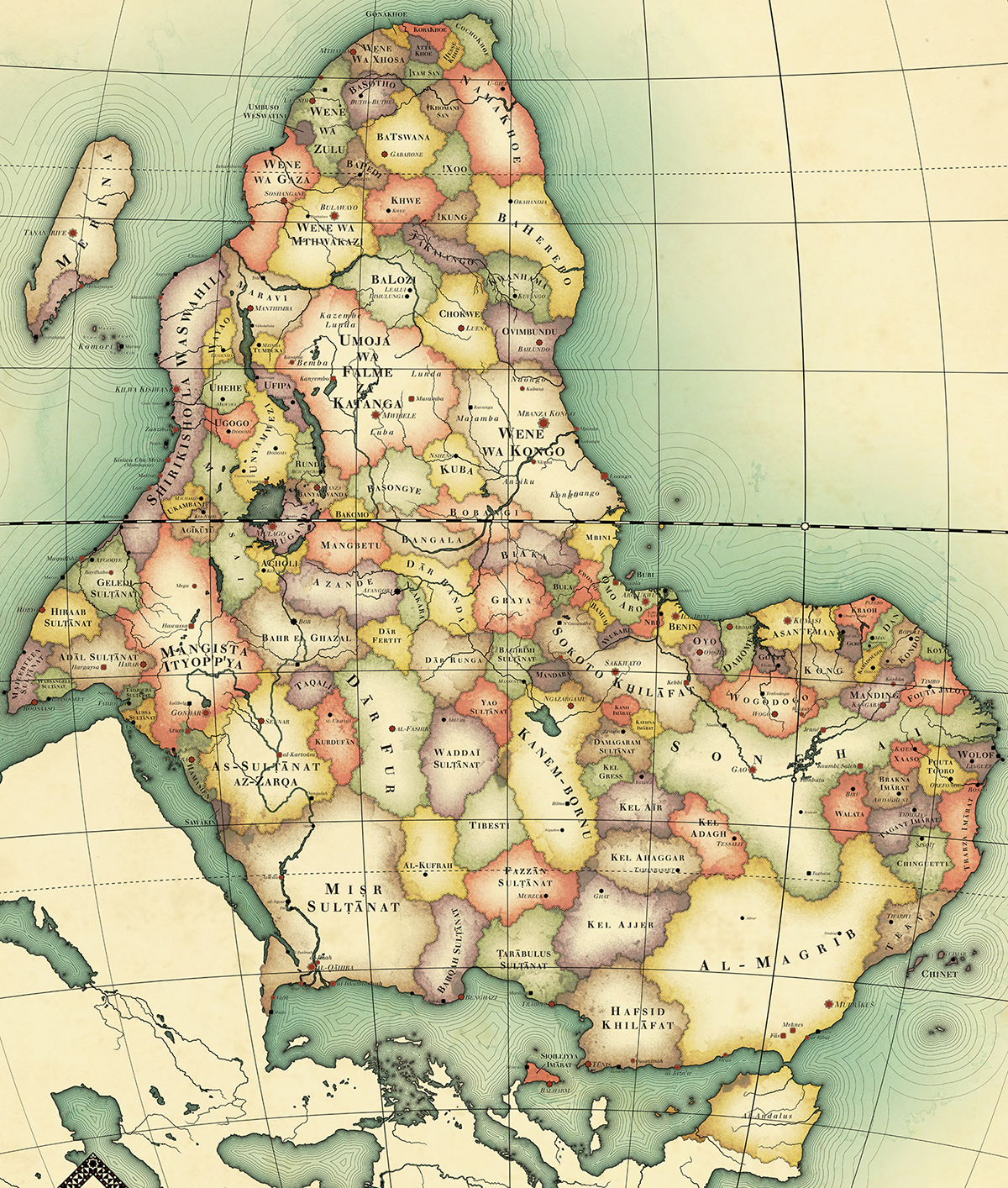
As the UN warns of an impending humanitarian disaster in the Central African Republic (CAR), what should we make of France’s recent back-to-back interventions in sub-Saharan Africa? Is there an echo in this of the clientalist politics pursued by France in Africa in the years after formal decolonization? Continue reading “France in Africa – Imperialist Humanitarian?”

Teaching ’12 Years a Slave’ and other Top Picks in Imperial & Global History

greatbooksDebating the origins of the First World War will have to wait a few days. Why? Because this week was a big one for other imperial and global news, from teaching the history of slavery to the end of globalization. Here are some of the Forum’s top picks of the week. Continue reading “Teaching ’12 Years a Slave’ and other Top Picks in Imperial & Global History”
Considering a History PhD at Exeter? Registration Open till Monday for the PhD funding Open Day

Want to do a PhD in history at the University of Exeter?

There is still time.

Prospective applicants who are eligible for funding can register for our Open Day in Bristol on Wednesday 22 January 2014. The aim of the Open Day is for you to learn more about the research opportunities and supervisory expertise offered in the SWW DTP. The deadline for registering is 12.00 midday Monday 13 January 2014. Continue reading “Considering a History PhD at Exeter? Registration Open till Monday for the PhD funding Open Day”

Fighting the Myths of the First World War

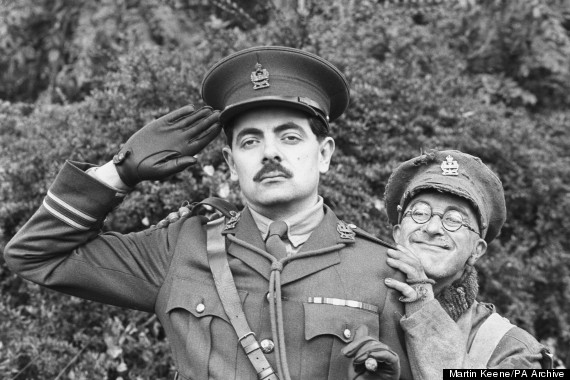
Television - BBC - Blackadder Goes Forth - Rowan Atkinson and Tony Robinson - London
Rowan Atkinson as Cpt. Edmund Blackadder (left). Tony Robinson as Private Baldrick (right).

Marc-William Palen

Did you miss this weekend’s intellectual battle over the myths of the First World War? Here are the highlights.

Round 1, Gove v. Evans

Late last week, Education Secretary Michael Gove fired off the year’s opening salvo in the pages of the Daily Mail in ‘Why Does the Left Insist on Belittling True British Heroes?’ As the title suggests (and now with support from Stephen Pollard in the Express and UKIP’s Nigel Farage in the Independent), Gove attempts to situate the debate as a Left v. Right political issue (for which Professor Gary Sheffield has taken him to task). Continue reading “Fighting the Myths of the First World War”

This Week’s Top Picks in Imperial & Global History

LawBooksNeed some distractions for the new year? Here are some of the most noteworthy recommended reads of the week from the Imperial & Global Forum. Continue reading “This Week’s Top Picks in Imperial & Global History”

Tracing Churchill’s Rhetoric on Imperial Trade

Screen Shot 2013-12-15 at 8.52.43 AMRichard Toye

Churchill and the Culture of Imperial Political Economy

Winston Churchill is not famed for his views on economics. Yet they formed an important aspect of his outlook.  Continue reading “Tracing Churchill’s Rhetoric on Imperial Trade”

Top Christmas Picks in Imperial & Global History

christmasbooksNeed some fun reading on imperial and global history over the holiday break? Here are some of the Imperial & Global Forum‘s top recommendations: Continue reading “Top Christmas Picks in Imperial & Global History”

South Africa’s Long Walk: Political Dissent and the Spirit of Resistance at the Mandela Memorial

A section of the crowd boos President Jacob Zuma during the memorial service for former president Nelson Mandela. Picture: Nelius Rademan/Foto24
President Jacob Zuma received boos from some of the crowd attending the memorial service for Nelson Mandela. Picture: Nelius Rademan/Foto24

Emily Bridger

The crowd’s booing of Zuma at the memorial service embodied Mandela’s oppositional legacy.

Following Nelson Mandela’s passing early this month, international media and public interest in South Africa has abounded. From the fake sign language interpreter at the memorial to President Obama’s embarrassing ‘selfie’ taken during the service, journalists have had plenty of scandals to sink their teeth into. In particular, the crowd’s booing of current South African president Jacob Zuma during last Tuesday’s memorial has struck a particular chord with journalists, twitter users, and politicians alike. Continue reading “South Africa’s Long Walk: Political Dissent and the Spirit of Resistance at the Mandela Memorial”

Boycotting Apartheid: the Global Politics of ‘Fair Trade’

Free Nelson MandelaDavid Thackeray

As  a  child  there  were  few  experiences  I  looked  forward  to  more  than  a  trip  up  to  London  with  my  father  to  visit  Hamleys  toy  store  in  the  run-up  to  Christmas.  Rather  unusually  perhaps,  these  visits  to  the  capital  were  also  occasionally  marked  by  a  stop  at  South  Africa  House  to  see  the  Anti-Apartheid  picket  of  the  embassy,  organised  to  call  for  the  release  of  ANC  leader  Nelson  Mandela.  We  had  moved  to  the  UK  from  New  Zealand  a  few  years  beforehand,  and  Dad  would  always  use  such  occasions  to  regale  me  with  proud  memories  of  the  protests  which  greeted  South  Africa’s  notorious  rugby  tour  in  1981.  When  the  Springboks  came  to  our  home  city  of  Hamilton,  a  key  centre  of  Maori  culture,  crowd  protests  led  to  the  abandonment  of  a  test  against  the  All  Blacks.  Another  game  became  a  farce  when  flour  bombs  and  leaflets  were  scattered  over  the  pitch  from  a  light  aeroplane. Continue reading “Boycotting Apartheid: the Global Politics of ‘Fair Trade’”

Human Rights and ‘Neoliberalism’

Samuel Moyn

Samuel Moyn
James Bryce Professor of European Legal History, Columbia University

Cross-posted from Humanitarianism and Human Rights
9/12/13

Much ink has now been spilled on the historical origins of human rights. That debate will continue no doubt. I have surveyed the wreckage in a recent review essay (in English here, but for some similar thoughts auf Deutsch see here) but there is no doubt that problems large and small remain to resolve.

One of the biggest is how to formulate the historical relationship between humanitarianism and human rights. In my view, the best thing to say is that the former is old and the latter (conceptualized as the quest for an international regime pursued by transnational movements) is new, though humanitarianism certainly did create many   norms originally framed outside an individualist or rights-based paradigm that contemporary movements have now put in one. Continue reading “Human Rights and ‘Neoliberalism’”

Over 1 Million Historical Images Made Available by British Library

Marc-William Palen

[London, 1857] Image taken from page 464 of 'The eventful voyage of H.M. Discovery Ship “Resolute” to the Arctic Regions in search of Sir J. Franklin. ... To which is added an account of her being fallen in with by an American Whaler after her abandonment ... and of her [from the British Library Images Collection]
[London, 1857] Image taken from page 464 of ‘The eventful voyage of H.M. Discovery Ship “Resolute” to the Arctic Regions in search of Sir J. Franklin. … To which is added an account of her being fallen in with by an American Whaler after her abandonment … and of her [courtesy of the British Library]

Need some new visual resources for next term’s imperial or global history class? The British Library has now made available over 1 million images dating from the 17th to the 19th century. Continue reading “Over 1 Million Historical Images Made Available by British Library”

This Week’s Top Picks in Imperial & Global History

LawBooksLooking for some weekend reading recommendations? Here are some of our top picks from the web this week: Continue reading “This Week’s Top Picks in Imperial & Global History”
The Black Hole of Apartheid History

Anti-Apartheid posterJamie Miller
Visiting Assistant Professor, Quinnipiac University

Why historians should study the regime, not just its opponents

Last week’s death of Nelson Mandela prompted outpourings of both admiration and introspection across the globe. Public figures scrambled to portray themselves as long-time supporters of the anti-apartheid cause — even where the historical record of their organisation’s relationship with Mandela undercut the credibility of such posturing (the British Tories readily come to mind). Yet amid the panegyrics, there was plenty of consideration of Mandela’s complex legacy. When Tea Party favourite Ted Cruz declared common cause with Mandela, a supporter wrote on his Facebook page: “Tell the truth Ted!!! Who are you??!! Obama?? Don’t rewrite history to try to get people to like you!!! Educate them!! Mandela was a murderer, terrorist, and a Communist!!!! Can we even trust you to be honest now??!!” A more nuanced analysis appeared in an incisive piece in Foreign Affairs. Historian Ryan Irwin traced Mandela’s elusive legacy to his willingness to embody a pluralist and inclusive vision of the anti-apartheid movement, rather than imposing his own ideological litmus test for would-be allies—be they liberals, pan-Africans, union leaders, or communists.

And yet one thing was conspicuous for its absence over the last week. There has been no effort to describe with any similar specificity what Mandela had defined his life against: the apartheid regime itself. [1] Continue reading “The Black Hole of Apartheid History”

Covering Up the Dark Side of Decolonisation

Gareth Curless

Historians of empire have long suspected that documents from the colonies were transferred back to Britain during the last days of imperial rule, only never to enter into the public domain. It was no small surprise therefore when in April 2011 the Foreign and Commonwealth Office (FCO), under pressure from a high court judge, admitted that it had a secret archive of nearly 9,000 files from 37 colonies. Perhaps the biggest surprise from the ruling was how easy it was for the FCO to keep these documents hidden from historians for so long. Continue reading “Covering Up the Dark Side of Decolonisation”

How Should Historians Consider Nelson Mandela?

nelson-mandelaRichard Toye

The sad news of the death of Nelson Mandela has led many commentators to reflect on how he will be remembered. His reputation is now, and has been for many years, almost uniquely positive. So it should be, and let’s hope it will remain that way. Let this not, however, be at the expense of historical complexity. Here are some points which historians should bear in mind when reflecting on Mandela’s career and on his evolution from freedom fighter to world statesman. Continue reading “How Should Historians Consider Nelson Mandela?”