Why do We Neglect Radio Sources When Studying #WW2?

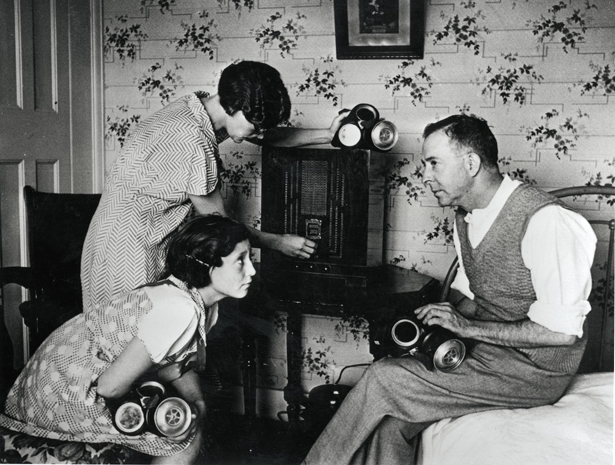
World War Two. England. 1938. The family at home, tuning in to hear the news on the radio news. They have gas masks at the ready.

Richard Toye
History Department, University of Exeter

Follow on Twitter @RichardToye

It’s often struck me that historians of World War II don’t make nearly as much use as they might of radio sources.

By contrast, they draw on newspapers to a much greater extent. Of course, the print media was important, but in order to capture people’s lived experience of the conflict the significance of radio has to be appreciated. Continue reading “Why do We Neglect Radio Sources When Studying #WW2?”

Revisiting Bretton Woods and the Origins of the IMF: Guardian Book Review by @RichardToye

Screenshot 2014-08-03 07.41.20

Richard Toye
History Department, University of Exeter
Follow on Twitter @RichardToye

You can read this book review article in its entirety at The GuardianRichard Toye is the author of The Roar of the Lion: The Untold Story of Churchill’s World War II Speeches. To order The Summit for £20 with free UK p&p call Guardian book service on 0330 333 6846 or go to guardianbookshop.co.uk.

During the second world war, the British and Americans led a bold effort to create a new international economic architecture, in the hope of ensuring future stability and peace. That they pulled it off, more or less successfully, was not so much a miracle as the product of a specific set of propitious historical circumstances. But they didn’t achieve it by being nice to each other. During the planning phase, that led to the crucial Bretton Woods conference of 1944, John Maynard Keynes, Britain’s key negotiator, contemptuously threw some draft minutes prepared by the Americans to the floor, declaring them “intolerable”. Harry Dexter White, Keynes’s opposite number, shot back: “We will try to produce something which Your Highness can understand.”

Such anecdotes help turn Ed Conway’s account of potentially dry events into highly readable history. Continue reading “Revisiting Bretton Woods and the Origins of the IMF: Guardian Book Review by @RichardToye”

The Tragedy of American Diplomacy and US Imperialism

Marc-William Palen
History Department, University of Exeter
Follow on Twitter @MWPalen

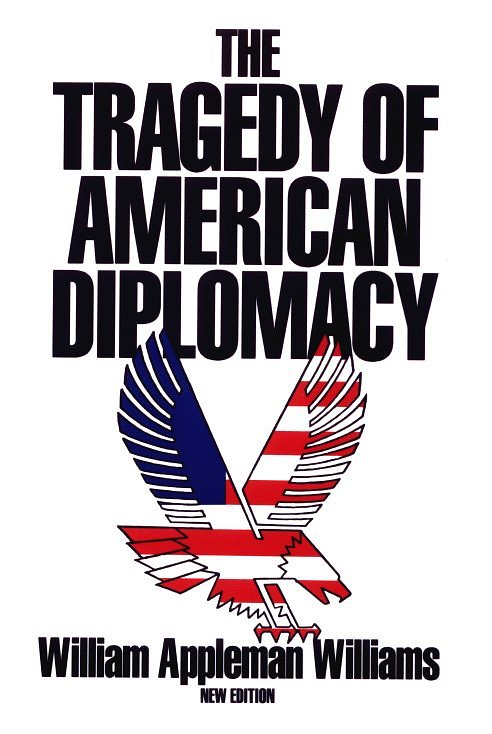
The_Tragedy_of_American_DiplomacyWilliam Appleman Williams is considered the founder of the “strongly influential” Wisconsin School of U.S. foreign relations imperial history that took root from within the History Department at the University of Wisconsin, Madison. Williams’s book The Tragedy of American Diplomacy, first published in 1959, was the first of many revisionist imperial histories of American foreign policy that appeared amid what would become the broader radical New Left movement. Continue reading “The Tragedy of American Diplomacy and US Imperialism”

Churchill the Middlebrow

Richard Toye
History Department, University of Exeter

Follow on Twitter @RichardToye

Cross-posted from Australian Book Review

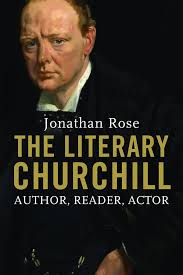
Rose Literary ChurchillOn the rear jacket of this fascinating and important book is a picture of Winston Churchill at his desk at Chartwell, his house in Kent, just a few months before the outbreak of World War II. Apparently caught in the moment of literary creation, cigar in mouth and concentrating on his papers, the photo credit – to a Picture Post photographer – leads to the obvious suspicion that this was actually a staged shot. For Churchill, his country home was not merely a place of repose but a writing factory, the output of which would earn him the large sums of money necessary for its upkeep. At the same time, his image as a man of letters served to advertise the product as well as to suggest the existence of a non-political ‘hinterland’ of the kind appropriate to a statesman of fertile brain and broad views. Continue reading “Churchill the Middlebrow”

The 1914 Home Rule Act – Is It Worth Celebrating?

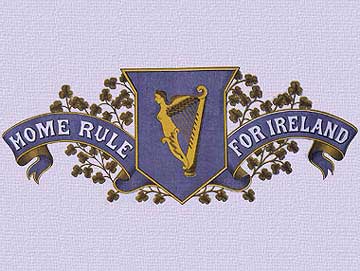
homerule

Richard Toye
Follow on Twitter @RichardToye

The following remarks were made by Professor Richard Toye at an event held this week at the Irish Embassy to commemorate the centenary of the Third Home Rule Act. The event, which also featured Professors Paul Bew and Michael Laffan, and former Taoiseach John Bruton, will be broadcast on BBC Parliament at 9pm on 5 July.

The 1914 Home Rule Act was, by any standards, a messy compromise. But was it a good compromise or a bad one? Continue reading “The 1914 Home Rule Act – Is It Worth Celebrating?”

Imagining Britain’s Global Markets

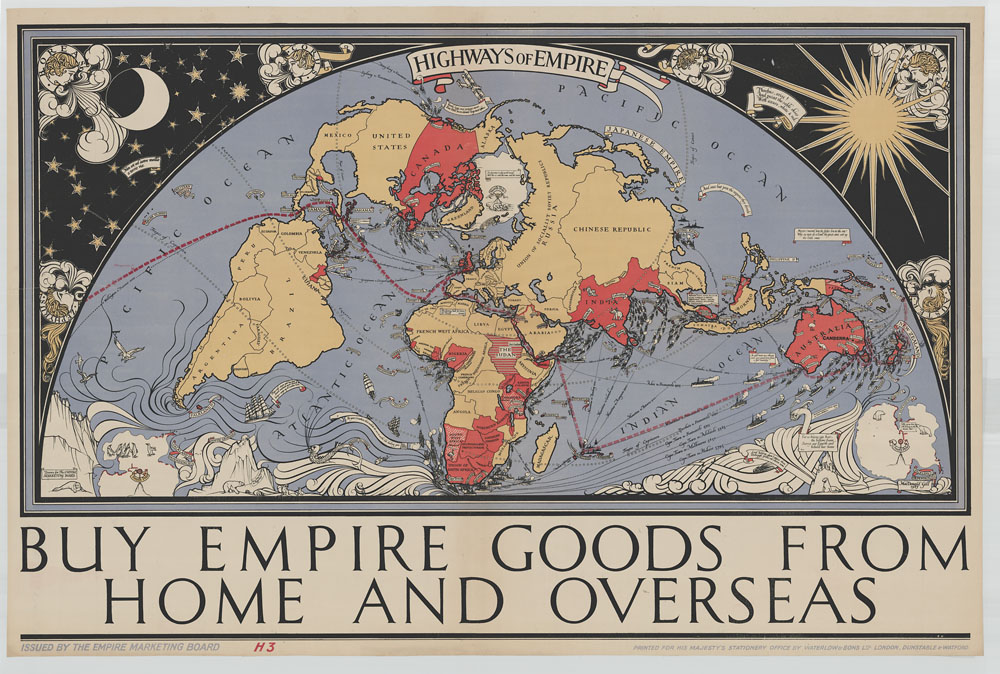
A 1927 pictoral map with all the dominions and trade routes. British Empire Marketing Board.   (Library and Archives Canada, Acc. No. 1983-27-382 Copyright expired.)
A 1927 pictoral map with all the dominions and trade routes. British Empire Marketing Board.
Library and Archives Canada, Acc. No. 1983-27-382 Copyright expired.

The History Department at the University of Exeter has recently received funding from the AHRC to support an international research network: ‘Imagining Markets: Conceptions of Empire/Commonwealth, Europe and China in Britain’s economic future since the 1870s’. The network led by David Thackeray, Richard Toye and Andrew Thompson aims to provide a bridge between historical and contemporary ways of thinking about Britain’s future global economic orientation, bringing together scholars working in the fields of Imperial, European and Asian studies, and scholars from cultural studies and economic studies, which have become increasingly separated branches of enquiry calling for reintegration.

Continue reading “Imagining Britain’s Global Markets”

Rhetoric and Imperial Decline: Arguing the Hola Camp Massacre of 1959

Richard Toye
Follow on Twitter @RichardToye

HolaMassacreTombstone
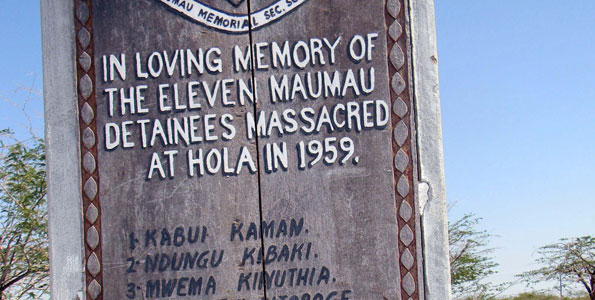
A mass grave in Hola is marked with a tombstone inscribed: “In loving memory of the 11 Mau Mau detainees massacred at Hola in 1959.” Their names are Kabui Kaman, Ndungu Kibaki, Mwema Kinuthia, Kinyanjui Njoroge, Koroma Mburu, Karanja Munuthi, Ikeno Ikiro, Migwi Ndegwa, Kaman Karanja, Mungai Githi and Ngugi Karitie.

On 3 March 1959, eleven Mau Mau detainees were beaten to death by their British guards amid an attempt to force the prisoners to undertake manual labour. What is now known as the Hola Camp Massacre has widely been seen as a seminal moment, one that undermined the legitimacy of the British Empire. In a celebrated Commons speech on the affair, Enoch Powell declared that it was not possible to have ‘African standards in Africa, Asian standards in Asia and perhaps British standards here at home […] We cannot, we dare not, in Africa of all places, fall below our own highest standards in the acceptance of responsibility.’

Yet it is intriguing to ask why this particular episode of colonial violence became a cause célèbre when previous comparable episodes of imperial violence (such as the Batang Kali killings in Malaya in 1948) had not. Continue reading “Rhetoric and Imperial Decline: Arguing the Hola Camp Massacre of 1959”

Adam Smith and Empire: A New Talking Empire Podcast

Marc-William Palen

Wealth of NationsWithin the field of imperial history, Adam Smith’s Wealth of Nations (1776) is commonly associated with the anti-imperial economic doctrine that arose in the mid nineteenth century alongside the rise of Free Trade England. This ideology drew inspiration from Smith’s condemnation of the British Empire for being unnecessarily mercantilistic, expensive, and atavistic. Smith’s critique of imperialism came to be known as “Cobdenism”, named after Victorian free trade apostle Richard Cobden, the anti-imperial radical who led the overthrow of England’s protectionist Corn Laws in 1846.

But the longer imperial legacy of the Wealth of Nations is much more . . . complicated. Smith’s work was transformed into an amorphous text regarding the imperial question throughout the late nineteenth and early twentieth century. Adam Smith had left behind an ambiguous legacy on the subject of empire: a legacy that left long-term effects upon subsequent British imperial debates.

Continue reading “Adam Smith and Empire: A New Talking Empire Podcast”

Asterix the Gaul – Colonial Freedom Fighter or Neo-Imperialist?

Richard Toye

Asterixcover-asterix_the_gaulWhat might a historian of modern empire uncover within the long-running cartoon book series, Asterix the Gaul? Orientalism, French cultural anxiety about American neo-imperialism, and fears of cultural corruption in the face of the forces of global commercialism, of course.

The new Asterix volume, Asterix and the Picts, is not only the first in the series to be drawn/written without the involvement of either of the original creators, Rene Goscinny and Albert Uderzo; it has also led reviewers to wonder whether it can be seen as commentary on Scottish nationalism. Continue reading “Asterix the Gaul – Colonial Freedom Fighter or Neo-Imperialist?”

A Decade of ‘Imperial Absent-Mindedness’: A New Talking Empire Podcast

porter absentminded imperialistsRichard Toye

In 2004, Bernard Porter published The Absent-Minded Imperialists: Empire, Society and Culture in Britain. It immediately became a controversial work. Porter later reflected that the book:

was mainly a response to certain scholars (and some others) who, I felt, had hitherto simplified and exaggerated the impact of ‘imperialism’ on Britain in the nineteenth and twentieth centuries, after years in which, except by empire specialists like myself, it had been rather ignored and underplayed. […] the main argument of the book was this: that the ordinary Briton’s relationship to the Empire in the nineteenth and early twentieth centuries was complex and ambivalent, less soaked in or affected by imperialism than these other scholars claimed – to the extent that many English people, at any rate, possibly even a majority, were almost entirely ignorant of it for most of the nineteenth century.[1] Continue reading “A Decade of ‘Imperial Absent-Mindedness’: A New Talking Empire Podcast”

Does Trade Promote Peace? An Historical and Global Perspective

Global History of Trade and ConflictLucia Coppolaro and Francine McKenzie
Editors of A Global History of Trade and Conflict Since 1500 (Palgrave, 2013)

In the early 17th century, Jan Pieterszoon Coen, the Dutch East India Company’s governor-general in the Indies, explained that trade and war were inseparably linked: ‘we cannot make war without trade nor trade without war’.[1] The utility of war and other violent methods to secure an advantageous commercial position was an extreme view even by the mercantilist standards of the day, but trade and conflict were commonly connected. About one hundred years later, Montesquieu, the Enlightenment political philosopher, reached the radically different conclusion that trade was an instrument of peace; thus in 1748, he wrote ‘Peace is the natural effect of trade’. Continue reading “Does Trade Promote Peace? An Historical and Global Perspective”

What can a First World War Adventure Novel Tell us About Empire?

buchanjoetext9639stp10Richard Toye

The Guardian recently ran a piece calling for Britons to confront their colonial past by way of now-forgotten empire adventure stories. Professor Richard Toye has done just that, uncovering the imperial side of a stirring adventure tale, The Thirty-Nine Steps (1915).

John Buchan’s 1915 adventure novel The Thirty-Nine Steps, with its dashing hero Richard Hannay, is just a bit of fun – isn’t it? Well, it’s fun all right, but behind it there lays a pretty clear political agenda. Most obviously it’s anti-German, with the plot revolving around a devilish Teutonic plot to steal British military secrets. But there’s also a strong imperial dimension. Continue reading “What can a First World War Adventure Novel Tell us About Empire?”

The Roar of the Lion: The Debate Goes On

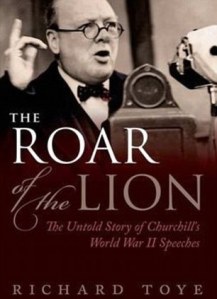
Roar of the lionIn the latest Reviews in History, published online by the Institute of Historical Research, Professor Kevin Matthews of George Mason University looks at Professor Richard Toye’s recent book The Roar of the Lion: The Untold Story of Churchill’s World War II Speeches, which has already aroused considerable controversy. Matthews notes:

To produce this study, Toye deftly combines secondary source material with archival research, especially Churchill’s own, often overlooked speech-writing files. The result is a book that is by turns informative, engaging, and, all too often, frustrating.

Matthews agrees that ‘Toye is surely right that Churchill did not command unanimous support during the war, a fact he demonstrates by lacing his book with contemporary reactions to the wartime speeches.’ However, he is critical of the book’s use of Mass-Observation material and the reports of the Ministry of information’s Home intelligence Division:

More than once, while the Home Intelligence Division reported overall support for a Churchill address, Toye is quick to highlight negative comments about the same speech found in the MO files, even when those comments represented ‘minority feeling’ (p. 108). Moreover, these negative reactions often say less about Churchill’s oratory than they do about a war-weary, but also fickle public.

In his author’s response, Toye responds robustly, arguing that Matthews overlooked the ways in which the book addresses such methodological concerns. Toye also emphasizes that highlighting contemporary criticisms of Churchill’s speeches does not necessarily amount to an endorsement of the critics’ point of view. He argues: ‘Once it is grasped that I am neither criticising Churchill nor rubbishing his speeches, then Matthews’s critique of my work loses its force.’

Who do you think is right?

You can check out the full exchange here.

Orientalism and its Legacies: New Talking Empire Podcasts

SaidOrientalismRichard Toye

Edward Said (1935-2003) was one of the foremost intellectuals of the Twentieth Century. Heavily influenced by the French philosopher Michel Foucault, his work spanned the fields of literature, history, and post-colonial studies. He was a controversial figure, and none of his work is more debated than his landmark 1978 book Orientalism. Said recast this term so that it referred to the structures of knowledge – or rather discourse – through which Westerners constructed the image of the East. Continue reading “Orientalism and its Legacies: New Talking Empire Podcasts”

Tracing Churchill’s Rhetoric on Imperial Trade

Screen Shot 2013-12-15 at 8.52.43 AMRichard Toye

Churchill and the Culture of Imperial Political Economy

Winston Churchill is not famed for his views on economics. Yet they formed an important aspect of his outlook.  Continue reading “Tracing Churchill’s Rhetoric on Imperial Trade”