Marc-William Palen
History Department, University of Exeter
Follow on Twitter @MWPalen

Marc-William Palen
History Department, University of Exeter
Follow on Twitter @MWPalen
Cross-posted from Humanitarianism & Human Rights
Academic Conveners: Fabian Klose (University of Cologne), Johannes Paulmann (IEG Mainz), Andrew Thompson (University of Exeter) in cooperation with the International Committee of the Red Cross (Geneva)
Date: 07.07.2019-19.07.2019, Mainz / Geneva
The fifth edition of the Global Humanitarianism Research Academy (GHRA) took place at the Leibniz Institute of European History Mainz and the Archives of the International Committee of the Red Cross in Geneva from July 7 to 19, 2019. It approached cutting-edge research regarding ideas and practices of humanitarianism in the context of international, imperial and global history thus advancing our understanding of global governance in humanitarian crises of the present. With the Chair in International History and Historical Peace and Conflict Studies at the Department of History of the University of Cologne, a new partner joined the GHRA 2019. As in the last four years the organizers FABIAN KLOSE (University of Cologne), JOHANNES PAULMANN (Leibniz Institute of European History Mainz), and ANDREW THOMPSON (University of Exeter) received again a large number of excellent applications from more than twenty different countries around the world. Eventually the conveners selected eleven fellows (nine PhD candidates, two Postdocs) from Brazil, Cyprus, Egypt, Ireland, Japan, Portugal, the United Kingdom, and the United States. The multitude of disciplinary approaches from International Law, Political Science, and Medicine proved to be very rewarding just as the participation of guest lecturer CLAUS KREß (University of Cologne), visiting fellow JULIA IRWIN (University of South Florida, Tampa) as well as STACEY HYND (University of Exeter) and MARC-WILLIAM PALEN (University of Exeter) as long-standing members of the academic team. Continue reading “Report of the Fifth Global Humanitarianism Research Academy (GHRA 2019)”
Ryan Hanley
University of Exeter
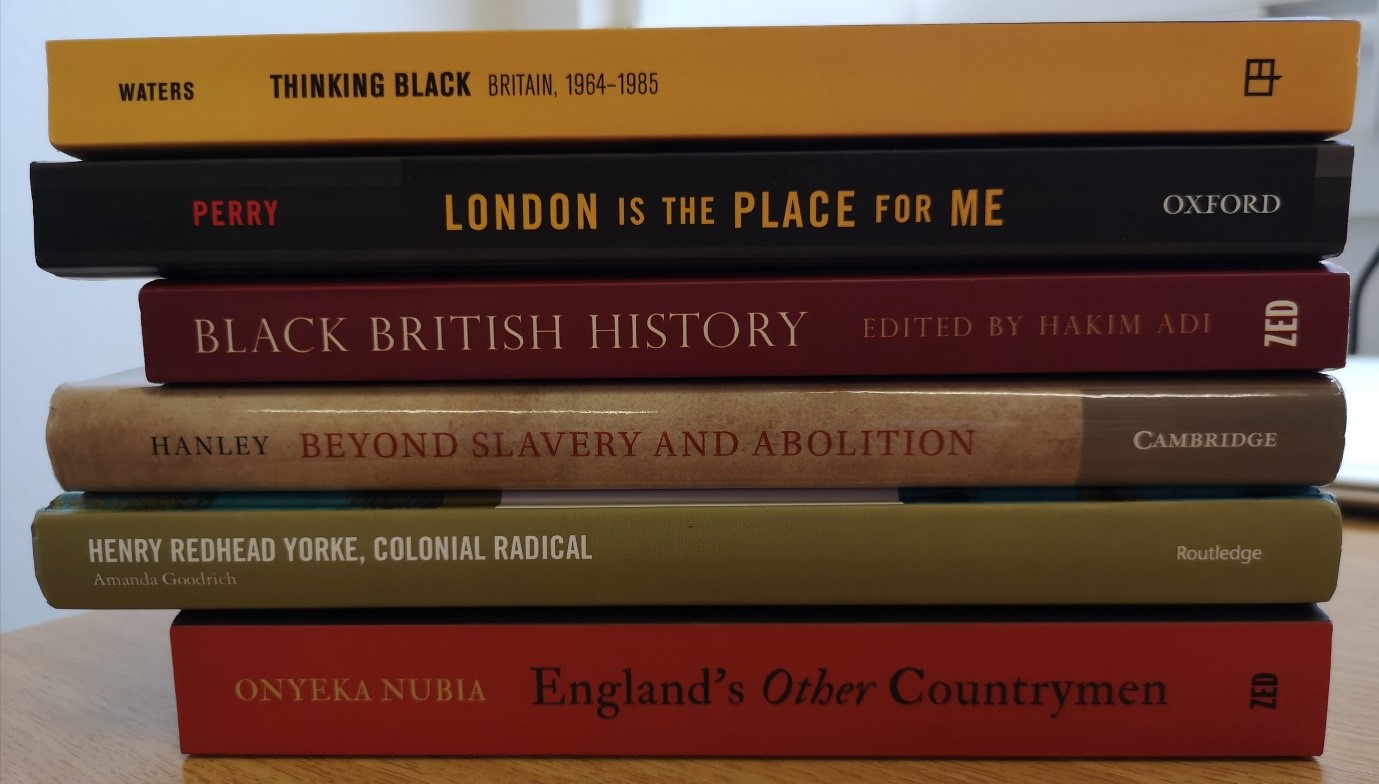
October marks Black History Month in the UK, providing the perfect excuse to delve into some of the best new history writing in this dynamic and rapidly-expanding field. Since my first monograph, Beyond Slavery and Abolition: Black British Writing, c.1770-1830 (Cambridge University Press, 2018), was published last October, the field of black British history seems to have been completely transformed. The past twelve months have seen several (I counted six) new permanent academic posts in the UK and a new MA programme, all dedicated more or less specifically to black British history. And January 2020 sees the launch of a new seminar series in London supported by the Institute for Historical Research, showcasing some of the best new work in the field from within and beyond the university – hope to see some of you there!
Some of this will have to do with the publication in October 2018 of the Royal Historical Society’s Race, Ethnicity and Equality Report, which highlighted the chronic underrepresentation and overwork of ‘Black and Minority Ethnic’ academic staff in British history departments. But the sudden heightened visibility of black British history in UK academia is not purely down to newfound resolutions to build stronger, better history departments, nor solely to the ongoing work to ‘decolonise’ history curricula, though both are important factors. The simple fact is that we have had an incredible year of high-quality scholarly research publications, accounting for some of the most innovative, dynamic, and vital work on British history as a whole.
Don’t call it a ‘turn’ – but there is more and more great work out there that, taken together, is changing the way we think about Britain’s past and its relationship to global and imperial history. Some of you, especially if you don’t work on topics obviously related to black British history, might be curious about how this impacts on your research interests. So, to celebrate and spread the word about this new wave of black British history scholarship, here are my top picks from the past twelve months. Continue reading “New Books on Black British History”

Marc-William Palen
History Department, University of Exeter
Follow on Twitter @MWPalen
Christopher McKnight Nichols
Oregon State University
Continue reading “Historicizing ‘America First’ and US Isolationism”

Marc-William Palen
History Department, University of Exeter
Follow on Twitter @MWPalen
William Gallois
University of Exeter
Rethinking History is seeking to attract new book reviewers and would welcome suggestions of works to review from PhD candidates and early career researchers working in global and colonial history. We also have a specific need to find reviewers for the following recently-published works: Continue reading “Call for Book Reviewers – Rethinking History”

Marc-William Palen
History Department, University of Exeter
Follow on Twitter @MWPalen

Jonathan Parker
University of Texas at Austin
Cross-posted from Not Even Past
This excellent work by historian Pieter Judson shows how the Hapsburg empire was a modernizing force that sustained a complex but often mutually beneficial relationship with the various nationalist movements within its borders. To support this argument, Judson synthesizes an impressive number of existing works on narrower topics into a cohesive narrative history of the empire from the late eighteenth century until its demise at the end of World War I. Judson claims that the empire was hardly doomed prior to 1914, arguing against long-standing nationalist histories of the empire’s inevitable collapse. While The Habsburg Empire is not without its flaws, it will surely remain required reading for anyone interested not only in the empire itself, but more broadly in the history of state-building, modernization, and nationalism in the nineteenth century. Continue reading “The Habsburg Empire: A New History by Pieter Judson (2016)”
Marc-William Palen
History Department, University of Exeter
Follow on Twitter @MWPalen

John C. Mitcham
Duquesne University
President Donald Trump’s recent musings about buying Greenland from Denmark stirred deep emotions abroad. The idea of acquiring sovereign territory through a real estate purchase seems like a quintessentially American act. As a Canadian writer in the Toronto Star put it, “Whether you love him or hate him, I think we can agree on this: Donald Trump even believing he can buy Greenland is clinically insane.”
Except that Canada also once tried to purchase the Greenland.
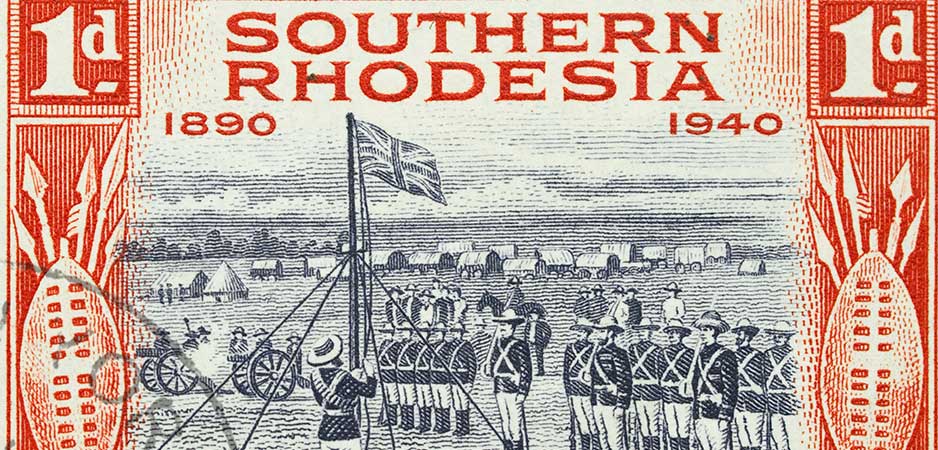
At the height of the First World War, the leaders of the vast British Empire assembled in London to lay the foundation for a postwar world dominated by white, English-speaking peoples. This Imperial War Conference of 1917 included representatives from the overseas Dominions of Canada, Newfoundland, South Africa, and New Zealand. It was the kind of Commonwealth gentleman’s club that would make the most romantic Brexiteers swoon with post-imperial nostalgia. Continue reading “That Time Canada Tried to Purchase Greenland”

Alan Lester
University of Sussex
When Laurence Fox played Lord Palmerston in ITV’s Victoria, he admitted that the character “may have had a bit of the Boris about him”. [1] Johnson and Palmerston of course shared undiplomatic careers as flippant Foreign Secretaries and a wit and charm that made them popular with the public, if not always with their peers in parliament. The parallels do not end there, however.
In 1857, when he was Prime Minister, Palmerston suspended parliament in order to force his will by appealing directly to the electorate. Sensing that he was more in touch with the electorate than their elected representatives in the House of Commons, he called a general election and mobilised British patriotism to gain a new parliamentary majority. In Palmerston’s case, patriotic fervour was brought to bear against the Chinese rather than the EU. In both his journalistic and political careers, Johnson has dedicated himself to narrating the EU as Britain’s bogeyman just as effectively as Palmerston was able to generate Sinophobia. Both men realised that there’s nothing like spinning an enemy to advance a political career. Continue reading “Why Boris Johnson is drawing parliamentary parallels with Lord Palmerston”
Bogdan Iacob, James Mark, Tobias Rupprecht
First published in Eurozine
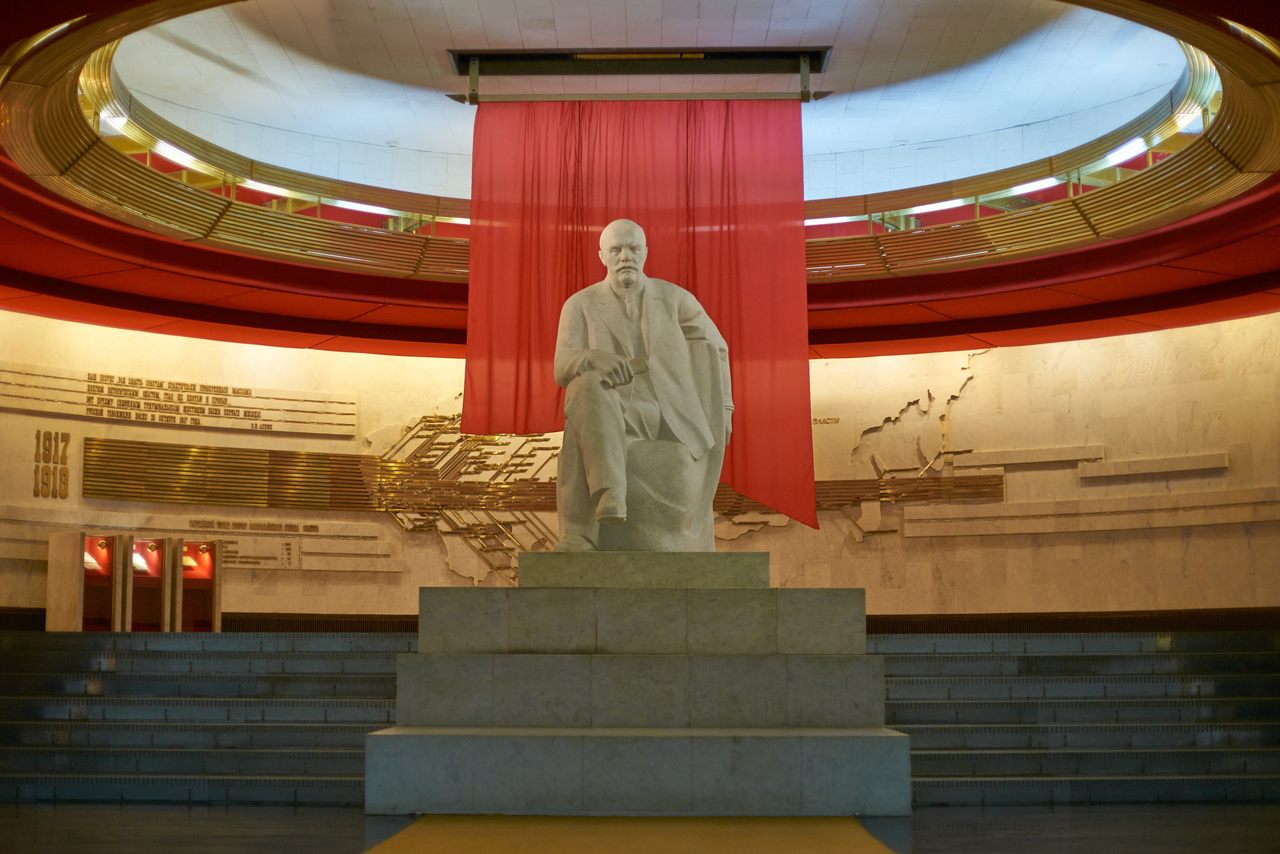
Eastern Europe is clearly part of a global populist wave, and is now part of the western right-wing populist imaginary as the bedrock for ‘pure’ European values. Only by looking at ‘1989’ from a new angle can we see how populist governments’ rejection of a ‘decadent’ and ‘imperialist’ West merely continues a communist stance, despite their strident anti-communist rhetoric.
The spread of populist governments in eastern Europe over the last decade, and their nationalist challenging of core tenets of western liberalism, has given currency to talk about a ‘new east-west divide’. A notion has taken hold that draws on a longer history of western views of eastern backwardness: a specifically eastern illiberal ‘infection’ is allegedly threatening the stability of the entire European project. In this vein, former US Secretary of State Hillary Clinton called upon ‘the EU and the people of Europe to resist the backsliding we are seeing in the east’.1 Yet the parallel ascent of populist parties in much of the West, and a wave of anti-populist mass protests in the east, suggest the divide is not defined by geography alone.
As we argue in 1989: A Global History of Eastern Europe, the current wave of east European populism, while rooted in local nationalist traditions, is best understood by also considering its global ideological bedfellows. Nativists in eastern Europe, and those who embrace similar forms of ethnonationalist cultural traditionalism elsewhere, have mutually reinforced each other. Radical right-wing figures in western Europe have developed strong bonds with eastern European populists in a common push to ‘re-found’ Europe on an explicitly anti-liberal basis. Beyond Europe, leaders with an authoritarian bent, from the right-wing of the Republican Party in the United States, to Vladimir Putin in Russia, Recep Tayyip Erdoğan in Turkey, and Xi Jinping in China, have contributed to eastern European populists’ re-positioning against the West. Through these relationships, leading figures of such nationalist parties as PiS in Poland and Fidesz in Hungary, as well as their intellectual supporters, re-imagined their place in a broader world beyond the liberal rule of law and what they consider the neo-colonial interference of the EU in their countries’ domestic affairs. Together, they clamour for the defence of their societies’ ‘Europeanness’, allegedly threatened by Western multiculturalism, cosmopolitanism, and ‘political correctness’. Continue reading “The struggle over 1989: The rise and contestation of eastern European populism”
Marc-William Palen
History Department, University of Exeter
Follow on Twitter @MWPalen
You must be logged in to post a comment.