The result of the 2008 Research Assessment Exercise confirms Exeter’s position as one of the UK’s leading research-intensive universities. Almost 90% of our research is at internationally recognised levels and every single subject submitted included world-leading (4*) research. When adjusted for the 95% of staff submitted, Exeter ranks among the top 15 in the UK for research out of 159 higher education institutions. The Times Higher Education described Exeter as ‘a rising star among research-intensive institutions’. Continue reading “2 New History Lectureships Available at Exeter”→
David Morgan-Owen Visiting Research Fellow, National Museum of the Royal Navy
British naval policy in the First World War era has become a topic of considerable debate in the last two decades. One of the key issues with which historians have grappled has been the question of the relative importance assigned to home and imperial defence by contemporary politicians and defence planners. Continue reading “The Recall of the Legions: A New Perspective on the Anglo-German Naval Rivalry”→
In under two decades, authoritarian political systems collapsed across Europe – in the south of the continent in the 1970s, and then in the east between 1989 and 1991. Although much work has been done on these processes in each region, and comparative work carried out on post-authoritarian transitions and memories, there has yet to be any sustained scholarship that examines the ‘entangledness’ of these processes in the context of broader European and global processes of the late Cold War and its aftermath. Taking a longue durée approach, this conference will explore these inter-relationships between the 1960s and the present day. 2014 marks the 25th anniversary of the fall of state socialism and the 40th anniversary of the beginning of the transition from dictatorship on the Iberian Peninsula and in Greece: an ideal time to consider the relationship between these processes that have been central to modern European history. Continue reading “CFP: Entangled Transitions: Between Eastern and Southern Europe 1960s-2014”→
History does not repeat itself. The historians repeat one another.
—Max Beerbohm, 1896.
Historians are often charged — sometimes correctly — with precipitously proclaiming a “new” field of study: a field that, upon further investigation, is shown to be remarkably similar to earlier turns in the historiographical timeline. The post-colonial and subaltern “turns” of the 1980s are cases in point, as they, however unwittingly, tended to ignore the prodigious and overlapping work within Area Studies that had appeared in preceding decades. I duly began to wonder if the term “global history” might prove to be yet another illustrative example. Continue reading “Sleuthing the Origins of ‘Global History’”→
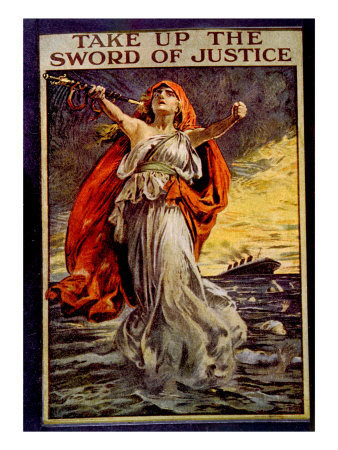
Michael Gove’s recent assault, in the form of an article in the Daily Mail, alleges that the myths of the First World War continue to be perpetuated by an unholy alliance of left-wing academics and television sit-coms. The Education Secretary accused his ideological opponents of failing to recognise that the conflict was a ‘just war’, fought in defence of ‘Britain’s special tradition of liberty’. Since the piece went to press, the myriad problems inherent in Gove’s characterisation have been dissected at great length – including an excellent assessment by Marc-William Palen in this very blog. Yet while we might take particular exception to the tone and context of the Education Secretary’s position, such attempts to deploy the rhetoric of justice and liberty in defence of conflict are nothing new. Indeed, from my own research on the Liberal Party and the outbreak of the 1899-1902 South African War, I would suggest that Gove is merely rehashing the language and rhetoric of pro-war Liberals at the turn of the century. Continue reading “Echoes of Britain’s Wartime Past: Gove’s Timeless Rhetoric of Justice and Liberty”→
Another big week in imperial and global history has passed. Here are some of the centre staff’s top stories:
*Miranda Carter points out in the Guardian that the one-time bestselling British imperial adventure stories of Kipling, Stevenson, and Haggard have been almost forgotten — dangerous evidence that Britons are ignoring their imperial past:
It is a mistake to neglect our colonial past. We should not want to become like Japan, a nation that deliberately chose to forget the shame of the second world war. Japan has never apologised in the same way as Germany for its actions during the war, and has often seen itself as the victim of the conflict rather than the aggressor. In Britain, we haven’t truly processed our colonial history, and we should remind ourselves of it. One way cultures remember and digest the past is through stories, which is why the best of these colonial adventure stories deserve to be reread, in all their awkward ambivalence. . . . It is also why British writers should . . . tell stories that will illuminate parts of the colonial experience, particularly for an increasingly uninformed domestic audience. Postcolonialism throws up difficulties for western writers, but it can also open up new routes into stories about it.
*The nomination of The Act of Killing for an Oscar has put Indonesia’s bloody past into the forefront, connecting the anti-communist killings of the late 1960s with today’s modern-day gangsters and paramilitaries. Continue reading “This Week’s Top Picks in Imperial & Global History”→
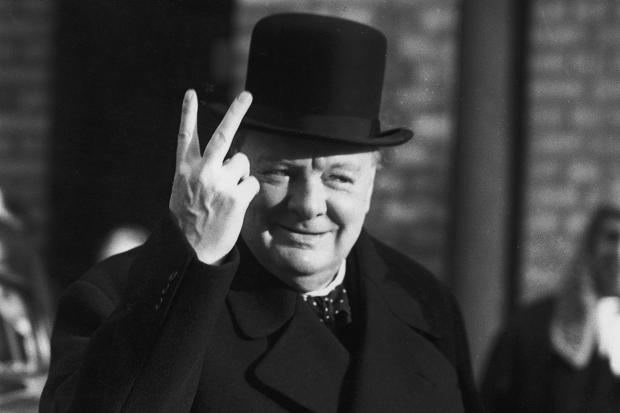
To produce this study, Toye deftly combines secondary source material with archival research, especially Churchill’s own, often overlooked speech-writing files. The result is a book that is by turns informative, engaging, and, all too often, frustrating.
Matthews agrees that ‘Toye is surely right that Churchill did not command unanimous support during the war, a fact he demonstrates by lacing his book with contemporary reactions to the wartime speeches.’ However, he is critical of the book’s use of Mass-Observation material and the reports of the Ministry of information’s Home intelligence Division:
More than once, while the Home Intelligence Division reported overall support for a Churchill address, Toye is quick to highlight negative comments about the same speech found in the MO files, even when those comments represented ‘minority feeling’ (p. 108). Moreover, these negative reactions often say less about Churchill’s oratory than they do about a war-weary, but also fickle public.
In his author’s response, Toye responds robustly, arguing that Matthews overlooked the ways in which the book addresses such methodological concerns. Toye also emphasizes that highlighting contemporary criticisms of Churchill’s speeches does not necessarily amount to an endorsement of the critics’ point of view. He argues: ‘Once it is grasped that I am neither criticising Churchill nor rubbishing his speeches, then Matthews’s critique of my work loses its force.’
For the last century Britain has led the world in caring for its heritage. Yet with cuts in public spending and pressures to relax restrictions on development the future of our historic environment is looking ever more uncertain and insecure. Centre Director Professor Andrew Thompson asks whether imperial history can ride to Heritage’s rescue. It is something that struggling heritage groups across the globe might do well to consider.
Imagine a Britain without Stonehenge or Hadrian’s Wall. Imagine our historic landscape no longer embellished by great castles, cathedrals or country houses. This could have easily been a reality today had it not been for a very significant piece of legislation in the nation’s legal history — the 1913 Ancient Monuments Consolidation and Amendment Act.
This long forgotten, yet landmark piece of legislation, paved the way for the creation of the historic environment that we know and enjoy today. Its premise was that there were monuments and buildings that belonged to our nation’s history: and that government had a duty to ensure their survival.
For the last century Britain has led the world in caring for its heritage. Yet with cuts in public spending and pressures to relax restrictions on development, the future of our historic environment is looking ever more uncertain and insecure. Continue reading “Can Imperial History Ride to Heritage’s Rescue?”→
Edward Said (1935-2003) was one of the foremost intellectuals of the Twentieth Century. Heavily influenced by the French philosopher Michel Foucault, his work spanned the fields of literature, history, and post-colonial studies. He was a controversial figure, and none of his work is more debated than his landmark 1978 book Orientalism. Said recast this term so that it referred to the structures of knowledge – or rather discourse – through which Westerners constructed the image of the East. Continue reading “Orientalism and its Legacies: New Talking Empire Podcasts”→
Roger Fieldhouse Emeritus Professor, University of Exeter, former member of the Anti-Apartheid movement, and founder of the Northalterton Anti-Apartheid Group in 1965
In recent weeks, the Imperial & Global Forum has explored the Anti-Apartheid boycott’s relationship to the modern ‘fair trade’ movement and the historiographical black hole of the apartheid regime itself. But who supported the British Anti-Apartheid movement, and what was its local, national, and global strategy? Continue reading “The British Anti-Apartheid Movement: A Brief History”→
It’s time for the weekend roundup in imperial and global history.
To kick things off, ever wonder what a map of Africa might look like if it had never been colonized? Swedish artist Nikolaj Cyon has done just that:
The Washington Post notes that ‘the map asks what Africa would look like today if colonialism had never happened. (Africa’s present-day borders were determined largely by colonialism, which continues to create lots of very big problems.) Cyon drew these boundaries based on a study of political and tribal units in 1844, the eve of Europe’s “scramble for Africa.” He oriented it with south at the top to subvert the traditional Europe-on-top orientation.’ Continue reading “This Week’s Top Picks in Imperial & Global History”→
Nurses and wounded soldiers at Exeter’s City Hospital (VA Hospital No 3) circa 1917. Exeter was the first of the provincial towns to take in refugees. Photo borrowed from the great website Exeter Memories.
The commemoration of the Western Front should not wholly overshadow the wide-ranging activities of the men, women, and children of the British Home Front.Devon’s local tendency toward charity over service reflects the unusual autonomy of its citizens as they attempted to navigate the different challenges of the war.
The recent politicised controversies surrounding the centenary of the First World War reveal the strong emotions and the common misperceptions that the conflict continues to evoke. Presently, the deliberations about the commemoration of the Great War also remain primarily focused on how and why Britain went to war: who started what, the failings of military strategists, and the gruelling experience of British soldiers. This is reflected in the staggering amount of books about the Great War that have been published to coincide with and capitalise upon the conflict’s centenary. Yet Margaret Macmillan rightly points out that whilst the passions evoked in the debate on the First World War ‘may make for a good spectacle’, it does not do ‘what history should – and that is help us to understand the past in all its complexity’. Yet, amid these heated debates of how the First World War should be remembered in Britain, there has been little discussion and reflection of the complex wartime experiences of individuals that fell outside the requirements of military service: the women, children and men unable to serve in the military who instead participated in various forms of economic and social self-mobilisation. Continue reading “Remembering the Home Front of the First World War”→
In November 2012, a slim majority of Puerto Ricans voted in favor of U.S. statehood. And within the last week, Dr. José M. Saldaña, former president of the University of Puerto Rico, and former mayor of San Juan, Hernán Padilla, each once again raised the call for Puerto Rican statehood. Yet modern-day remnants of the American Empire continue to trouble US relations with Puerto Rico, which still holds a semi-colonial American status. To give the issue some much-needed historical perspective, what follows is a revised version of an article that previously appeared in the History News Network and the Australian newspaper.
Burn your outdated American flags; make room for the fifty-first star on the star-spangled banner.
For the first time in Puerto Rico’s more than hundred-year history as an American territory, on Election Day in November 2012, a slim majority voted in favor of U.S. statehood in a non-binding referendum that now goes to the U.S. Congress.
Puerto Ricans had been given a similar option three times before — in 1967, 1993, and 1998 — but with opposite results.
Why this apparent about face?
Because of a weakening economy, a decreasing population, and because “the current relationship simply does not create the number of jobs that we need,” says Puerto Rican Secretary of State Kenneth McClintock.
As it stands, 58 percent of Puerto Ricans now live in the mainland United States. Puerto Rico’s four-million residents — the 42 percent remaining on the island — are American citizens but can’t vote in American elections. Such has been the status quo since 1917.
But all this could change if Puerto Rico becomes the fifty-first state of the Union.
Whatever the outcome, this historic moment deserves due attention. Instead, aside from a brief flurry of superficial analysis, the implications of Puerto Rico’s self-determinative vote have gone largely ignored.
We might easily blame American political ADD for such a short attention span. More uncomfortably, such an imperial absence of mind is also a garish reminder of how much Puerto Rico’s complicated, century-long, semi-colonial status has become an accepted part of the American subconscious. Continue reading “America’s Absentminded Empire”→
Membership in the Network is open to any postgraduate and early career researcher interested in the field of Imperial & Global History, broadly defined.
The Imperial and Global History Network is an exciting new resource for early career researchers and posgraduates at the University of Exeter.
The aim of the Network is to connect postgraduate and early career researchers working in the field of Imperial and Global history, providing an inter-disciplinary forum for the discussion of research questions and methodologies, archival research and fieldwork, and funding applications and career development. The Network is hosted by the Centre for Imperial and Global History at the University of Exeter and membership is open to any postgraduate and early career researcher interested in the field. If you’re interested in joining the Network or you would like to find out more information please contact one of the convenors: Dr Gareth Curless and Dr Stacey Hynd. Continue reading “New Exeter History Network for Early Career Imperial & Global Researchers”→
If you are seeking PhD funding in the fields of World/Global/Colonial/Imperial History, please may I draw your attention to the following funding opportunities at the University of Exeter.
AHRC Doctoral Training Partnership South West and Wales Consortium (SWWC) [up to 50 awards available, deadline 21 February, with an Open Day on 22 January]
ESRC South West Doctoral Training Centre +3 and 1+3 Studentships [25 Awards, deadline 13 February]
ESRC South West Doctoral Training Centre +3 and 1+3 Studentships in Security, Conflict and Justice [2 awards, deadline 13 February]
College of Humanities Graduate School Doctoral Awards [12 awards available, deadline 2 February].
You must be logged in to post a comment.