
Dan Weavers
University of Exeter
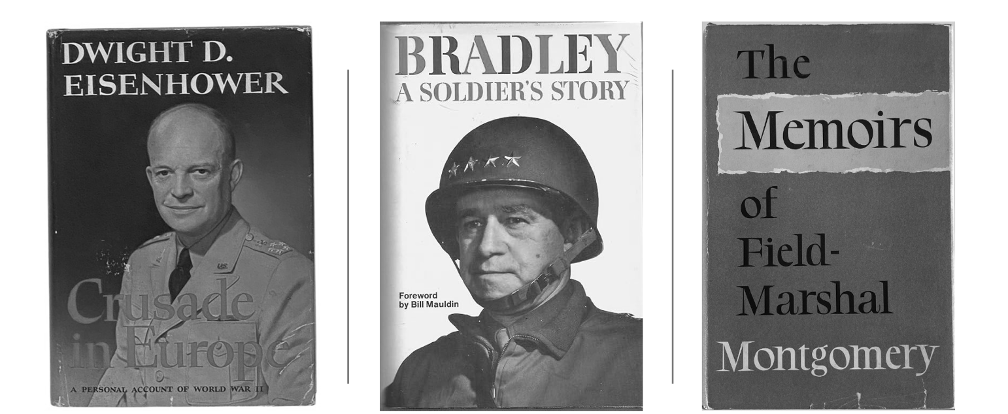
In 1948, US General Dwight D. Eisenhower published his memoir of the Second World War, Crusade in Europe, starting a war of words between American and British allies. Eisenhower’s criticism of Field Marshal Bernard Montgomery in particular produced a wave of indignation in a weakened and declining Britain, whose policymakers were hoping to exchange the moral capital earned from contribution to victory in the war against Nazism to reestablish their global standing and maintain the Empire and Commonwealth.
The symbolic capital of “Monty” was a key source of moral capital for the nation: to insult Monty was to insult Britain. The situation was compounded by the publication of US General Omar Bradley’s A Soldier’s Story in 1951, which presented an escalation in these criticism of Britain’s favourite soldier, just as both countries were once again fighting alongside each other in Korea. Therefore, Eisenhower’s and Bradley’s words were deemed by some in the UK as potentially harmful to the Anglo-American Special Relationship, whilst Britain was desperate for continued American support for British postwar revival.
Britain’s fall from the top rank was reviled not just by the political figures of the day, but also the British military men of the war. Montgomery was not only possessed of vast egotism and self-centredness which fuelled his rage at his former American colleague’s books; he was “always alert to the diminution of British power and influence, and the shrinking of the British Empire distressed him.”[1] He waited until 1958 to publish the vengeful Memoirs, in the aftermath of now President Eisenhower’s repudiation of the British over Suez. As Niall Barr has stated, the “claims and counter-claims” of their memoirs “had the effect of placing in the spotlight the personalities and relationship of Eisenhower and Montgomery almost to the exclusion of every other issue.”[2]
A dedicated study of the commander memoirs of World War II has not yet been made, an indication of how historians have largely discarded them as biased, distorted and unreliable.[3] Frances Houghton’s The Veteran’s Tale (2018) expertly examines the memoirs of the common British soldier but is not a study that encompasses commander books. When viewed through the prism of the Cold War, rather than the Second World War, a whole new perspective of these memoirs can be viewed. Therefore, whilst memoirs have often been dismissed as being of very little value historically, those of the Second World War commanders in fact offer a fascinating window into British postwar imperial anxieties.
Continue reading “Ike, Brad & Monty: Memoirs and Britain’s Postwar Decline”

You must be logged in to post a comment.