It’s time for the weekend roundup in imperial and global history.
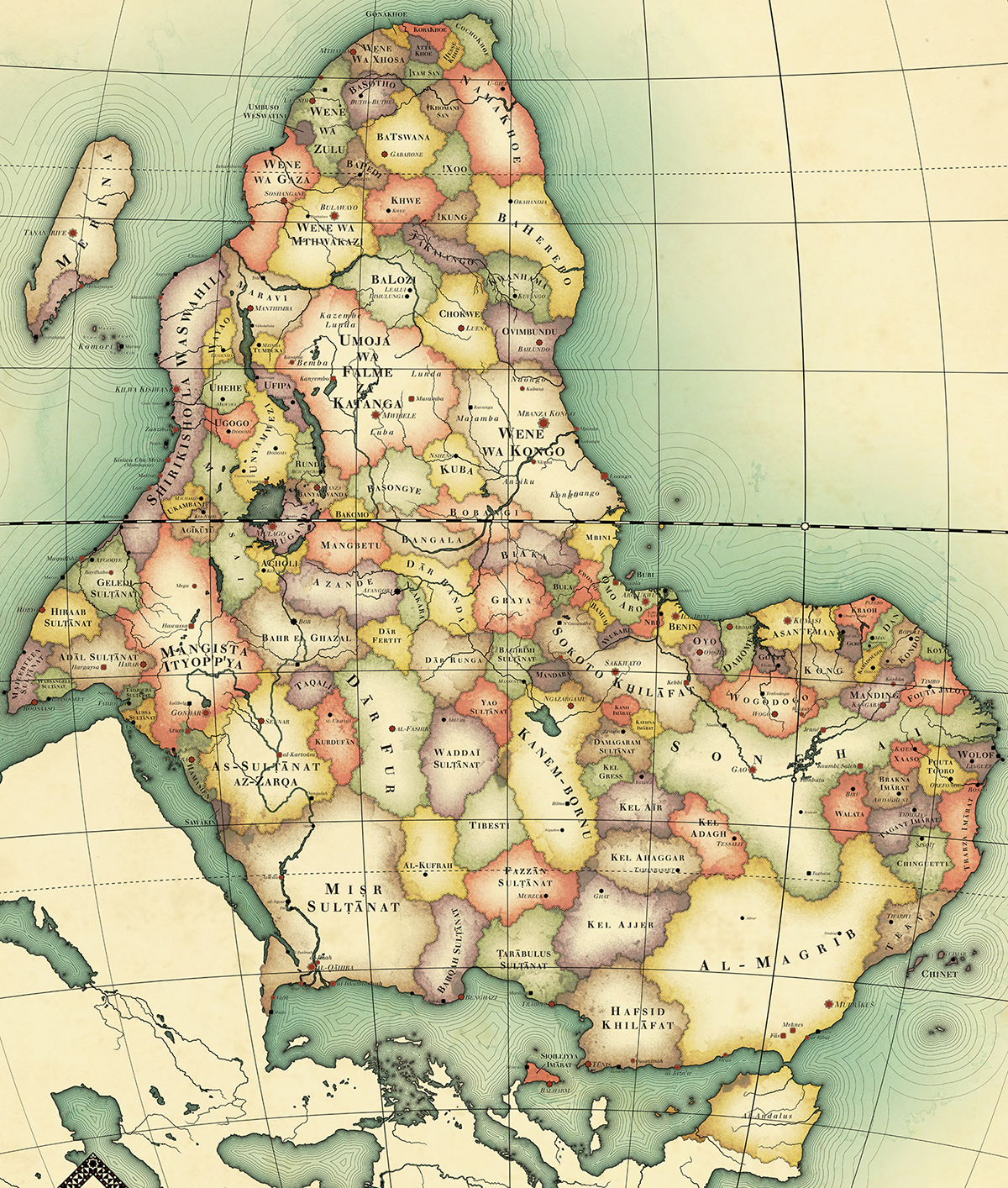
To kick things off, ever wonder what a map of Africa might look like if it had never been colonized? Swedish artist Nikolaj Cyon has done just that:
The Washington Post notes that ‘the map asks what Africa would look like today if colonialism had never happened. (Africa’s present-day borders were determined largely by colonialism, which continues to create lots of very big problems.) Cyon drew these boundaries based on a study of political and tribal units in 1844, the eve of Europe’s “scramble for Africa.” He oriented it with south at the top to subvert the traditional Europe-on-top orientation.’ Continue reading “This Week’s Top Picks in Imperial & Global History”→
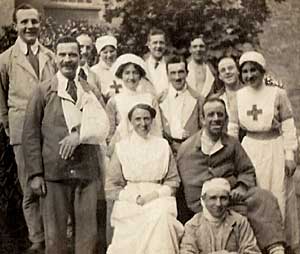
Nurses and wounded soldiers at Exeter’s City Hospital (VA Hospital No 3) circa 1917. Exeter was the first of the provincial towns to take in refugees. Photo borrowed from the great website Exeter Memories.
The commemoration of the Western Front should not wholly overshadow the wide-ranging activities of the men, women, and children of the British Home Front.Devon’s local tendency toward charity over service reflects the unusual autonomy of its citizens as they attempted to navigate the different challenges of the war.
The recent politicised controversies surrounding the centenary of the First World War reveal the strong emotions and the common misperceptions that the conflict continues to evoke. Presently, the deliberations about the commemoration of the Great War also remain primarily focused on how and why Britain went to war: who started what, the failings of military strategists, and the gruelling experience of British soldiers. This is reflected in the staggering amount of books about the Great War that have been published to coincide with and capitalise upon the conflict’s centenary. Yet Margaret Macmillan rightly points out that whilst the passions evoked in the debate on the First World War ‘may make for a good spectacle’, it does not do ‘what history should – and that is help us to understand the past in all its complexity’. Yet, amid these heated debates of how the First World War should be remembered in Britain, there has been little discussion and reflection of the complex wartime experiences of individuals that fell outside the requirements of military service: the women, children and men unable to serve in the military who instead participated in various forms of economic and social self-mobilisation. Continue reading “Remembering the Home Front of the First World War”→
In November 2012, a slim majority of Puerto Ricans voted in favor of U.S. statehood. And within the last week, Dr. José M. Saldaña, former president of the University of Puerto Rico, and former mayor of San Juan, Hernán Padilla, each once again raised the call for Puerto Rican statehood. Yet modern-day remnants of the American Empire continue to trouble US relations with Puerto Rico, which still holds a semi-colonial American status. To give the issue some much-needed historical perspective, what follows is a revised version of an article that previously appeared in the History News Network and the Australian newspaper.
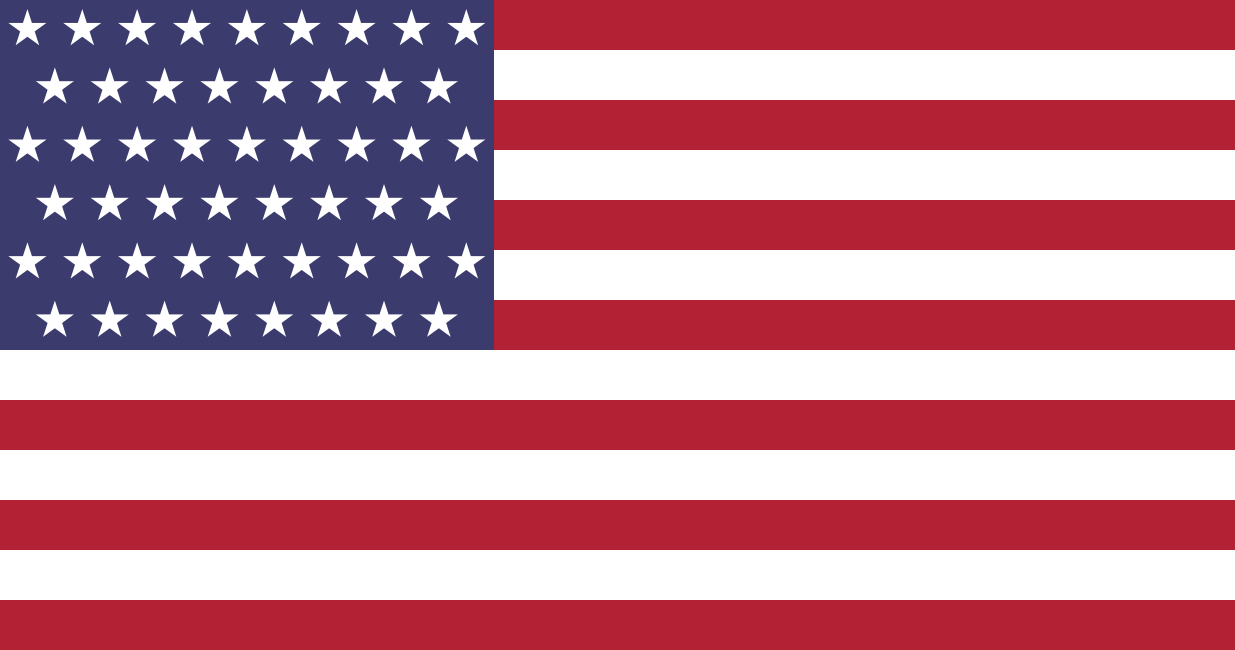
Burn your outdated American flags; make room for the fifty-first star on the star-spangled banner.
For the first time in Puerto Rico’s more than hundred-year history as an American territory, on Election Day in November 2012, a slim majority voted in favor of U.S. statehood in a non-binding referendum that now goes to the U.S. Congress.
Puerto Ricans had been given a similar option three times before — in 1967, 1993, and 1998 — but with opposite results.
Why this apparent about face?
Because of a weakening economy, a decreasing population, and because “the current relationship simply does not create the number of jobs that we need,” says Puerto Rican Secretary of State Kenneth McClintock.
As it stands, 58 percent of Puerto Ricans now live in the mainland United States. Puerto Rico’s four-million residents — the 42 percent remaining on the island — are American citizens but can’t vote in American elections. Such has been the status quo since 1917.
But all this could change if Puerto Rico becomes the fifty-first state of the Union.
Whatever the outcome, this historic moment deserves due attention. Instead, aside from a brief flurry of superficial analysis, the implications of Puerto Rico’s self-determinative vote have gone largely ignored.
We might easily blame American political ADD for such a short attention span. More uncomfortably, such an imperial absence of mind is also a garish reminder of how much Puerto Rico’s complicated, century-long, semi-colonial status has become an accepted part of the American subconscious. Continue reading “America’s Absentminded Empire”→
Membership in the Network is open to any postgraduate and early career researcher interested in the field of Imperial & Global History, broadly defined.
The Imperial and Global History Network is an exciting new resource for early career researchers and posgraduates at the University of Exeter.
The aim of the Network is to connect postgraduate and early career researchers working in the field of Imperial and Global history, providing an inter-disciplinary forum for the discussion of research questions and methodologies, archival research and fieldwork, and funding applications and career development. The Network is hosted by the Centre for Imperial and Global History at the University of Exeter and membership is open to any postgraduate and early career researcher interested in the field. If you’re interested in joining the Network or you would like to find out more information please contact one of the convenors: Dr Gareth Curless and Dr Stacey Hynd. Continue reading “New Exeter History Network for Early Career Imperial & Global Researchers”→
If you are seeking PhD funding in the fields of World/Global/Colonial/Imperial History, please may I draw your attention to the following funding opportunities at the University of Exeter.
AHRC Doctoral Training Partnership South West and Wales Consortium (SWWC) [up to 50 awards available, deadline 21 February, with an Open Day on 22 January]
ESRC South West Doctoral Training Centre +3 and 1+3 Studentships [25 Awards, deadline 13 February]
ESRC South West Doctoral Training Centre +3 and 1+3 Studentships in Security, Conflict and Justice [2 awards, deadline 13 February]
College of Humanities Graduate School Doctoral Awards [12 awards available, deadline 2 February].
As the UN warns of an impending humanitarian disaster in the Central African Republic (CAR), what should we make of France’s recent back-to-back interventions in sub-Saharan Africa? Is there an echo in this of the clientalist politics pursued by France in Africa in the years after formal decolonization? Continue reading “France in Africa – Imperialist Humanitarian?”→
Much ink has now been spilled on the historical origins of human rights. That debate will continue no doubt. I have surveyed the wreckage in a recent review essay (in English here, but for some similar thoughts auf Deutsch see here) but there is no doubt that problems large and small remain to resolve.
One of the biggest is how to formulate the historical relationship between humanitarianism and human rights. In my view, the best thing to say is that the former is old and the latter (conceptualized as the quest for an international regime pursued by transnational movements) is new, though humanitarianism certainly did create many norms originally framed outside an individualist or rights-based paradigm that contemporary movements have now put in one. Continue reading “Human Rights and ‘Neoliberalism’”→
[London, 1857] Image taken from page 464 of ‘The eventful voyage of H.M. Discovery Ship “Resolute” to the Arctic Regions in search of Sir J. Franklin. … To which is added an account of her being fallen in with by an American Whaler after her abandonment … and of her [courtesy of the British Library]
An Empire Marketing Board poster from the late 1920s
This autumn I spoke at several universities in Australia and New Zealand on the subject of the various shopping weeks that were launched to promote Empire trade during the 1920s and 1930s. The story of the Empire Marketing Board’s efforts to develop the idea of ‘Buying Empire’ in inter-war Britain is well known, and its posters still appear regularly on the covers of books written about imperial culture (and also currently featured as the background to this blog!). What is less well known is that the same cause was taken up with enthusiasm by a variety of organisations in the Dominions, and arguably achieved greater and more lasting prominence there than it did in Britain.
At the same time, it quickly became clear to me that the archives in England and Australasia were telling different stories. Politicians and businessmen in Wellington and Melbourne may have conceived themselves to be members of a ‘British’ trade community, but their understanding of what the future of the Empire as an economic unit should be often differed from their counterparts in London. Continue reading “Buying British Across the World”→
You must be logged in to post a comment.